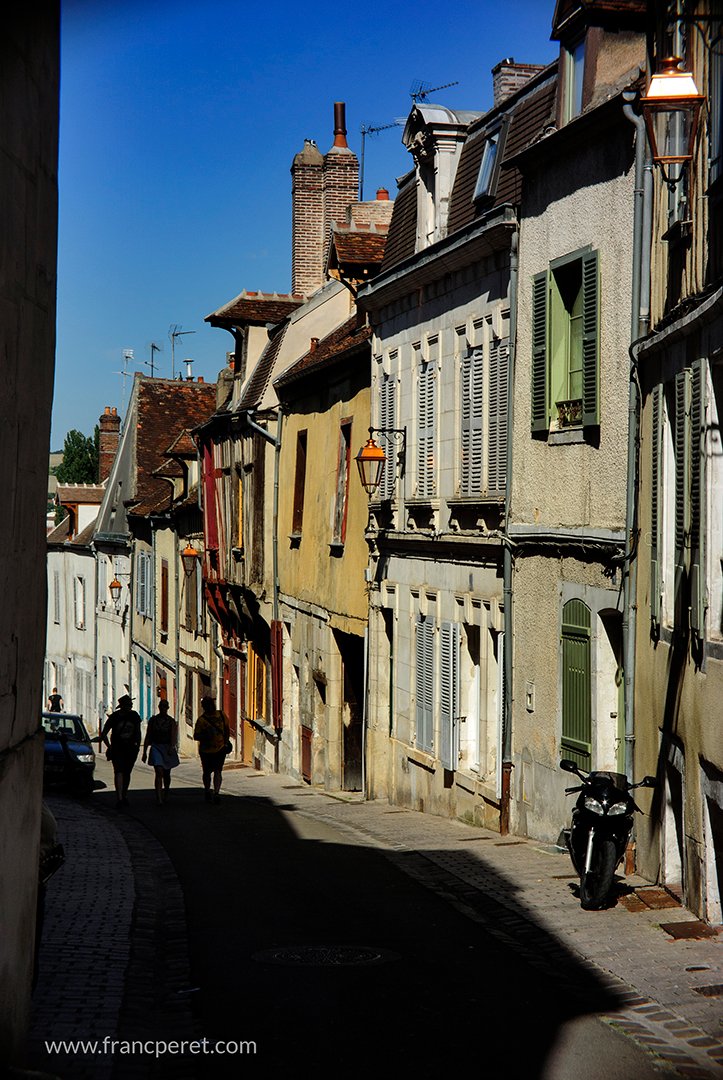
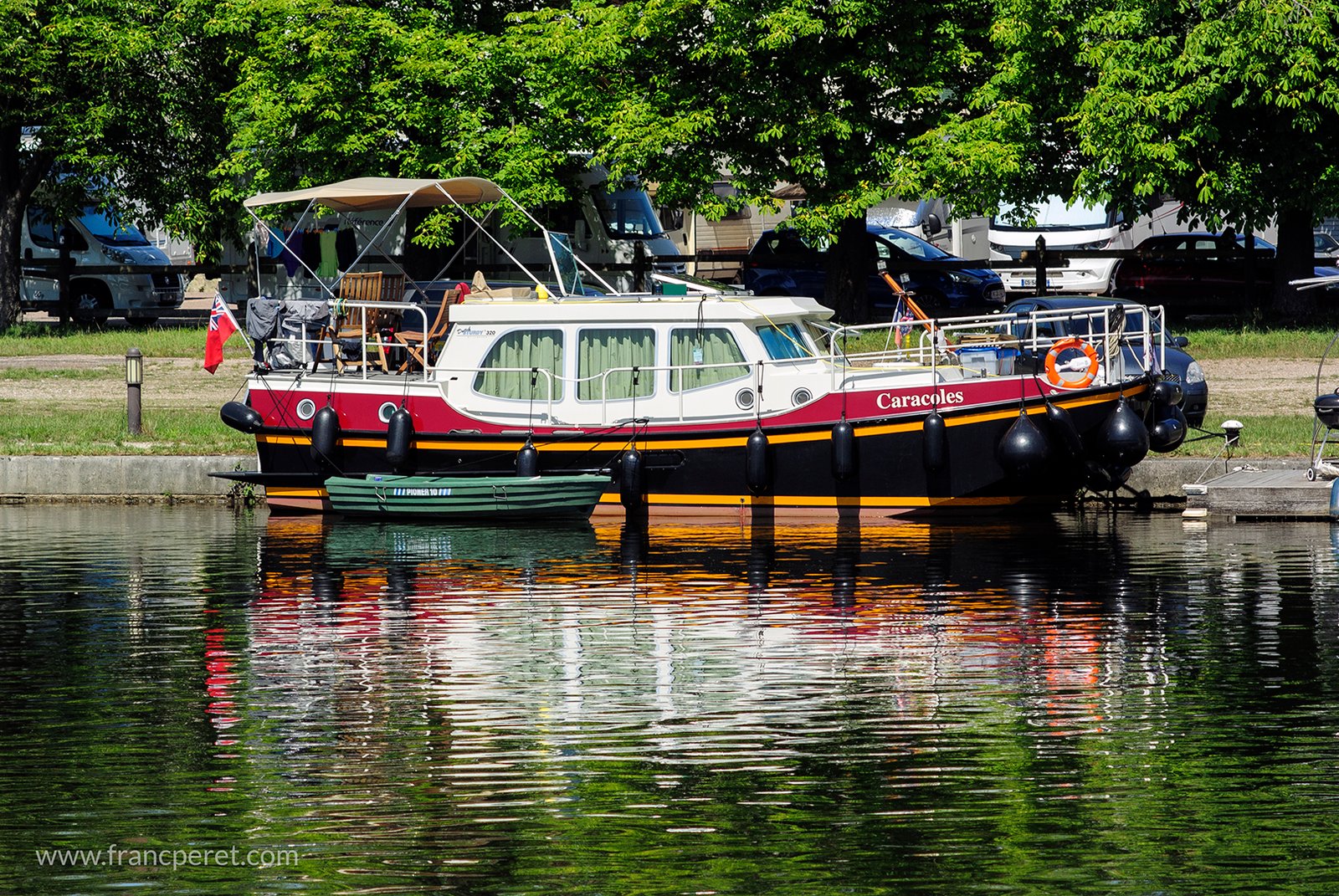
Auxerre (Burgundy) is the biggest city near my home, not far from Paris, but in the middle of the countryside. This place is steeped in history and when the sun lights up the sky, I like to take a photographic walk there…
Photos by Franc Peret (Photography Teacher)
Double click on pictures to get the best quality view.
Auxerre (Bourgogne) est la plus grande ville près de chez moi, pas très loin de Paris, mais en pleine campagne. Cet endroit est imprégné d’histoire et quand le soleil illumine le ciel, j’aime y faire une promenade photographique…
Double cliquez sur les photos pour les apprécier en qualité maximale.
View from Yonne river. Vue de l’Yonne.Going up the hill to city center. Monter pour rejoindre le centreSummer refreshment // rafraichissement d’étéMarina // Port de plaisanceAnother view of Auxerre from Yonne river
Une autre vue d’Auxerre prise de l’Yonne.iron curtain and light strip Rideau de fer et bande de lumièreHairdresser // Boutique de coiffeur.A shutter block.Chinese Shadow in Auxerre, Burgundy, France.Traditionnal bookstoreOld print on the wall and flattened pipe // Vieille inscription et tuyau aplati.Détail de l’Église Saint-PierresilhouettesCathédrale Saint-EtienneTypical cross road // croisement de rues typique
Auxerre’s country-side surrounding.
The traditional place where I am buying my daily milk
La ferme où j’achète mon lait au producteur.fairy barbed wire // barbelés féeriques.Wheat fields in sunset // blé baigné de soleil.Harmony of Old bricks and old wood. Harmonie de vieilles briques et vieux bois.Getting mess in order and colors.
To see more pictures of that series, check my album posted there Flickr
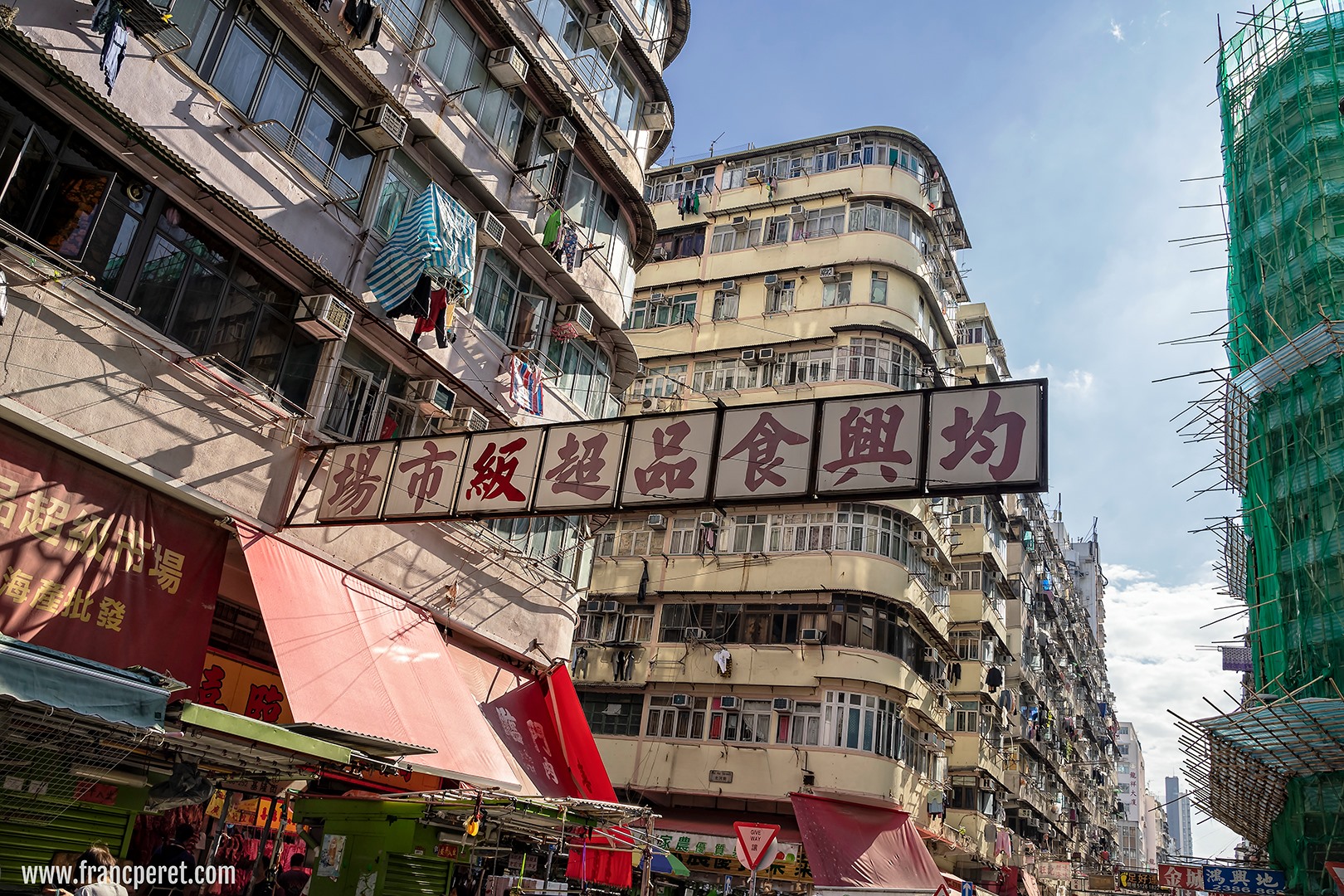
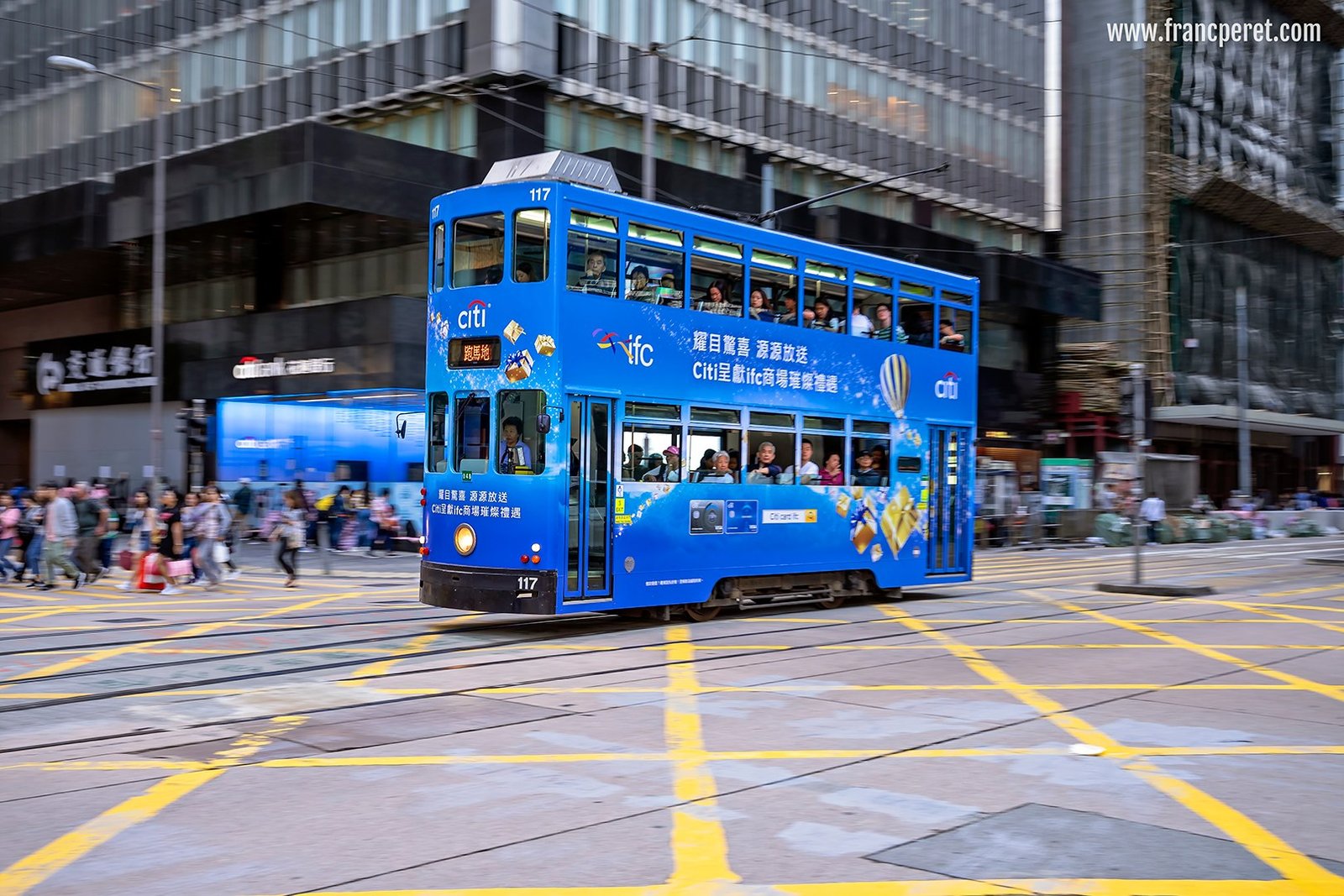
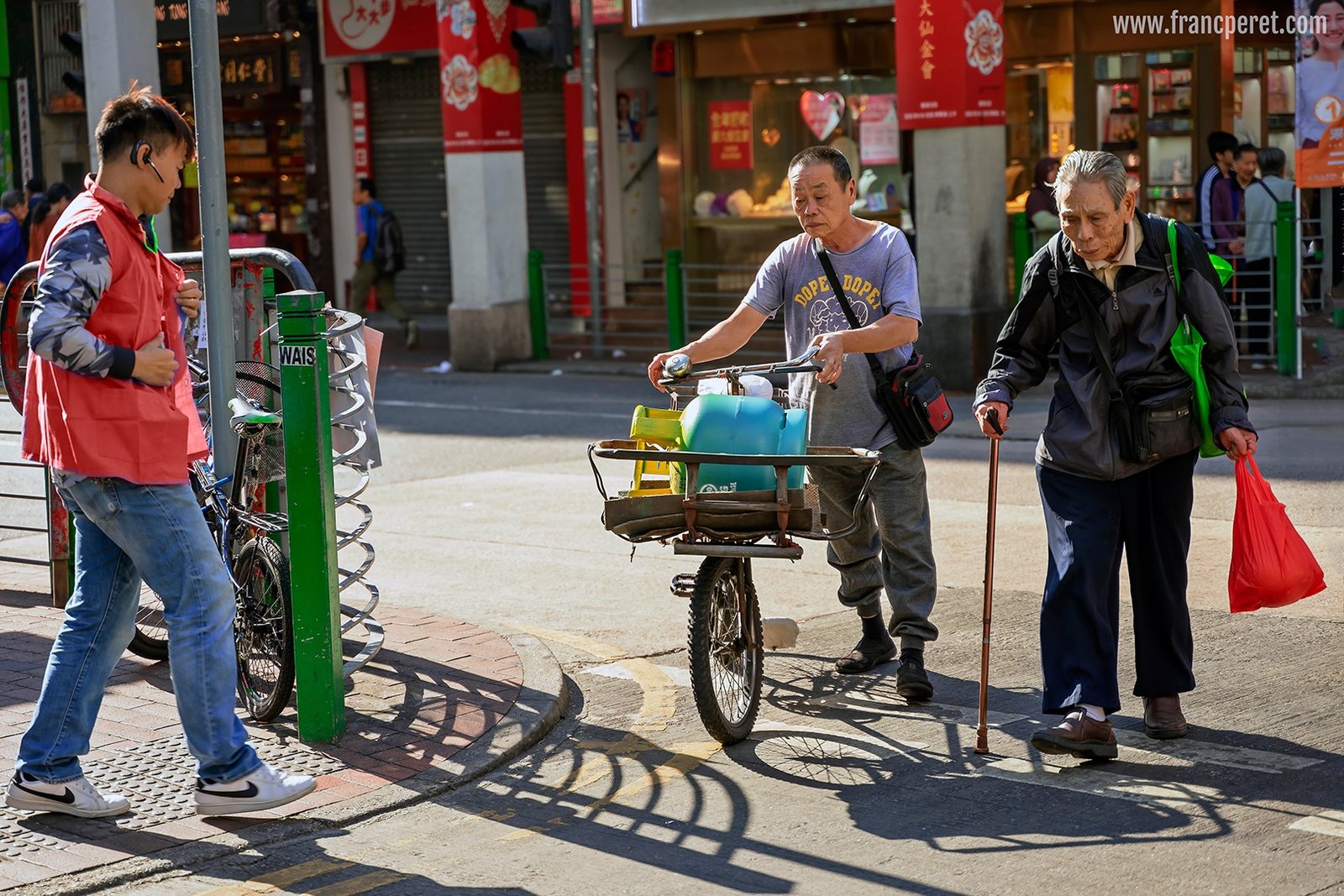
Ever since I discovered it in 1995, I’ve loved Hong Kong. It is a unique place in the world. Small in size but so huge in flavors, meanings and cultural diversity. I love this place and my only regret is that I never having lived there.
Franc Peret
TIPS :
1- Always click on the image to view the highest quality
2 – La version française suit la version anglaise.
Kowloon CoolieHKG Island historical street and restaurant
As you may know protests have been happening almost daily in HKG for months and while as a foreigner and especially as a Westerner (due to the colonial past of this area) I do not did not feel entitled to judge or intervene in these internal events.
Ferry from HKG to Kowloon
As a photographer, however, I hoped to witness and capture with my camera some of these incredible street protests that are part of contemporary history.
Never ending life
I have followed many similar events in France, such as the still current demonstrations of the yellow vests, and I found it both interesting to compare these photographic and human experiences and these popular protest movements.
The Unwitting Peacemaker
HKG fast & tasty food
Unfortunately for me, but fortunately for Hongkongers, because of the local elections, nothing happened for the 4 days I stayed there on an express round trip.
HKG is THE destination
So I focused on the city and its inhabitants to collect some “tourist” shots to my liking.
Strong memories of my favorite movie “Chungking Express”, and all my previous visits came back in the form of emotional tsunamis:
Blue Double deck
Memories of my 25 years of irregular liaisons with this extraordinary place come back to my face.
My many round trips from Taiwan to renew my visa, my meetings with Christopher Doyle (Wang Kar Wai DOP), my video shoots for Harley-Davidson, my friends who left and those who still live there…
FRENCH VERSION:
MON HOMMAGE A HONG KONG
Artistic visionReal Vision
Depuis que je l’ai découvert en 1995, j’ai adoré Hong Kong. C’est un endroit unique au monde. De petite taille mais tellement énorme en saveurs, en significations et en diversité culturelle. J’adore cet endroit et mon seul regret est de n’y avoir jamais habité.
Franc Peret
Comme vous le savez peut-être, des manifestations se sont produite presque quotidiennement à HKG, pendant des mois et si en tant qu’étranger et, plus surtout en tant qu’occidental (en raison du passé colonial de cette région), je ne me sentais pas en droit de juger ou d’intervenir dans ces événements internes.
Ferry Cruise at night
En tant que photographe, cependant, j’espérais être témoin et capturer avec mon appareil photo certaines de ces incroyables manifestations de rue qui appartiennent à l’histoire contemporaine.
Should I stay or should I go ?
J’ai suivi de nombreux événements similaires en France, tels que les manifestations toujours actuelles des gilets jaunes, et je trouvais cela à la fois intéressant de comparer ces expériences photographiques et humaines et ces mouvements populaires de protestation.
Night is a different show
Malheureusement pour moi, mais heureusement pour les Hongkongais, à cause des élections locales, rien ne s’est passé pendant les 4 jours où j’y suis resté lors d’un aller-retour express.
Just a normal day on the way to the market.
Je me suis donc concentré sur la ville et ses habitants pour récolter quelques clichés “touristiques” à mon goût.
Des souvenirs forts de mon film préféré “Chungking Express”, et toutes mes visites précédentes sont revenues sous forme de tsunamis émotionnels : Les memoires de mes 25 ans de liaisons irregulieres avec cet endroit extraordinaire me remontant en plaine face.
Female teams playing hockey
Mes nombreux allers-retours depuis Taïwan pour renouveler mon visa, mes rencontres avec Christopher Doyle (Wang Kar Wai DOP), mes tournages de vidéos pour Harley-Davidson, mes amis partis et ceux qui y vivent encore…
History is on its way in France, with its yellow vest insurrection and I couldn’t let it go without being part of it as a visual witness, due to my photo and video journalist background
By Franc Peret
I left home at 5:30 am took a train and spent my day in Paris, searching for snapshots in the heat of the yellow vest insurrection.
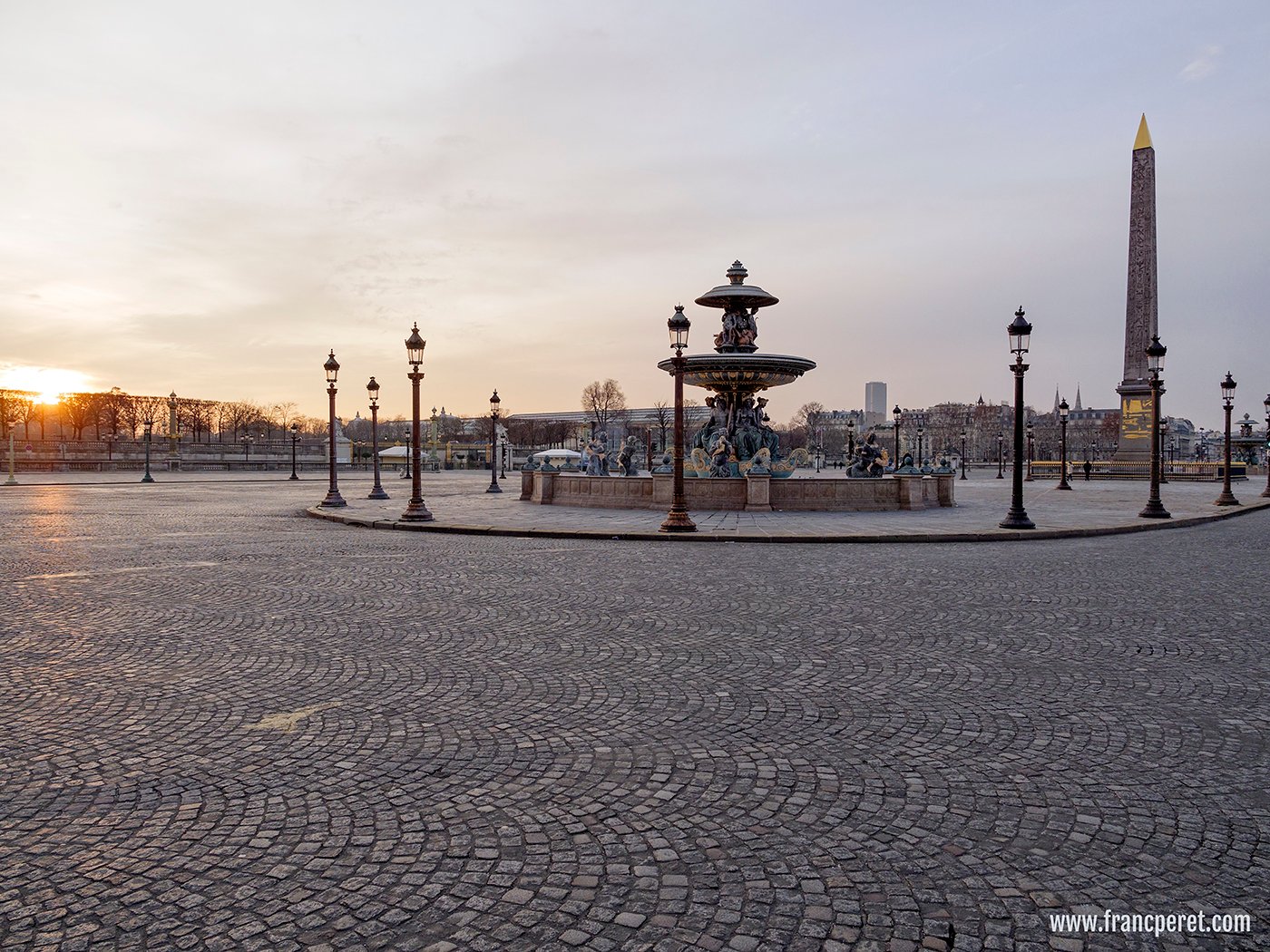
Empty Paris, shut down by police forces, Concorde place.
Subway stations being shut down, I walked for hours from “Paris-Bercy” to “Place de l’Étoile” through “Bastille” (about 11 kms due to many major streets blocked by police).
Police Check point filtering protesters flow.welcome team. More than 8900 police forces were controlling Paris
I saw policemen disguised as protesters, I got 6 safety body search prior to reach “Champs Élysées”.
Police kept my protective goggle and my light gas mask to be sure I will be suffering during their coming assault.
I followed a growing marching group to destination.
Special unit for special occasion and they are going to charge against people like good old time, stick replacing the saber as they are not officially allowed to kill protester anymore…People are protesting in hope they will not finish their life, sleeping outdoor in winter, on a subway aeration grid at the bottom of luxury brand building.
They were coming from all parts of France, with no leaders and no political party for telling people where to go and what to do.
The leftover countryside crowd filling the luxury avenue of Champs Elysees.
Most of them reacted against the official message from our government: “Don’t go to Paris, it will be too dangerous and our forces will be tough on illegal protesters (they consider us all as illegal anyway)”.
The trap is readyStand by before action
Reaching “Champs Élysées”, men in uniform let us in, but never let us out until mid afternoon.
No trespassingHolding people tight, giving pressure.
Waiting for the rest of the crowd, we exchanged jokes and opinion with very friendly Gendarme (kind of police belonging to Army corp) locking the way to the “Place de l’Étoile”.
Friendly contacts on both side. We are both toys victim of dirty politician game. Why should we fight?
Later on, they protected us against some very aggressive policemen in combat gear.
Police attacks
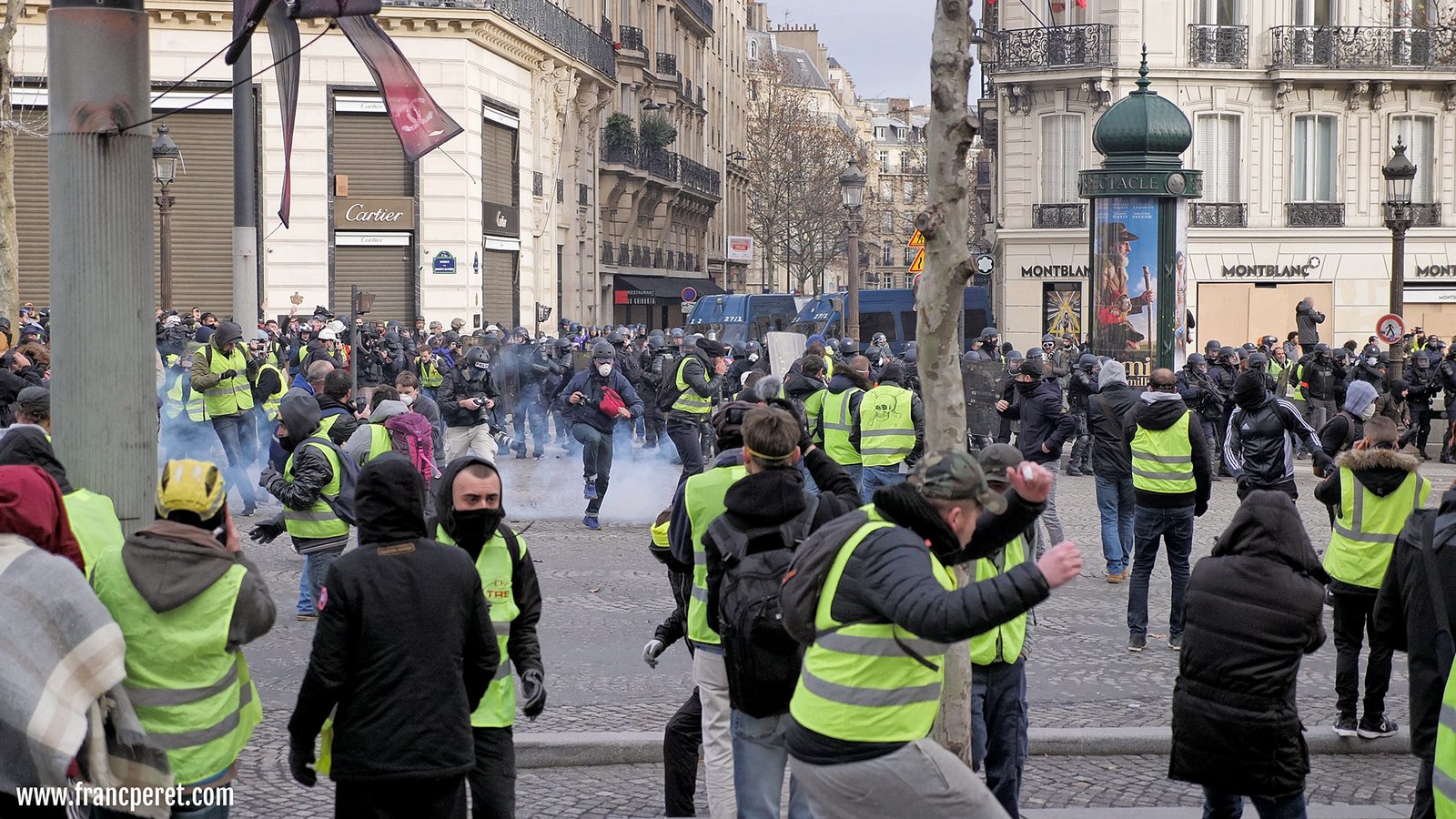
Locked in a trap, we swallowed tear gas for hours.
Flashball were also heavily used against average people (not the destructive ones) causing hundreds of casualties.More than 10 000 tear gas ammunitions used against the crowd.
Once I threw up and cried a lot.
Singing national anthem in protest to police violence against their people
I became blind and lost my way, until a baton pushed me away in the right direction. I was in the most dangerous location; among men in gear.
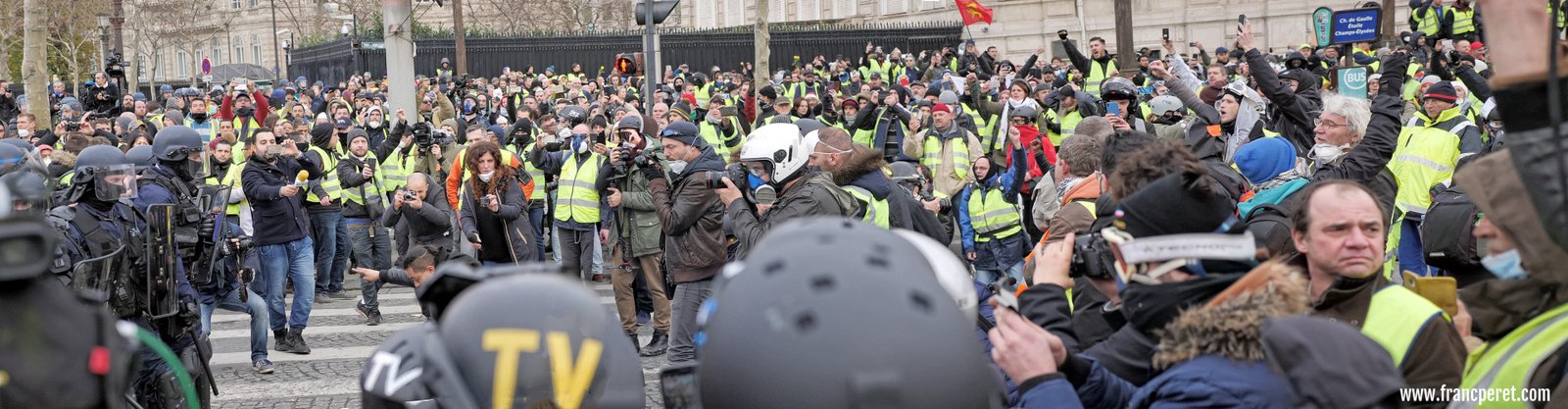
Media were allowed to wear heavy protective gear and they couldn’t capture protester’s suffering under police assault.Many protesters chose a posture against violence to emphasize the treatment they undergo..
Few minutes later, I got shot by a flash ball in my right leg.
Sittingkneeling or…
Luckily, it bounced on somebody else before hitting me.
The old lady was bleeding, and I just got a bruise.
Explosion, flashball and gas again…
Protesting nurse, doctors and firemen in strike took care of people in pain like us.
Femen facing Gendarme who smartly set a woman in front of them.Femen participated to the protest despite the freezing temperature.
My leg was steep and I had great difficulties to reach back my train station, hobbling for 2 hours, on the irregular pavement of the Seine river bank.
As they felt let down by government, lots of retired people joined the demonstration and some with a hint of humor.
Back in the train, i realized that I didn’t sit for a single second during the last 10 hours.
A huge number of journalists offer a wide range of pictures and video on the net concerning this series of protestMore importantly, many protesters holding a smart phone were able to record events never shown by official medias.
I was not fully satisfied with my pictures and video, as my lack of protection, experience and updated information plus my protective instinct kept me away from the hottest event.
The most protected areas belong to government.
Thus I went back once again to Paris the following Saturday, with a better understanding of the situation but a worst lighting situation due to a winter style overcast day…
THE END
Information:
– All pictures were shot with Panasonic Lumix GH5 + 12-35 mm f/2.8 + 35-100 mm f/2.8 + Voigtlander 25 mm f/0.95.
– Wide format pictures and panoramic views were extracted from my 4K video footage.
Hugging the national flagWearing the national flagKneeling with the national flag.Ready to collapse barricadeWriting while peeing (team work): : “FUCK MACRON” (Macron is president of France).Dogs were invited to the partySmoking Paris and the crowd.Asking for a new democratic model.Robocop indicating the right wayForce, protesters and crowd.Protected stores against potential riot.Empty Paris for several Saturdays and more to come. Anger is still vivid…
For beginners, a good photography starts with a good subject. While progressing, the quality of light becomes a priority over subject, as any of them can deliver a great result as soon a moody lighting is falling on it.
Franc Peret
In my Essential Photography Classes, I very quickly emphasize the importance of light to my students who solely focus on camera settings and the subject itself.
Commercial photo shoot are done in studio to get the best result out of the subject.TV commercial lighting set up involves much more equipment, time and budget than the shooting part.
I am always repeating this back to basic motto: “without good light, there is no good picture”
The word “Photography” literally (from its Greek origin) means: “painting with light”.
Working with light means also working with shadow and everything in between. Nikon D750 ISO100 1/60s with 24-120 mm f/4 @ 90 mm f/11.My little one looking at the main door bathed by soft natural light shaping her face with a bright line. Lumix GM5 ISO200 1/160s with 45 mm f/1.8 @ f/1.8
It is the reason why, big budget advertisement, movies and important visual production are spending most of the money on lighting equipment, specialist and crew.
It is also the reason why studio shooting are making a difference compare to natural light session (for portrait, products and fashion).
Reflective tools under sunlight. Nikon D750 ISO100 1/1000s with 24 mm f/2 @ f/2Graphical Shanghai airport. Nikon D90 ISO 200 1/60s with 18-140 mmf/3.5-5.6 @ 18 mm f/8
Also, memorable landscape photography are always shot at the best time of the year and the best hours of the day.
ISOgraphy
Of course, with newer camera able to shoot at very high ISO (higher than ISO 6400), this original idea seems outdated.
Meeting new friends. Lumix GM5 ISO1250 1/30s with 25 mm f/1.4 @ f/1.4Marc the gardener in winter light. Lumix GM5 ISO400 1/15s with 25 mm f/1.4 @ f/1.4
And some geeks are spending their time to challenge their vision and their equipment capacity by shooting subjects in “no light” situation such as a jumping black dog in a tunnel at night.
Apolline, her mother and a stray cat. Lumix GM5 ISO100 1/640s with 25 mm f/1.4 @ f/2Summer in France. Lumix GM5 ISO100 1/160s with 20 mm f/1.7 @ f/4
With this search of camera efficiency in low light, subject is not important anymore, only pixel peeping and noise hunting on screen seems to bring satisfaction.
Cinemascope framing for this outdoor portrait: During a sunny day, keeping the subject face under shadow deliver a softer and more pleasing look. Nikon D750 ISO100 1/640s with 85 mm f/1.4 @ f/1.4
However, this kind of practice is not related to photography anymore and I am calling it “ISOgraphy”.
Light is all you need
Therefore, whatever camera you are using, a better lighting will always bring the best improvement in your photography.
An old bed frame became a art piece in my garage, before It goes away in a garbage truck. Nikon D750 ISO140 1/160s with 24-120 mm f/4 @ 92 mm f/5A plastic bottle on a table in my home.Thanks to the light, anything can become attractive. Lumix G85 ISO 200 (to preseve details) 1/8s (G85 has a great internal stabilizer) with 100-300 mm f/4-5.6 @ 125mm f/9 (to get enough depth of field)
I am so used to search for light (or building up lighting for film making and studio work) that my emotional response to any subject (even my little daughter) is linked to the quality of light falling on them.
My little one is cute, and even cuter under great lighting, her eyes turned to the sky. Nikon D750 ISO100 1/320s with 90 mm f/2.8 @ f/2.8
Somehow, anything under good lighting is a subject to me and my feeling and creativity is building up the shot.
Quality of light?
When I am speaking about lighting, there is sometime a misunderstanding among my students.
While I am considering quality, they are considering brightness only.
Blowing dandelion seeds… Mid day under blue sky is not offering the best lighting, better to avoid strong shadows on face by choosing your point of view according sun’s position. Nikon D5500 ISO100 1/3200s with 50 mm f/1.8 @ f/2
A good quality of light is shaping the subject (3D feel), bringing a mood (hard or soft), displaying vivid or pastel colors, offering a strong B&W type of contrast or a smooth transition between bright and dark area.
Vintage Suitcase in market. Direct sunlight emphasize colors. details and texture. Nikon D750 ISO200 1/125s with 24-120 mm f/4 @ f/11On action shot, best is to wait for your subject to cross the light you had detected. Nikon D5500 ISO400 1/1000s with 18-140 mm f/5.6 @ 140 mm f/5.6
As soon as you are starting to be sensitive to light, it is a never ending experience as it is spreading such a wide panel of beauty and there is nothing more enjoyable in life than to see beauty everyday.
Hard light with sharp shadows under winter sunlight. Nikon D750 ISO100 1/3200s with 85 mm f/1.4 @ f/1.8
No need to be trained to find good lighting, it can be anywhere, anytime (for close up shots) and you just need to open your eyes and to concentrate on the way light is falling on things and people around you.
And whatever is bath under a great light will become your subject…
When you are used to see a landscape, it changes drastically according the sky scenario. Nikon D5500 ISO100 1/2000s with 18-140 mm f/3.5-5.6 @ 18 mm f/5.6Even in a darker area, you need different sources of light for shaping the scenery. Lumix GM5 ISO400 1/25s with 20 mm f/1.7 @ f/2.8
I am used to divide my Essential Photography course in three steps. First, providing essential technical knowledge. Second, explaining essential composition rules. Last but not least, developing student’s conceptual mind. Here is how it works. By Franc Peret
Taking successful pictures is both a simple task and a complicated one.
Simple, because the process involved is almost always the same and quit easy to explain and remember, step by step:
1 – Set the right exposure
2 – Focus on the subject.
3 – Be ready to grab the right moment (positioning or facial expression for example)
4 – Concentrate on your personal creative decision in term of framing, assembling elements (composition), and depth of field.
“Yammi” (Lumix G85 ISO 100 1/100s + 14-140 mm f/3.5-5.6 @ 17 mm f/4.5) Being patient and steady while waiting for the right moment to shoot help to become discreet and out of sight of the subject, even you are next to her.“Ice on lips” (Lumix G85 ISO 400 1/40s + 25mm f/1.4 @ f/1.4) Once the essential set up of the camera is done right, most important is to not miss the moment!
Not that simple
The fact that you often have to solve those 4 steps in less than a second is the complicated part of photography.
Getting the picture right, as often as possible, is possible with training…
More you are going to shoot, better the chance to make the right decision on time.
“Reflective street” (Lumix G85 ISO 100 1/80s -0.7 + 14-140 mm f/3.5-5.6 @ 14 mm f/8) Searching for interesting lighting and reflective surface is a good start to get out of routine.“Square everywhere” (Nikon D750 ISO 800 1/180s + 24-120 mm f/4 @ 120 mm f/4.8) Step by step you should switch from funny street snapshot to more personal subject and sophisticated composition
Developing a vision
Once you are used to get good results, you have to challenge yourself a little more to add meanings, drama, sparks or personality to your shots.
How to get this?
While pressing the shutter button, you should already get a clear concept in mind, a vision or a directive line to be able to bring together a meaningful series of shots to tell a complete story (journalistic approach) or to express a specific mood (“artistic” approach).
“Quiet Butterfly” (Lumix G85 ISO 200 1/400s + 14-140 mm f/3.5-5.6 @ 140 mm f/5.6) … While others needs quicker reaction before they are gone…“Lion Cloud”. (Nikon D750 ISO 100 1/80s +28 mm f/3.5 @ f/8) Some subjects allow several minutes to be detected and shot…
Fine tuning
This conceptual mind will also, later on, help you to process your image on computer in the right direction , the one you had initially chosen.
“Followed by her shadow” (Lumix G85 ISO 100 1/200s + 14-140 mm f/3.5-5.6 @ 14 mm f/6.7) Under such a hard source of light, he choice was obvious here, composing the shot with the subject and her shadow for a more 3D visual.“Like a mirror” (Lumix G85 ISO 100 1/200s + 14-140 mm f/3.5-5.6 @ 30 mm f/5.6) My little girl is already a little lady, looking at herself in any reflective surface. I was ready for this one!
Some camera brand (such as Olympus or Fujifilm), with great color science, are better than others to delivery very satisfying results out of the box (jpg file), but most of the time, you will be able to improve the result by working on raw files.
All depends on the final use of the picture, such as quick share on social network (jpg are enough) or print for exhibition (better to go raw).
“Electric Birds 2” (Lumix G85 ISO 200 1/1320s + 14-140 mm f/3.5-5.6 @ 14 mm f/6.7). This approach brings in more options and feed imagination but also challenge the original concept behind any creative choice. It is important to never go “too far” and the limit is a personal choice.“Electric Birds” (Lumix G85 ISO 200 1/160s + 14-140 mm f/3.5-5.6 @ 102 mm f/6.3). The exact same subject can be shot with so many different point of view and post treatment, such as vintage look or dramatic B&W.
No faking here!
“Electric Birds 3” (Lumix G85 ISO 200 1/400s + 14-140 mm f/3.5-5.6 @ 140 mm f/6.3) Later in the day, when the sky is all blue and the source of light is not behind the subject anymore, best is to keep it in color.
The aim of Post production (“Photoshoping”) is indispensable to extract the optimum “juice” out of your work:
To get back the details you had seen with your eyes that seems gone on the jpg, to reproduce the right colors, to emphasize some parts of the shot or to improve the visibility of important elements by fine tuning the exposure of your raw image.
Post processing extra value
Of course, processing on computer is time consuming, and a potential painful experience for novices, but it is a very useful way to progress and to keep progressing forever.
Processing the image is a way to think of and judge what you had done with each subject, to discover some mistakes or imprecision, some stuff you should had done better or different to get a better result or more options out of the box.
“Cat rest” (Lumix G85 ISO 200 1/1500s + 14-140 mm f/3.5-5.6 @ 177 mm f/6.3) When, the light is great and an interesting subject is there waiting for you to shoot, there is not much things to think about prior to press the trigger.
Lasting passion
It also helps to emphasize a conceptual approach of photography, the best way to never get bored of it.
I am shooting for a living since 1986 and I am still not tired of it.
“Pollen Hunt” (Lumix GM5 ISO200 1/1600s + 150mm f/2.8 @ f/4) Lens choice matters on some specific subject needing both speed and short minimal focus distance.“From the Past” (Lumix G85 ISO 100 1/800s + 14-140 mm f/3.5-5.6 @ 140 mm f/8) Longer lenses compress the perspective, extract details from the environment and keep lines straights.
More I know about photography, more I am excited about it, as I can measure the progress I still have to do to reach fulfillment.
Visual Samples
To illustrate my words, find here a series of personal shots (no job assignment here) with detailed captions on the three parts: essential settings, composition choices and conceptualization.
” Too young for her first ride” (Lumix G85 ISO 200 1/1000s + 14-140 mm f/3.5-5.6 @ 21 mm f/5.6) For most of the lively shots of kids, it is important to quickly find a point of view with the less disturbing background to keep viewer attention to the main action.“Blue Crown″ (Lumix G85 ISO 200 1/1640s + 14-140 mm f/3.5-5.6 @ 24 mm f/5.6) Color combination is a basic of composition to associate a subject to an interesting background.
I hope that all of this will be useful to my readers.
If you are having questions or if you are in need of explanation, do not hesitate to drop me an email!
“Ice on lips” (Lumix G85 ISO 400 1/40s + 25mm f/1.4 @ f/1.4) Once the essential set up of the camera is done right, most important is to not miss the moment!“Lion Cloud”. (Nikon D750 ISO 100 1/80s +28 mm f/3.5 @ f/8) Some subjects allow several minutes to be detected and shot…“Followed by her shadow” (Lumix G85 ISO 100 1/200s + 14-140 mm f/3.5-5.6 @ 14 mm f/6.7) Under such a hard source of light, he choice was obvious here, composing the shot with the subject and her shadow for a more 3D visual.“Electric Birds 2” (Lumix G85 ISO 200 1/1320s + 14-140 mm f/3.5-5.6 @ 14 mm f/6.7). This approach brings in more options and feed imagination but also challenge the original concept behind any creative choice. It is important to never go “too far” and the limit is a personal choice.“Electric Birds” (Lumix G85 ISO 200 1/160s + 14-140 mm f/3.5-5.6 @ 102 mm f/6.3). The exact same subject can be shot with so many different point of view and post treatment, such as vintage look or dramatic B&W.“From the Past” (Lumix G85 ISO 100 1/800s + 14-140 mm f/3.5-5.6 @ 140 mm f/8) Longer lenses compress the perspective, extract details from the environment and keep lines straights.“Reflective street” (Lumix G85 ISO 100 1/80s -0.7 + 14-140 mm f/3.5-5.6 @ 14 mm f/8) Searching for interesting lighting and reflective surface is a good start to get out of routine.
By expressing their satisfaction through their testimonial, my formner students are delivering the best award I can dream of.
By Franc Péret
When I created the content of my Photography Course, 12 years ago, I had a very personal (and genuine) concept in mind.
I have no need to explain it to you as my students are explaining it very clearly through their testimonial.
The Class is a creative melting pot: Students are from allover the world sharing different experiences and point of view.
Those comments represents a double happiness to me:
– My students enjoyed the experience and their satisfaction is my first reward.
– Second, Their in depth description of the specificity of the Course perfectly match my original concept.
The way I am transmitting my knowledge is well understood by all of my students, despite their wide range of origins, personality and experience.
Discovering new points of interest is also promoted for freeing imagination.During the course, students are welcome to try new tricks to answer their needs
This means, I designed the right course for the right people and this is the main reason of its lasting popularity and success.
To understand more about the mood and the content of the course, check this series of recent testimonials:
After the Course, students are seeing things that they had never notice before.
1 – Chiara (Italy)
“Franc’s fun and approachable style makes even a rookie photographer feel comfortable and motivated. He breaks all the concepts down into easy to digest and to apply notions, using clear examples to explain himself. He really puts his students first, in the classroom and during photo walks. Your understanding is his main priority. The end of the course feels like just the beginning of a relationship with Franc and fellow students.”
Dean in full action.
2 – Dean (UK)
“Eyes wide open!
The day of my first class I had to clean the dust off my camera! 10 weeks later after doing Franc’s beginner course, my camera is now firmly by my side.
Franc has an amazing talent to condense so much knowledge and experience into a short course, in an entertaining way. He cleverly pitched the lessons to everyone’s needs by always making the content personal and relevant to our own interests.
He inspired me to open my eyes and notice beauty in even the smallest of subjects. During our photography walk, we visited a street I’ve quickly walked past hundreds of times without really “seeing”. Franc helped me to rediscover this amazing city from a new perspective!
Friends and family have noticed a massive improvement in my shots, thanks to Franc’s expertise and advice! I know how to create better shots and if something goes wrong, or it doesn’t turn out right, I know how to fix it!
Looking ahead to the advanced classes!”
3 – Fabrice (France)
“A few months ago, I decided to join a photography class because I had this DSLR camera I had bought myself and I had no clue what to do with it. My pics looked as “good” as with my iPhone. Today, I’m so glad I took this course: I finally understood what a camera can (and cannot do), what most of the buttons and settings are & the basics of different types of photography. I’m glad I joined Franc’s classes: he demystifies a lot about photography, keeps the lessons very practical, gives plenty of useful tips you can use right away and make a difference. He also makes the classes lively and fun. I can’t wait to join the Advanced Classes next time he is in Shanghai. Thanks Franc!!”
Night shooting with my students to learn the magic of painting with light.whatever topic students want to hear of will be discussed in Class, such as long pose photography
4 – Jonathan (UK)
“If you want to learn more about photography, then I would highly recommend this course! I can honestly say that I enjoyed every session and I learnt a huge amount about all aspects of photography. Franc is extremely knowledgeable, friendly and has a good sense of humor! He delivers a course that is well explained and easy to follow – there are no stupid questions! Classes sizes are small so if you need help you get it quickly. The photography walks are fun and you learn a lot. I look forward to doing the advanced class!!”
5 – Amelia (China)
“ Franc makes photography FUN. His charming personality and quick wit makes every class always a joy. During the course, I learnt photography 101 – in a way that was simple and digestible for somebody who is really quite horrid at numbers ( still trying to wrap my head around the shutter speed/aptitude/IOS… ). Another highlight : Franc gave me a new perspective on looking at the world. Painting with light – one of my key takeaway! Cameras show you a world that’s invisible to the naked eye. I am thankful to Franc for giving me the tools to use the lens and see the magic. Yay! Thank you!!!! “
6 – Anna (Italy)
I wanted to thank you because your classes were brilliant (your jokes as well) and I feel much more confident now with my camera. Still a long way to go but if I have one tenth of your passion I can only improve from there.
I hope we can be in touch and I can bother you in the future for questions and tips. Keep me posted regarding your future projects.
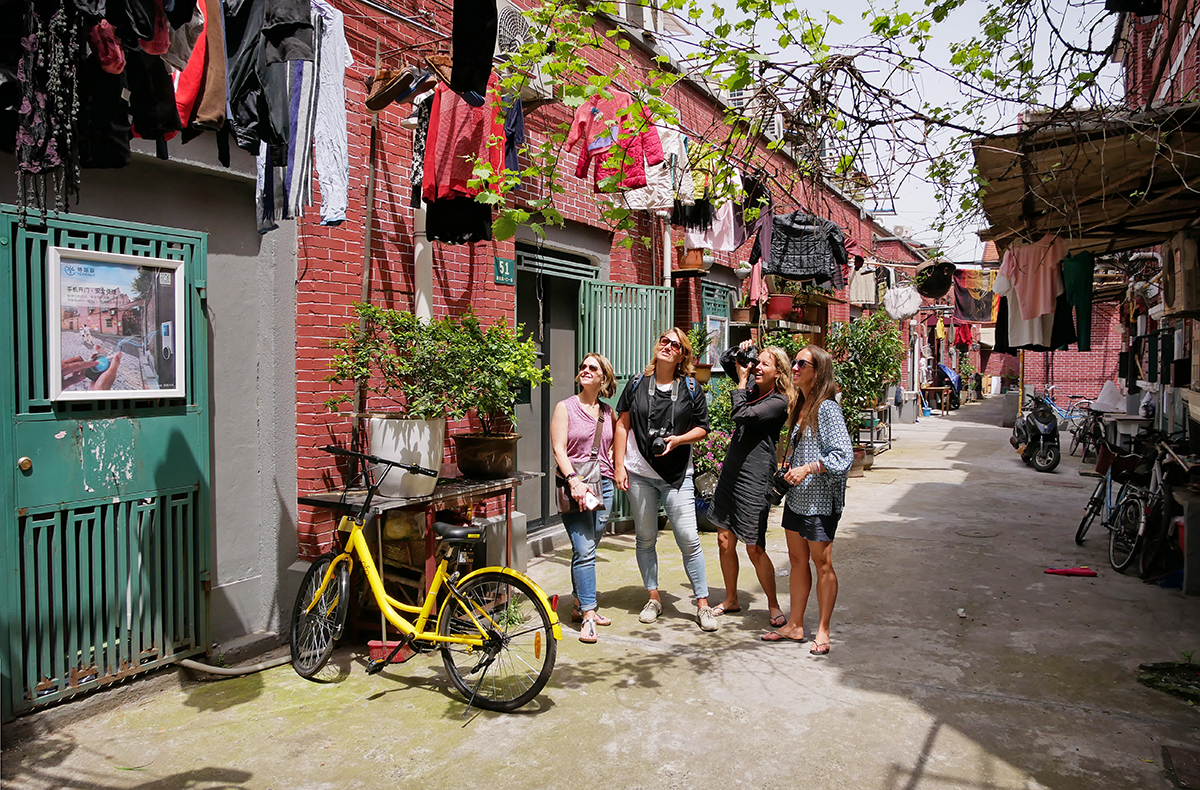
Shanghai is a great place for street photography, an enjoyable activity with a small group.
7 – Lucica (Romania)
“It’s difficult to express my appreciation for everything I learned from you through words…
I start my class with Franc without knowing anything about photography, but after two months of enjoyable time I learned how to make my memories unforgettable.
Franc taught me how to use my camera and made me want to be a better photographer.
Thanks for everything, Franc!”
Night shooting with Nils and his classmate to learn the magic of painting with light.
8 – Nils (Germany)
I wanted to get into photography for a long time but so far have been held back by the cost of a real camera and the unavailability of suitable photo classes. However, this year I decided to make the first step with Franc’s photography class for beginners and it was definitely the right decision.
Not knowing what I was getting into, I was concerned that the photography class would be very theoretical and dry and similar to how engineering classes used to be in college You can imagine how delighted I was when I found out that Franc’s class is quite the opposite. His teaching style is very hands-on and mostly based on experience which makes it easy for someone who is new to the topic to follow and understand.
Franc himself learned most of his photo skill by practicing and many years of professional and personal experience which means that he understands the point of view of a beginner. Of course it is important to understand the basic theoretical foundation of photography and Franc is able to explain the different variables and settings with clear examples and easy concepts. Also part of the class are photo walk sessions in which you and your group go out into the streets of Shanghai to try out all things you’ve learned in class.
These sessions are guided by Franc and he will show you his way of taking pictures but it is also highly encouraged to be a rebel and find your own way. These walks as well as your personal picture taking will give you many ideas and questions which you can bring back to the class room to discuss them with Franc and your group. This way is an open and relaxed exchange of ideas and a fun way to learn a new hobby. Franc is really passionate about photography and if you are interested in this topic, you soon will feel the passion too.
My only complaint is that I wished the class would go on longer since I still have many questions and many things to learn.
I really want the thank you Franc. Your photography class was so much fun and I made cool new friends that are also interested in the topic. I feel like I have learned a lot and now I have the urge to go outside and take pictures whenever possible. Walking through the streets or travelling through China, I often see things which I want to capture in a picture. It is like I have a different view to whats happening around me. Unfortunately I don’t have my camera with me all the time and often the picture looks different than what I had in my mind, but I want to keep on practicing to get better. I really don’t have any complaints about you or the class but I just wish I had more time and ease to explore everything about photography.”
9 – Miranda (Nederland)
“I did Franc’s Essential Photography class. Franc is a wonderfull and kind teacher. He has humor, which is pleasant, especially during the technical part of the course. I’m amazed by his dedication. After the classes are finished, students can still ask questions or share their work to get feedback. We stay in touch to learn more about photography every day. I’m thankfull for being part of this nice class and getting to know Franc and my fellow students. I’m definately going to attend the advanced photography class.”
10 – Laurence (France)
“It was a real pleasure to attend Franc’s classes. I learnt a lot in a short period of time. Franc manages to create a focused yet fun and pleasant atmosphere that makes me want to come back. I definitely recommend!”
11 – Simone (Germany)
Oh Franc…you are THE ONE AND ONLY…I really enjoyed your course…I learned a lot and now I learn to handle my new camera and want to realize all your tips and tricks that I’m prepared for your next course in October”
Which course to choose? Advanced or Essential class?
I am often receiving this question when time comes to enroll to one of my photography program. Here is the answer.
Franc Peret
I am offering 2 different Photography courses: Advanced and Essential and despite the detailed description on my website, it can be difficult to choose.
Essential vs Advanced
To make it simple, the Essential Class is what it is: “Essential”.
Everything you should know, think about and do, to get better pictures, a higher success rate (to capture the moment) and very pleasing result (technically and artistically).
Everyone should consider Essential
This class is the best value for money as everything you are learning there will be immediately useful in any kind of situation you can meet daily in the street, during an event or a trip. It covers essential photography in portrait, landscape, sports, macro, night shooting… analyzing the difficulties in those practice and offering a very efficient and practical “what to do” case by case solution.
It is a down to earth class adapted to both complete beginners and people with experience who knows things here or there but who cannot yet connect everything in a logical understanding and order.
Experimental and conceptual
The Advanced class is something very different.
This program is a series of workshops for you to discover how far you can go with your camera.
Also, more important, this experience will help you to understand that what is happening (what you organize and set) in front of the lens is finally much more important than the camera itself.
Pushing Boundaries
Somehow it teach you how to become a director/art director/orchestra conductor handling an overall project and not simply a photographer trying to grab a picture.
It is more oriented toward personal creativity, using the camera in many unusual ways: very higher shutter speed, very long pose, shooting several shot from same position, post processing for special effects and so on.
Take it all!
Somehow, to get a complete overview about photography, you should take both lessons, but I would say, the essential class is the most useful one if you are a street photographer type of person, somebody who like to shoot people in documentary style, bringing back travel or family pictures, shoot landscape or products…
If you are more into design, painting, graphic work and virtual world, the advanced class will match as soon as you know how and why to set up your camera or choose a lens.
I hope all of this will be helpful ot pick up the right class for you, but if anything is not clear yet, do not hesitate to contact me!
Many amateur photographer think that to achieve a black and white picture they just need to get rid of the color of a regular shot. Nothing could be more wrong than this belief. Here is why…
By Franc Peret
In my teaching, I always say to my students that Black and White pictures are “dangerous”, Which means something potentially going against their progress.
Why?
THE WRONG B&W TRICK
Because many people are using that trick to make their “so so” pictures in color, suddenly look more “artistic” in Black and White, as B&W print is vastly associated, in many people’s mind, as artwork.
Shooting black and white means seeing things that might be not attractive in colors but appealing in shade of grey with lines, shape and structure.High contrast scene are the way to go to start to work in B&W, as the strong shape of the shadows are going to compensate the lack of colors.
And some easily pleased people are enjoying the trick very much, without knowing they are going against their own progress in general photography that way.
Using B&W as a cure to compensate a weak composition in color is not the best way to face the problem, finding the solution and improving framing skills.
By using a Yellow filter in my B&W post processing, I did a double action: brightening up the barrier while darkening the sky a lot. I also reinforced the contrast to give more strength to the shadows in the foreground.The diverse structures (barrier, steps, wall, stadium…) the strong shadow and the presence of the 2 opposite colors (yellow and blue) attracted my B&W vision.
Also, with that misunderstanding in mind, those photographer are certainly not going to learn how to shoot interesting Black and White pictures, as well. This is a dead end for creativity.
FILM TIME
Somehow, Black and White is too attractive.
For many people, B&W looks more “cool” than color.
Street vendors in Winter shot against the light to emphasize the separation between elements and to fill up empty space with shadows. Panasonic GM-5 ISO200 1/320s, 12-32mm f/3.5-f/5.6 @ 13mm f5.6
This is due to the fact that, back to film time, Black & White negative film was the unique post processing accessible to everyone, technically and economically, especially to independent artists.
A laboratory was easily set in the bathroom or the kitchen with few key equipment, accessories and chemicals.
On the B&W shot, human presence becomes more unique and important as the rest of the image is filled with common element, rectilinear structures which are not differentiated by their colors anymore. It is like pure life (a mother with her baby) versus a globally dehumanized environment.Another example where color and B&W are working fine but in a different way. The color shot emphasize the separation of the image in 3 layers surrounding the main subject: the black shadow, the yellow fence and the white building with the blue sky.
This was far to be the case with color film, and back to 1986, I had only one friend, a famous wedding photographer near Paris, who had his professional color lab at home.
It was a huge and very costly installation, needing bunch of preset, test, set up and maintenance to deliver the right result. And, worst of all, the chemical’s smell was constantly allover the place…
Hard light creates sharp shadows, usually a difficult combination for portrait due to too strong contrast, but it suits B&W very well.
Color lab were scaled for commercial use, not for personal expression.
BEING AN ARTIST
Therefore, for decades, many photographers expressed themselves in Black and White as they could afford its treatment and manipulation.
On the color shot, blue is dominant as everything is “paint ” in that color.On the black and white version, lines and patterns with sharp contrast from the tree branches and the palissade are taking other as color is not part of the message anymore.
Exhibiting their printed work, they were able to make the difference compare to amateur by improving a lot the quality of their shot by working precisely in the darkroom, the ancestor of Photoshop.
In Black and white, structure and metallic feel is taking over life. For example, we notice more the wet ground and the straight patterns (doors, broom…). The lady seems to be part of the surrounding (absorbed) like a cosmonaut or a cyborg at the gate of her spaceship.This picture of the old lady sleeping in a garbage container is working very well in color too as red and blue are the only two main dominant colors related to the lady’s occupation (tools and apron). The color in the center of the image reinforce the cold and lifeless feel of her surrounding.
Brightness, darkness, contrast, grain, blurriness, re-framing, cropping, erasing element were all at hand for the artist to get much more dramatic and impressive shots than average Joe.
DIGITAL TIME
Nowadays, with digital pictures, too many photographer are taking it easy and consider B&W as an easy cure to their far to be perfect color shots.
Marion on the bike. The most important common point between B&W and color shot is quality of light. Good lighting means more potential for a good shot.
Instead of working harder and more efficiently on their composition, they prefer to get rid of colors when the diverse elements in their image get too confusing: with too many tints and shape badly mixed together.
Give me five. The alternance of highlight and shadows are reinforced by the B&W treatment. Important is to get the main subject under a good lighting.Shooting against a strong light with a frame filled with reflective surfaces and dark silhouette creates powerful structure which does not need color anymore.
And they wrongly think that the job is done that way.
Somehow, this statement sounds like it is easier to achieve a successful B&W shot than a color one.
Somehow it is true, as you do not need to worry about marrying colors together, but it is not that simple.
All depends on the skill of the photographer.
BACK TO BASIC OF COMPOSITION
Hanging clothes are also great subject for both B&W or color shots.Street Life in Shanghai are offering very nice opportunities to detect B&W subject, such as those reflective windows and electric.lines.
To build an interesting shot, a photographer needs to put elements together with a certain sens of harmony or conflict.
And color is an added value to light, shadow, contrast, shape, lines, patterns and motion.
Happy mom and her kid in before the fence. Recipe is the same for portrait in color or B&W. Best is to use the sun as a kick light and to get the subject standing on a reflective surface to fill up the shadow.Kids behind the fence. I was attracted by 2 common point: 1- the round face of the kid and the round shape of the air conditioner fan on top of him. 2 – His straight and symmetric posture compare to the straight lines (tube, pipe, fence, window, shadows) surrounding him.
If the photographer knows what he is doing, he is going to play a lot with colors to accentuate his subject, his mood or his concept.
A pure amateur without much technique is going to suffer with this overdose of elements and option, and being overwhelmed by it, he might be happy to get rid of colors to reduce his amount of decision making to achieve something going well together.
Playground on grass. Black and White composition needs details with loads of things in focus which imply a rigorous placement of every element in the frame.
This is a reductive approach which is not helping personal progress.
At the opposite, the professional photographer, while switching from color shooting to black and white shooting, might feel at first that something is missing in his usual creative arsenal: colors.
Written text and reflective surface are very interesting subject in B&W as well.Lines, shadows and reflection are very powerful creative tools.
Therefore, he is going to work harder on his composition to compensate the lack of colors with more intense contrast, details, lines, shape, patterns and motion.
SEEING EVERYTHING IN B&W
As you can understand, at this stage, I make it clear that creating a Black and white shot means SEEING black and white in your head and SHOOTING as you imagine it.
This B&W portrait in subway emphasize people connection by holding the same aluminium pole.Silhouette are working very well in B&W creating a cut out effect with very sharp details (hair style).
It means being able to see the scene in front of you not in colors but in shade of grey, from black to white.
With film camera and DSLR, this vision is quit difficult to achieve, as the viewfinder is showing the scene as it is, and lots of experience is needed to be able to predict what will be the B&W result out of the colorful scene you are framing.
Fisherman in Shanghai Century Park. Path way (dam), lake shape and man posture altogether create motion in the shot even nothing much is happening.
According the post processing (filtering), red, yellow, green and blue element in the shot are going to appear completely different (huge luminescence difference) in monochrome.
COMPOSITION TOOLS
Key point in Black and White shooting are still contrast (highlight and shadow), shape, lines, patterns and motion.
First of all, higher contrast scene are helping a lot as they emphasize all those elements, taking over any notion of color.
Motion can be physical movement, another way of creating powerful lines.A surveillance camera is spot on in focus while the pattern in the background provide a feel of space and perspective. People are secondary element under this oppressive structure.
The alternate of highlight and shadow helps to cut out the image, to split the different elements and to create a hierarchy among them.
An old bed spring used as a fence is a great source of patterns.Modern city landscape are filled with lines, shape and loads of interesting element in B&W.
Contrast becomes as powerful as focus point to determinate the main subject and most of the time, it is a very good idea to close down the Aperture to get more depth of field and to grab sharper details in a B&W shot.
Pigeon House in Shanghai Century Park. Some material such as leather, rusted iron and wood are gold mine for textured pictures.
Shape, lines and pattern are the other creative tools that you are looking for in a B&W shots to render a more dramatic (emotional) feel.
Facing a strong sun, the portrait works well in B&W especially with a wool hat which offers lots of texture and details.Under soft light, I still prefer color pictures, with a pastel feel to it. Skin is so beautifully rendered that way.
Motion is not only about physical movement (walking people, running kids, passing by bicycle…), it is also a feel of dynamic you create with pattern (repeated element such as square windows on a building or branches of a tree), swirling shape (such as cloud in the sky) and lines (often present in city or natural landscape).
Shanghai Century Park. Winter landscape are among the best topic for Black and white photography.
Actually, winter is the best season of the year to learn how to shoot in B&W as the nature is lifeless and colorless (full of lines as no leaves on branches) while the lower sun is offering plenty of contrast and very long shadows.
The Panasonic allows me to see the world in B&W with its electronic view finder and I can also switch lenses. Here I mounted my lightest portrait lens: Olympus 45mm f/1.8My favorite B&W shooting companion, the tiny Panasonic GM-5 next to my working tool (Nikon D750).
ELECTRONIC VIEWFINDER
Picnic in Century Park. Depth of field is a welcome addition to most of B&W shot to reinforce texture (mother shirt, grass and trees) an important element of composition.
Thanks to new technology, mirror-less cameras using electronic viewfinders offer the possibility to frame and see any scene in Black and White through the lens.
And this is amazingly valuable to get the shot as it should be in term of framing, composition and setting.
I personally do use different mirror-less cameras such as Nikon1, Panasonic GH4 and Panasonic GM-5.
I love those cameras, as they are compact and their lens line-up is very diverse and of great quality.
It is a very interesting addition to my usual Nikon DSLR System.
Anyway, pictures are telling more than words and I think I had wrote enough here.
To complete the subject, please, get a look at some of my Black and White samples, all fully explained with caption.
This Colorful chalk on blackboard exhibit in Shanghai street looks like Some wishes for 2016 by a local street artist.
By Franc Peret
A real art piece as it is invaluable, nobody can buy it and it is going to be erased within a month…
Actually, those who are living in China know about those black boards present everywhere in traditional areas. Someone from the local community is writing and drawing on it for all their neighbors to remember the basic rules of good social behaviors as well as some advises related to education, health and safety.
It looks dated, in term of communication tool, but it is quit efficient and it should be considered as a real street art form.
This is another Night shooting session in Shanghai, with 6 of my students in the same area as the previous Night Walk. However, each time, it is a different experience due to the personality of the participant, the mood of the moment and the direction we are taking. Another great session with great people.
By Franc Peret
Last but not least, I am often changing my gear.
This time, instead of the Nikon D750 I used for previous session, I picked my 2 smallest cameras: The Nikon 1 V1 (1 inch sensor) and my Panasonic GM5.
The participant to the class: Nathalie, Vivian, Veronique, Rebecca, Alex and Priscilla. Nikon1 V1 ISO200 1/15s and Cine Nikkor 25mm f/1.4 @ f/1.4.
I fixed a Cine Nikkor 25mm f/1.4 (full metal and full manual) on the Nikon and a Lumix 20mm f/1.7 on the GM5.
Getting the phone hanging in space was a way to capture the interesting metallic link holding it in front of the breaking cars in the background. Nikon1 V1 ISO200 1/30s and Cine Nikkor 25mm f/1.4 @ f/1.4.
SMALL SENSOR vs BIG SENSOR
The big advantage of this type of camera (smaller sensors with great lenses) at night is to provide much more depth of field even at maximum Aperture (f/1.4 and f/1.7 in that case).
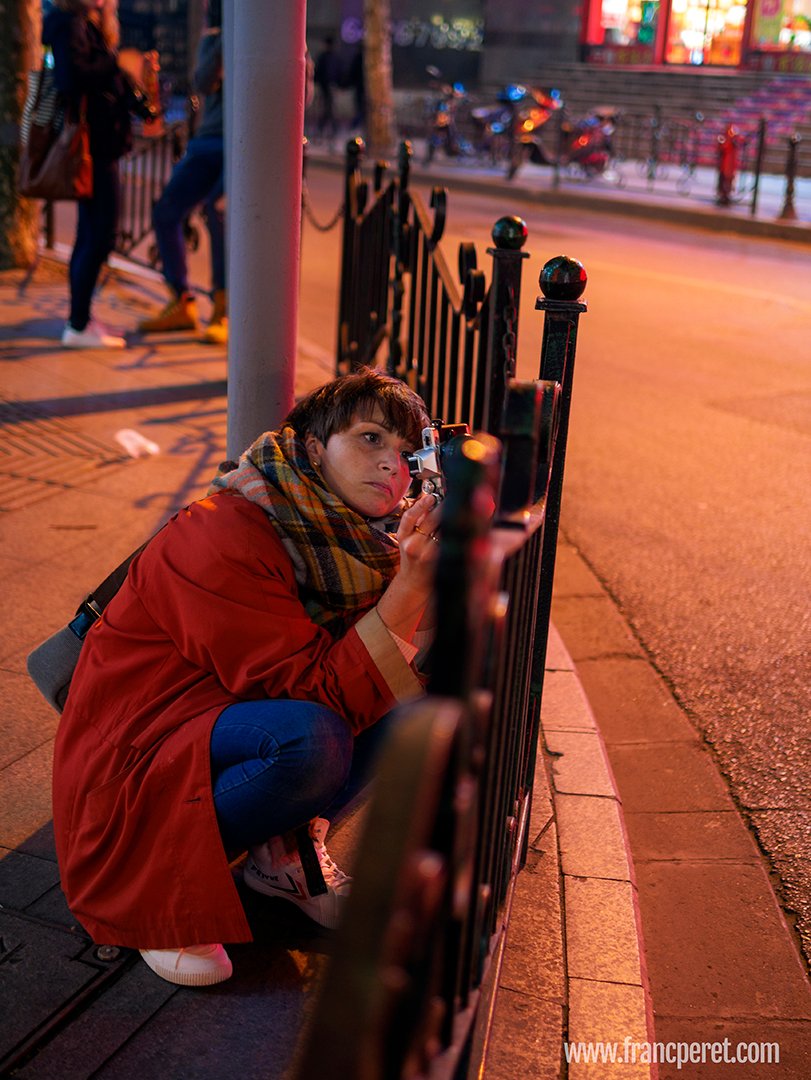
Vivian working to achieve the same effect while struggling to keep her balance. Photography is a physical activity. Nikon1 V1 ISO200 1/8s and Cine Nikkor 25mm f/1.4 @ f/1.4.
Full frame camera are offering less noise, but to get enough things in focus, you can rarely use your lens fully open and being forced to close down the Aperture sometime, you need to increase the ISO to compensate.
To summarize, I would say that Full Frame camera at night are best used with subject at a longer distance, while cropped sensors works very well on close-up shots.
Somehow, APS-C (or DX) Sensors offer a great balance between the 2 options.
HUNTING REFLECTION
Alex collecting light on his face from Sony Showroom display. Nikon1 V1 ISO200 1/50s and Cine Nikkor 25mm f/1.4 @ f/1.4.
Here are some of shots I achieved that Night while walking in the heart of Shanghai, teaching to my students how to find a subject, compose their frame, set the camera according lighting condition and being as stable as possible to not need to increase the ISO.
Alex’s camera at rest. Nikon1 V1 ISO200 1/8s and Cine Nikkor 25mm f/1.4 @ f/1.4.
This is an easy task to achieve in Shanghai, as source of lights are coming from everywhere and our only duty is to fill up the frame with colors, reflective surfaces and bright spots.
Lonely Tour Eiffel in a store. Light source direction are unusual at night bringing some magic to anything. Panasonic GM5 ISO100 1/160s and 20mm f/1.7 @ f/2.5All black, white and red. Waiting to cross the street.Panasonic GM5 ISO200 1/6s and 20mm f/1.7 @ f/2
Most importantly, is to not try to reproduce the kind of shots you usually do daytime.
It would be meaningless as nighttime is offering such a different look and challenge.
Yellow Bike build to last according the Brand name: “Yong jiou” (Use Longtime). Nikon1 V1 ISO100 1/6s and Cine Nikkor 25mm f/1.4 @ f/1.4No smoking. In the taxi bringing me to the meeting point. Nikon1 V1 ISO200 1/25s and Cine Nikkor 25mm f/1.4 @ f/1.4.
Best to be stable is to find something solid to hold your back, your shoulder or even your camera from the position you want to build up your composition.
Luminous landscape. Panasonic GM5 ISO200 1/15s and 20mm f/1.7 @ f/2.Nathalie framing a fire hydrant against the bright city landscape. Nikon1 V1 ISO200 1/15s and Cine Nikkor 25mm f/1.4 @ f/1.4
I usually advice wall, handrail, tree or ground.
Unfortunately, you are not always finding a friendly support for every subject.
Alex in a corner for a great color match. Panasonic GM5 ISO100 1/50s and 20mm f/1.7 @ f/2
In that case, the way you are positioning your body and holding your camera are going to matter even more to not get a blurry shot at low shutter speed.
AN HIDDEN WORLD
One of my favorite night shooting subject in such a developing city is background or details that could be used for the shooting of a 1950’s science fiction movie.
I am not sure you are going to understand this sentence, but lets check out the surrounding shots to get an idea of my feeling and inspiration.
Another inspiring Sci Fi background.Panasonic GM5 ISO200 1/10s and 20mm f/1.7 @ f/2A Science fiction set coming from the past. Panasonic GM5 ISO400 1/5s and 20mm f/1.7 @ f/1.8
In this kind of set or with those type of details I can imagine parts of an abandoned space ship or high tech factory.
Sometime people are telling me that I am having too much imagination…
Space Station. Panasonic GM5 ISO200 1/2s and 12mm f/1.6 @ f/4
I am very clear about that.
Imagination will be NEVER too much.
Back to reality (almost). Panasonic GM5 ISO200 1/25s and 20mm f/1.7 @ f/2
For me, imagination is the only way to never get bored of something I am doing since 1986: professional photography.
An individual space ship? Panasonic GM5 ISO400 1/10s and 20mm f/1.7 @ f/2
And after 15 years shooting film, digital photography helped me to cross all my previous boundaries, and Photoshop, Video, film making, editing are added value to the experience.
And as I often say to my students, I am learning something new about photography and film making, almost everyday.
It is an endless process.
My life will never be long enough to learn as much as I would like to…
If you liked this post, you can discover the previous night shooting session in Shanghai Here