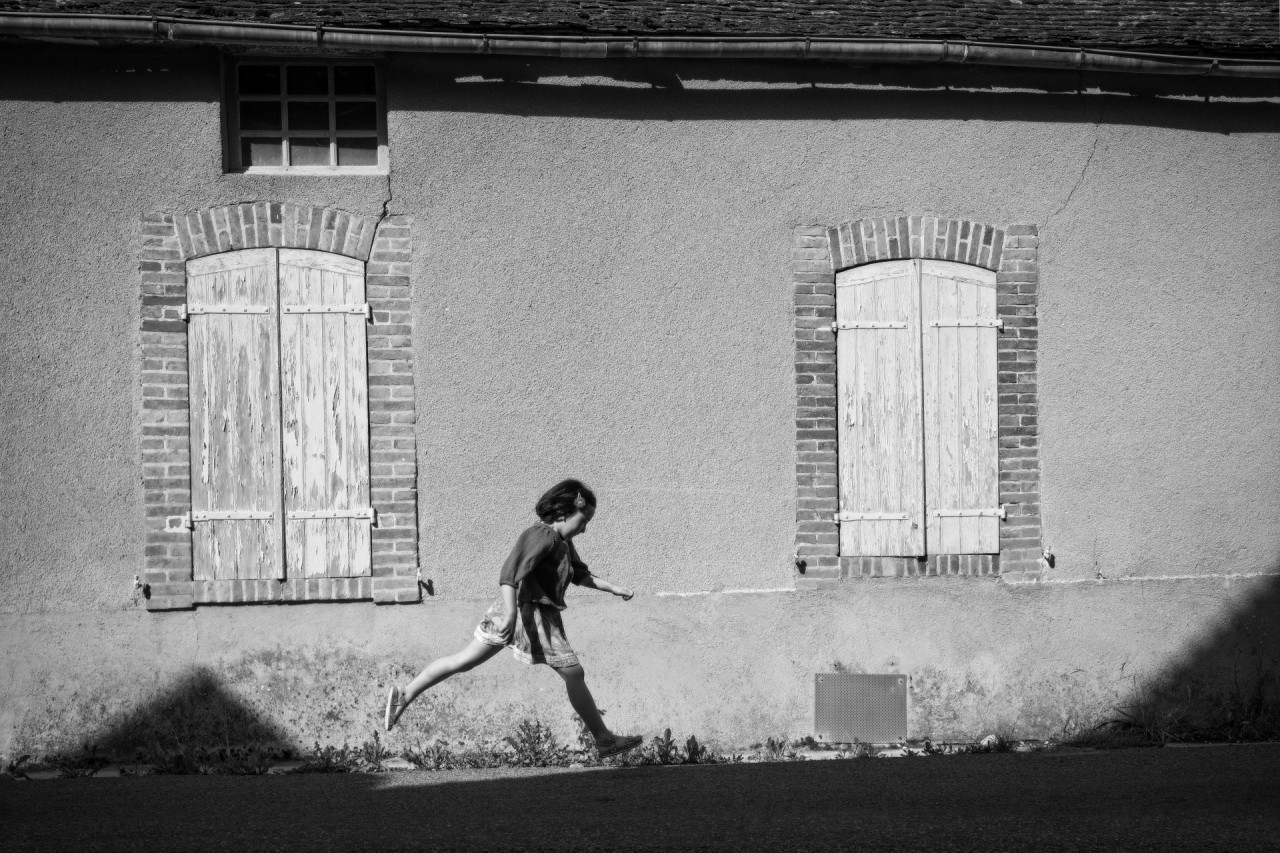
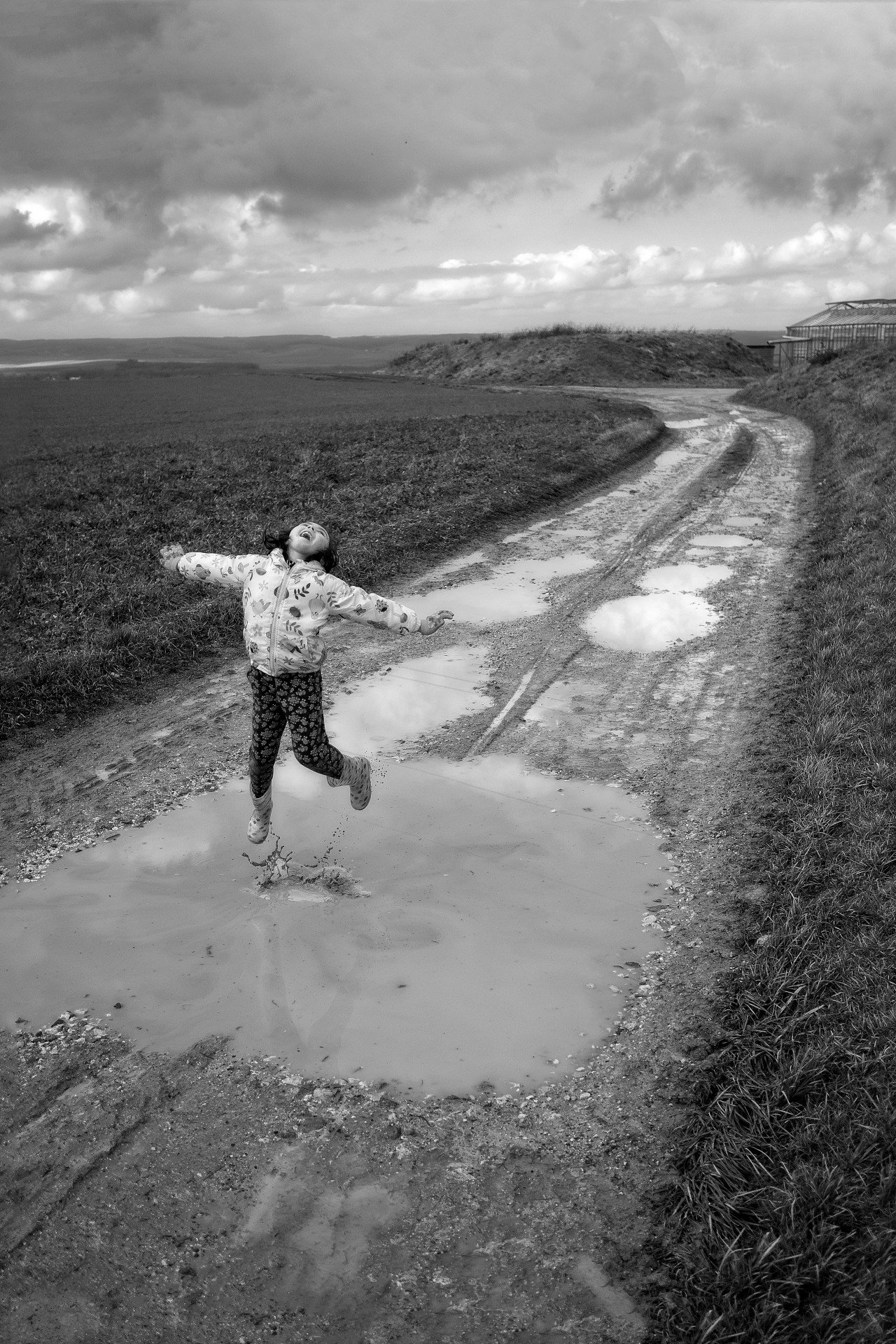
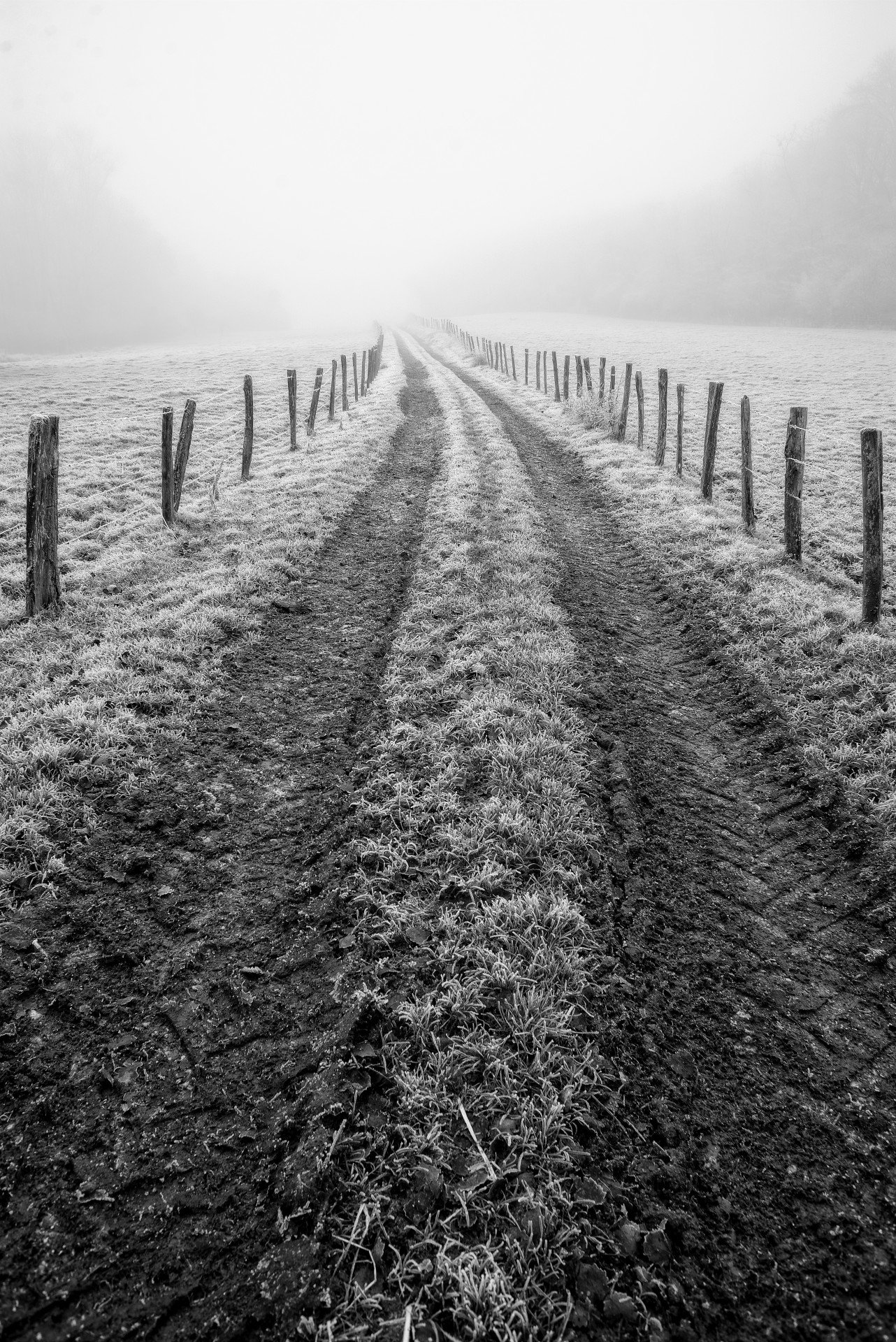
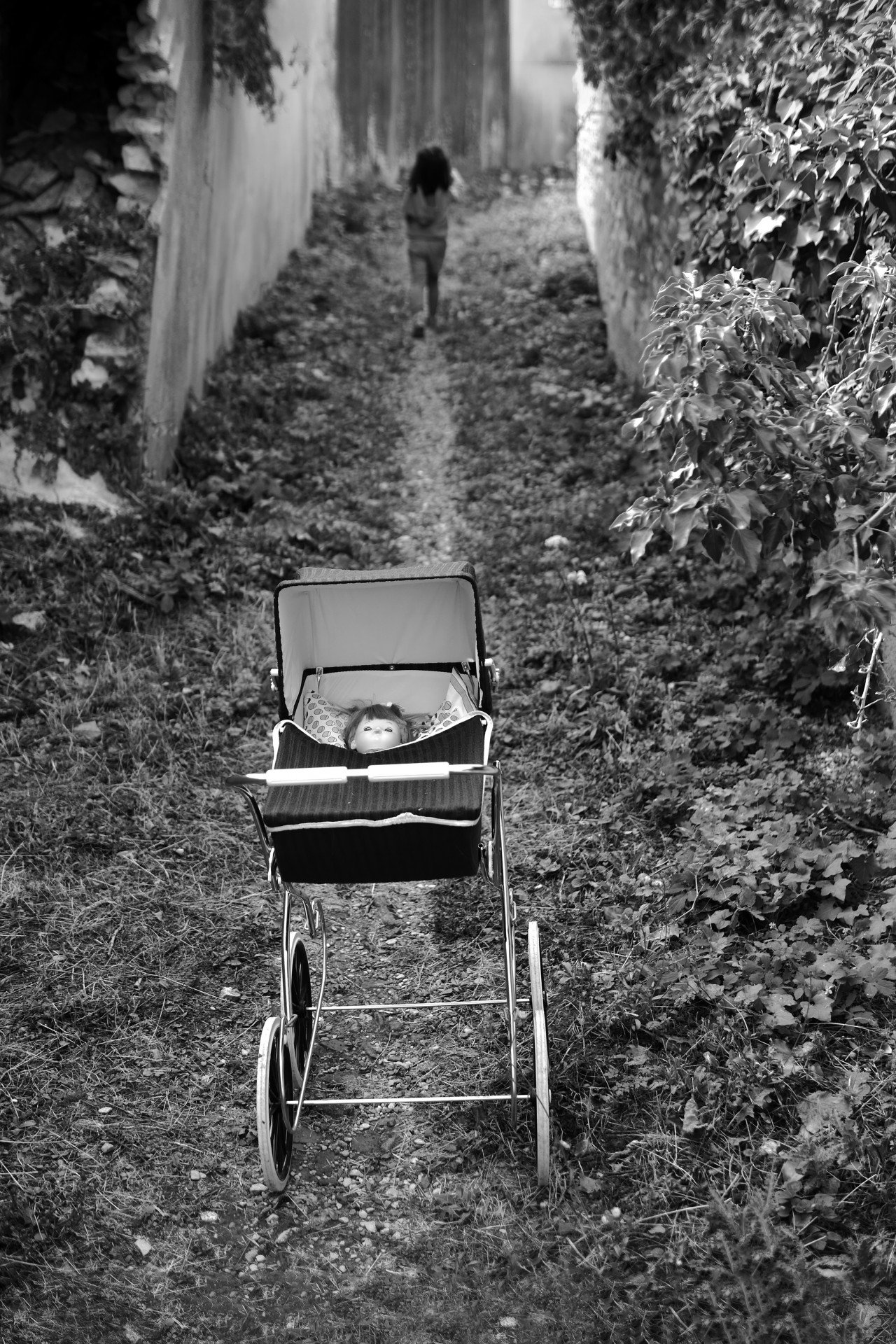
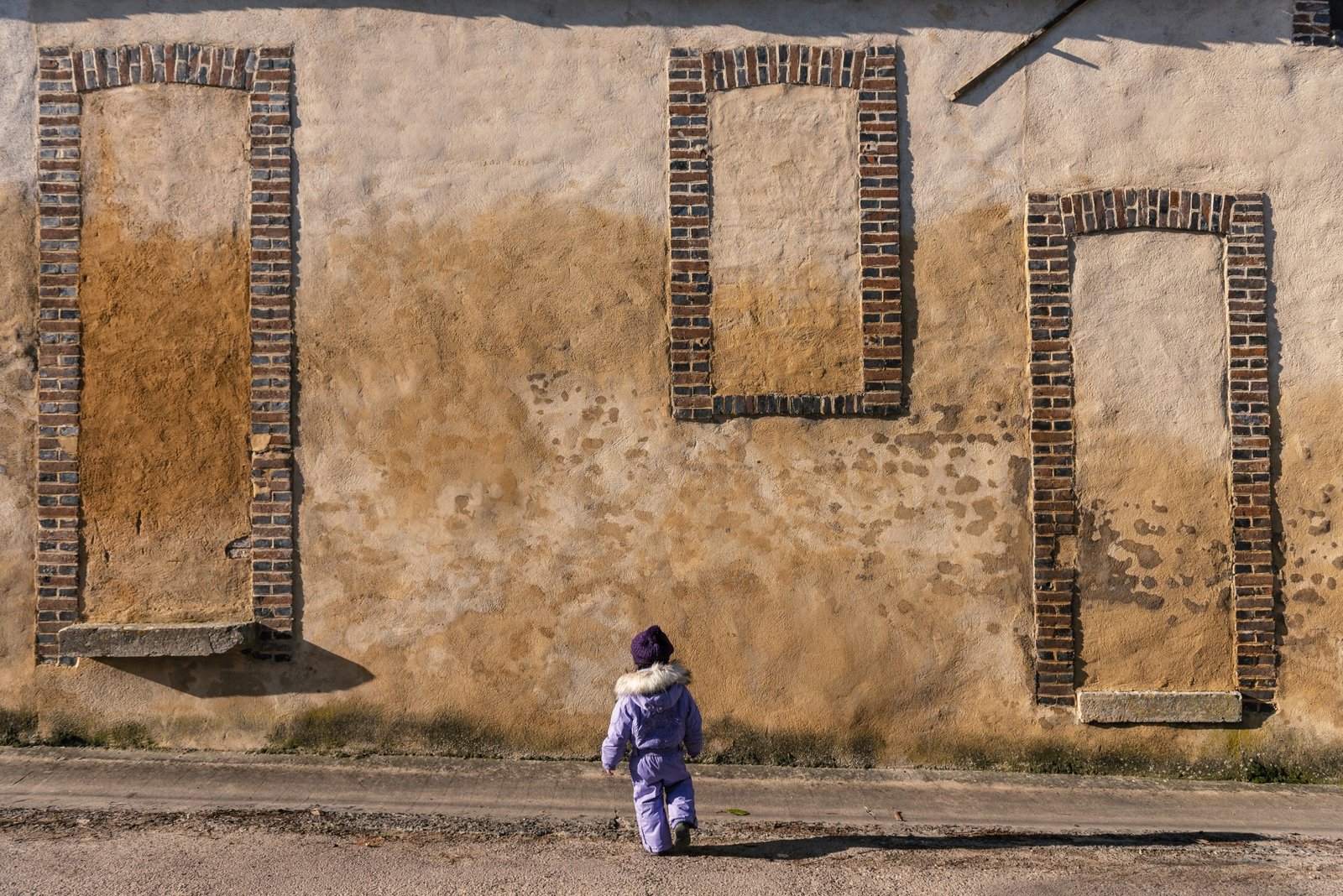
Voici une partie du contenu de mon exposition photographique sur le Patrimoine en 2022 dont le titre est : APOLLINE « Ce que ces yeux ont vu » Eloge du patrimoine rural.
Franc Peret
Apolline est née en 2015, à Shanghai, d’un père français et d’une mère chinoise. Elle aurait pu grandir dans cette mégalopole de 24 millions d’habitants, ultra moderne, hyperactive et cosmopolite, le nouveau centre du monde où j’avais choisi de vivre depuis 11 ans, après 6 ans au Japon et 3 ans à Taiwan.
Journalisme, cinéma, publicité et enseignement, je vivais au rythme des plateaux de tournages, de la création d’images et des reportages passionnants.
Depuis sa naissance, ma carrière m’importe peu.
Père de famille est mon nouveau métier, lui offrir une vie décente, ma priorité.
En Chine, Apolline aurait appris l’Anglais en maternelle, le Chinois en école publique, le Shanghaien dans la rue, le Français à la « maison », 70 m2 perchés au seizième étage, à mi-hauteur d’une tour plantée au milieu d’autres tours qui ferment l’horizon.
Au bruit, à la pollution et à l’incessante agitation, j’ai préféré pour elle le retour aux sources, aux fondamentaux, à l’autre facette de mon existence. En 1965 mes grands-parents en retraite s’étaient installés au Mont Saint Sulpice et depuis tout petit, j’y ai vécu des vacances heureuses.
Et c’est à partir de ce patrimoine familial qu’Apolline profite aujourd’hui d’une saine ruralité, grandissant dans un espace naturel, traditionnel et agricole marqué par les saisons, avec productions locales, commerces de proximité et école communale, tout à échelle humaine, loin du tumulte des villes et de leur cynisme ordinaire.
Car au-delà des monuments, des infrastructures et des paysages hérités de nos si clairvoyants ancêtres, le patrimoine est un lien vivant, un héritage culturel, économique et social qui a façonné un mode de vie et fondé une nation que notre rôle est de transmettre fonctionnelle aux générations futures.
C’est l’objet de cette exposition qui témoigne du bonheur d’une enfant à s’épanouir dans un tel environnement, qu’elle aura eu la chance de connaitre avant qu’il ne disparaisse progressivement.
Alors apprenons leur à savourer cette vie d’ici maintenant, ce patrimoine hérité de nos anciens, pour qu’ils sachent l’aimer, le préserver et le défendre, mieux que nous avons su le faire jusqu’à présent.
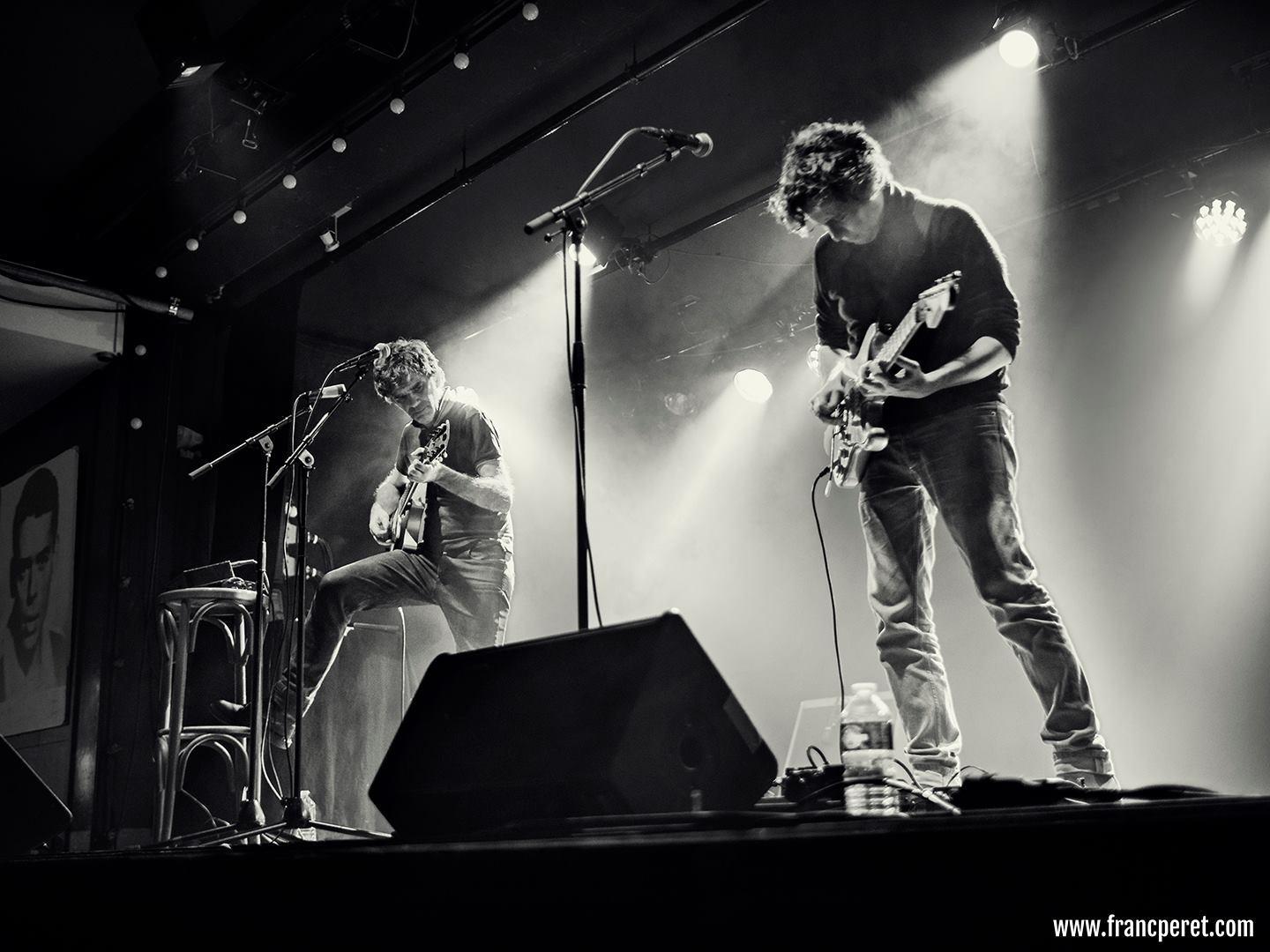
Few shots of a concert I shot some time ago : Fred Poulet in l’Escale (Migennes, Burgundy)
Quelques clichés d’un concert que j’ai photographié il y a quelques temps : Fred Poulet à l’Escale (Migennes, Bourgogne)
Franc Peret
And in Colors Et en couleur…Fred Poulet in B&W Fred Poulet en N&BLighting : Divided Stage ? Eclairage : Scène divisée ?EmotionL’Escale, a tiny but friendly place steeped in History. L’Escale, une salle petite mais conviviale chargée d’histoire.Posture
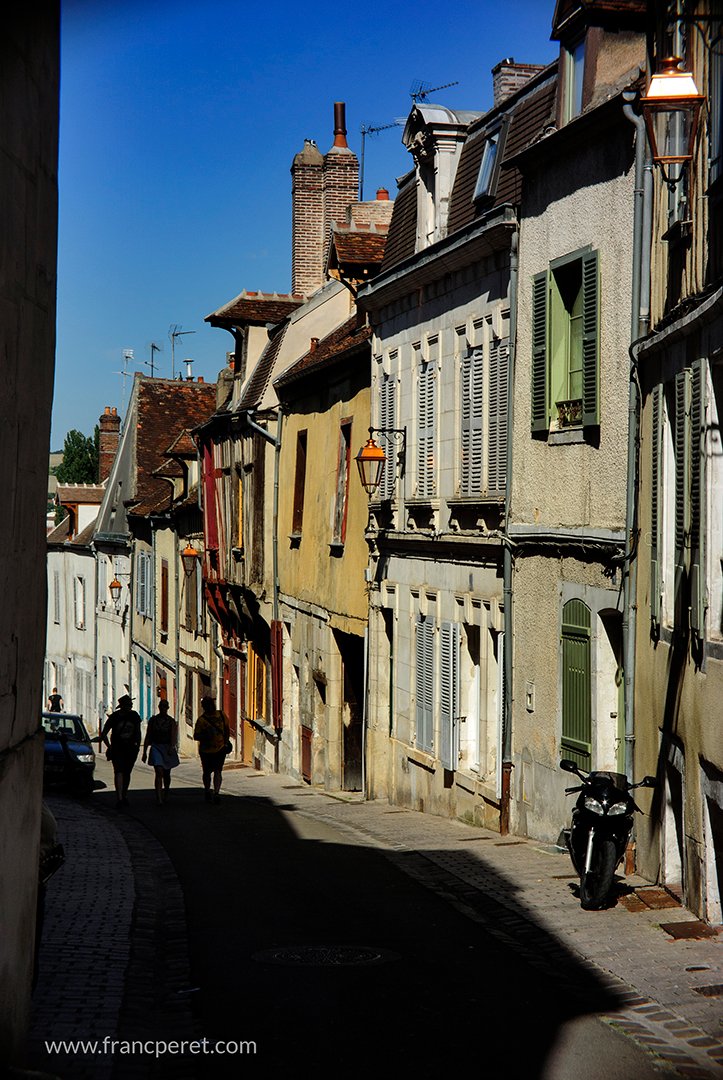
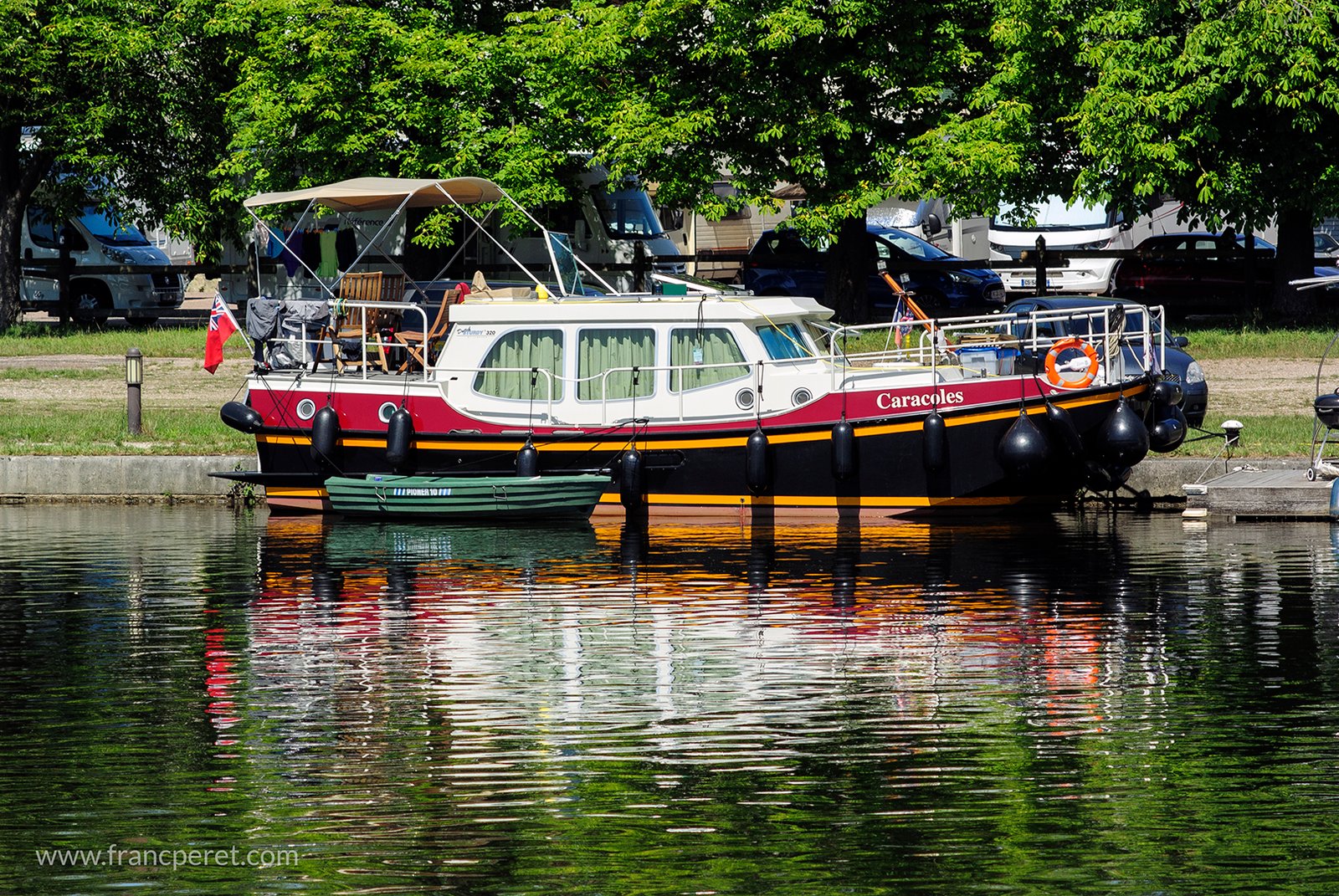
Auxerre (Burgundy) is the biggest city near my home, not far from Paris, but in the middle of the countryside. This place is steeped in history and when the sun lights up the sky, I like to take a photographic walk there…
Photos by Franc Peret (Photography Teacher)
Double click on pictures to get the best quality view.
Auxerre (Bourgogne) est la plus grande ville près de chez moi, pas très loin de Paris, mais en pleine campagne. Cet endroit est imprégné d’histoire et quand le soleil illumine le ciel, j’aime y faire une promenade photographique…
Double cliquez sur les photos pour les apprécier en qualité maximale.
View from Yonne river. Vue de l’Yonne.Going up the hill to city center. Monter pour rejoindre le centreSummer refreshment // rafraichissement d’étéMarina // Port de plaisanceAnother view of Auxerre from Yonne river
Une autre vue d’Auxerre prise de l’Yonne.iron curtain and light strip Rideau de fer et bande de lumièreHairdresser // Boutique de coiffeur.A shutter block.Chinese Shadow in Auxerre, Burgundy, France.Traditionnal bookstoreOld print on the wall and flattened pipe // Vieille inscription et tuyau aplati.Détail de l’Église Saint-PierresilhouettesCathédrale Saint-EtienneTypical cross road // croisement de rues typique
Auxerre’s country-side surrounding.
The traditional place where I am buying my daily milk
La ferme où j’achète mon lait au producteur.fairy barbed wire // barbelés féeriques.Wheat fields in sunset // blé baigné de soleil.Harmony of Old bricks and old wood. Harmonie de vieilles briques et vieux bois.Getting mess in order and colors.
To see more pictures of that series, check my album posted there Flickr
History is on its way in France, with its yellow vest insurrection and I couldn’t let it go without being part of it as a visual witness, due to my photo and video journalist background
By Franc Peret
I left home at 5:30 am took a train and spent my day in Paris, searching for snapshots in the heat of the yellow vest insurrection.
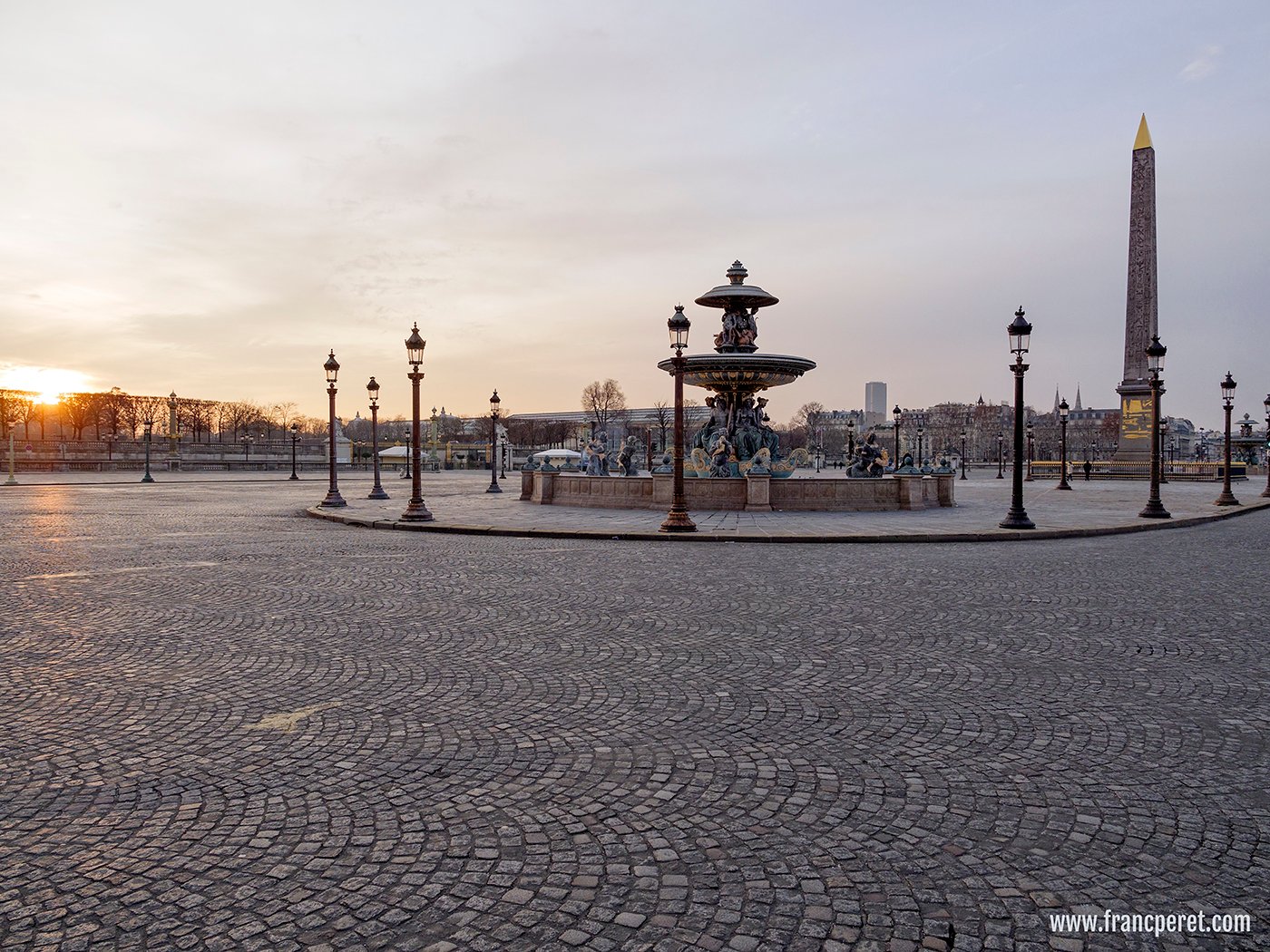
Empty Paris, shut down by police forces, Concorde place.
Subway stations being shut down, I walked for hours from “Paris-Bercy” to “Place de l’Étoile” through “Bastille” (about 11 kms due to many major streets blocked by police).
Police Check point filtering protesters flow.welcome team. More than 8900 police forces were controlling Paris
I saw policemen disguised as protesters, I got 6 safety body search prior to reach “Champs Élysées”.
Police kept my protective goggle and my light gas mask to be sure I will be suffering during their coming assault.
I followed a growing marching group to destination.
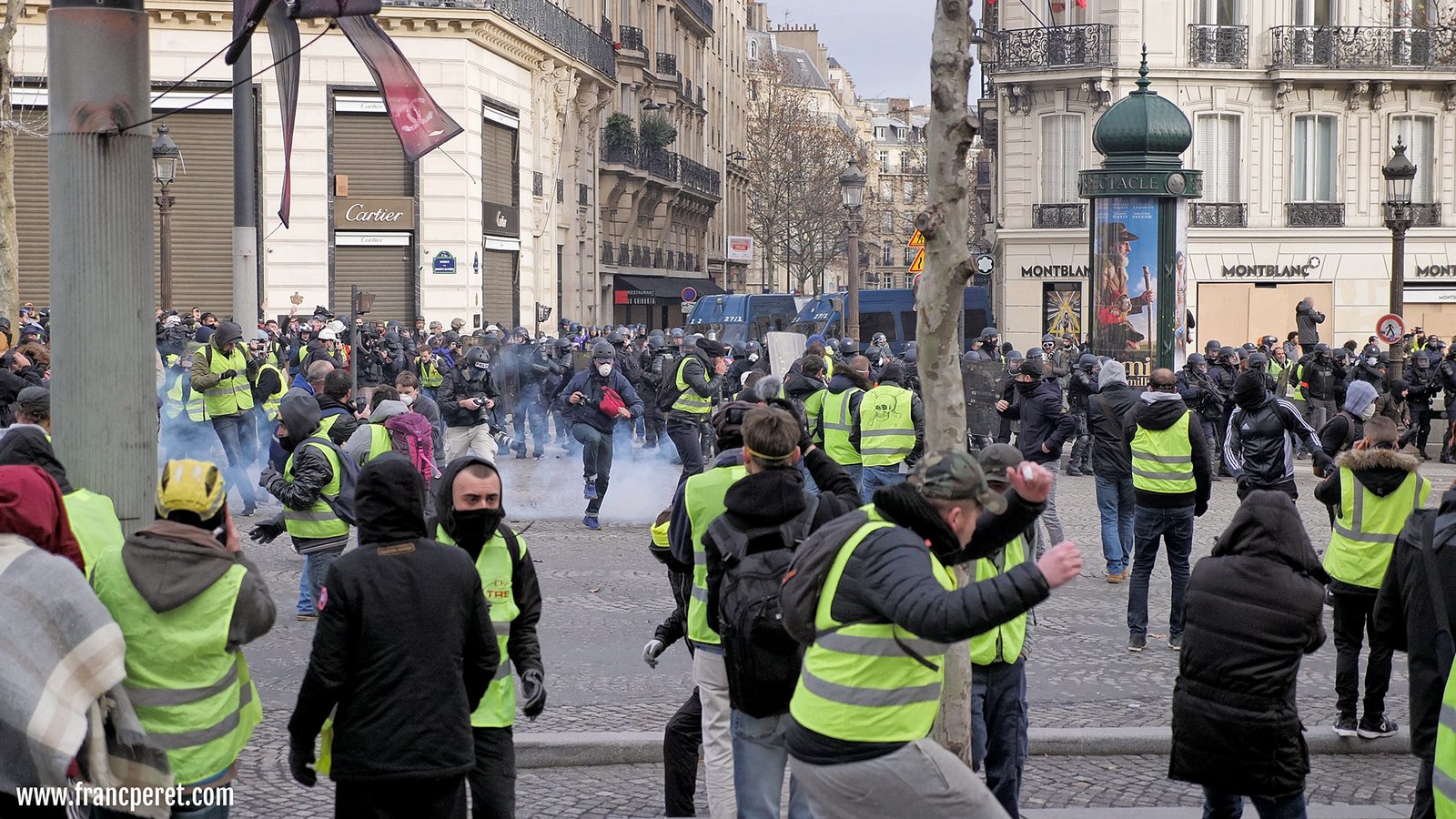
Special unit for special occasion and they are going to charge against people like good old time, stick replacing the saber as they are not officially allowed to kill protester anymore…People are protesting in hope they will not finish their life, sleeping outdoor in winter, on a subway aeration grid at the bottom of luxury brand building.
They were coming from all parts of France, with no leaders and no political party for telling people where to go and what to do.
The leftover countryside crowd filling the luxury avenue of Champs Elysees.
Most of them reacted against the official message from our government: “Don’t go to Paris, it will be too dangerous and our forces will be tough on illegal protesters (they consider us all as illegal anyway)”.
The trap is readyStand by before action
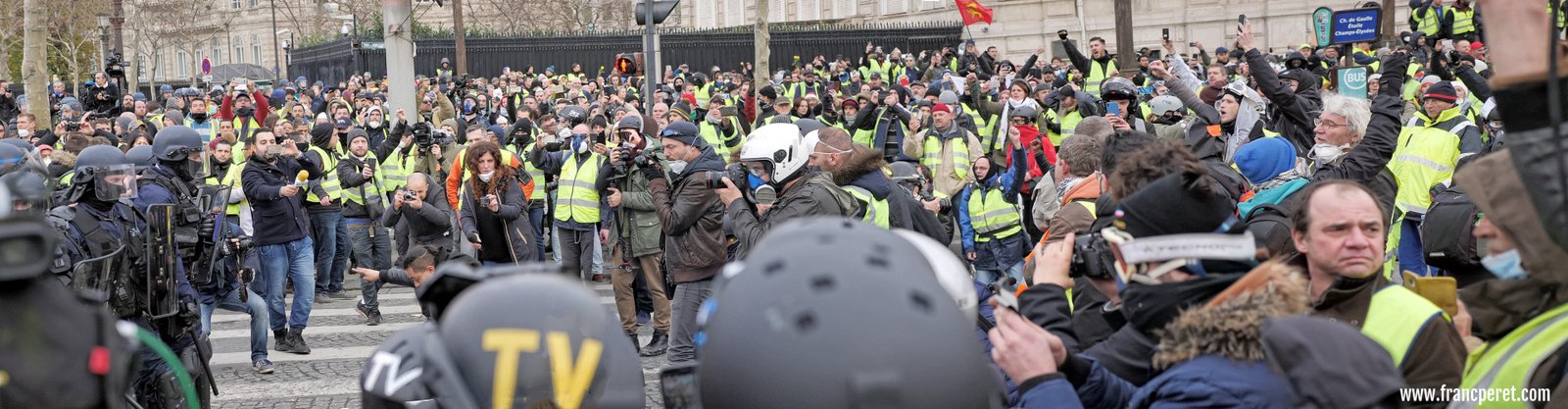
Reaching “Champs Élysées”, men in uniform let us in, but never let us out until mid afternoon.
No trespassingHolding people tight, giving pressure.
Waiting for the rest of the crowd, we exchanged jokes and opinion with very friendly Gendarme (kind of police belonging to Army corp) locking the way to the “Place de l’Étoile”.
Friendly contacts on both side. We are both toys victim of dirty politician game. Why should we fight?
Later on, they protected us against some very aggressive policemen in combat gear.
Police attacks
Locked in a trap, we swallowed tear gas for hours.
Flashball were also heavily used against average people (not the destructive ones) causing hundreds of casualties.More than 10 000 tear gas ammunitions used against the crowd.
Once I threw up and cried a lot.
Singing national anthem in protest to police violence against their people
I became blind and lost my way, until a baton pushed me away in the right direction. I was in the most dangerous location; among men in gear.
Media were allowed to wear heavy protective gear and they couldn’t capture protester’s suffering under police assault.Many protesters chose a posture against violence to emphasize the treatment they undergo..
Few minutes later, I got shot by a flash ball in my right leg.
Sittingkneeling or…
Luckily, it bounced on somebody else before hitting me.
The old lady was bleeding, and I just got a bruise.
Explosion, flashball and gas again…
Protesting nurse, doctors and firemen in strike took care of people in pain like us.
Femen facing Gendarme who smartly set a woman in front of them.Femen participated to the protest despite the freezing temperature.
My leg was steep and I had great difficulties to reach back my train station, hobbling for 2 hours, on the irregular pavement of the Seine river bank.
As they felt let down by government, lots of retired people joined the demonstration and some with a hint of humor.
Back in the train, i realized that I didn’t sit for a single second during the last 10 hours.
A huge number of journalists offer a wide range of pictures and video on the net concerning this series of protestMore importantly, many protesters holding a smart phone were able to record events never shown by official medias.
I was not fully satisfied with my pictures and video, as my lack of protection, experience and updated information plus my protective instinct kept me away from the hottest event.
The most protected areas belong to government.
Thus I went back once again to Paris the following Saturday, with a better understanding of the situation but a worst lighting situation due to a winter style overcast day…
THE END
Information:
– All pictures were shot with Panasonic Lumix GH5 + 12-35 mm f/2.8 + 35-100 mm f/2.8 + Voigtlander 25 mm f/0.95.
– Wide format pictures and panoramic views were extracted from my 4K video footage.
Hugging the national flagWearing the national flagKneeling with the national flag.Ready to collapse barricadeWriting while peeing (team work): : “FUCK MACRON” (Macron is president of France).Dogs were invited to the partySmoking Paris and the crowd.Asking for a new democratic model.Robocop indicating the right wayForce, protesters and crowd.Protected stores against potential riot.Empty Paris for several Saturdays and more to come. Anger is still vivid…
For beginners, a good photography starts with a good subject. While progressing, the quality of light becomes a priority over subject, as any of them can deliver a great result as soon a moody lighting is falling on it.
Franc Peret
In my Essential Photography Classes, I very quickly emphasize the importance of light to my students who solely focus on camera settings and the subject itself.
Commercial photo shoot are done in studio to get the best result out of the subject.TV commercial lighting set up involves much more equipment, time and budget than the shooting part.
I am always repeating this back to basic motto: “without good light, there is no good picture”
The word “Photography” literally (from its Greek origin) means: “painting with light”.
Working with light means also working with shadow and everything in between. Nikon D750 ISO100 1/60s with 24-120 mm f/4 @ 90 mm f/11.My little one looking at the main door bathed by soft natural light shaping her face with a bright line. Lumix GM5 ISO200 1/160s with 45 mm f/1.8 @ f/1.8
It is the reason why, big budget advertisement, movies and important visual production are spending most of the money on lighting equipment, specialist and crew.
It is also the reason why studio shooting are making a difference compare to natural light session (for portrait, products and fashion).
Reflective tools under sunlight. Nikon D750 ISO100 1/1000s with 24 mm f/2 @ f/2Graphical Shanghai airport. Nikon D90 ISO 200 1/60s with 18-140 mmf/3.5-5.6 @ 18 mm f/8
Also, memorable landscape photography are always shot at the best time of the year and the best hours of the day.
ISOgraphy
Of course, with newer camera able to shoot at very high ISO (higher than ISO 6400), this original idea seems outdated.
Meeting new friends. Lumix GM5 ISO1250 1/30s with 25 mm f/1.4 @ f/1.4Marc the gardener in winter light. Lumix GM5 ISO400 1/15s with 25 mm f/1.4 @ f/1.4
And some geeks are spending their time to challenge their vision and their equipment capacity by shooting subjects in “no light” situation such as a jumping black dog in a tunnel at night.
Apolline, her mother and a stray cat. Lumix GM5 ISO100 1/640s with 25 mm f/1.4 @ f/2Summer in France. Lumix GM5 ISO100 1/160s with 20 mm f/1.7 @ f/4
With this search of camera efficiency in low light, subject is not important anymore, only pixel peeping and noise hunting on screen seems to bring satisfaction.
Cinemascope framing for this outdoor portrait: During a sunny day, keeping the subject face under shadow deliver a softer and more pleasing look. Nikon D750 ISO100 1/640s with 85 mm f/1.4 @ f/1.4
However, this kind of practice is not related to photography anymore and I am calling it “ISOgraphy”.
Light is all you need
Therefore, whatever camera you are using, a better lighting will always bring the best improvement in your photography.
An old bed frame became a art piece in my garage, before It goes away in a garbage truck. Nikon D750 ISO140 1/160s with 24-120 mm f/4 @ 92 mm f/5A plastic bottle on a table in my home.Thanks to the light, anything can become attractive. Lumix G85 ISO 200 (to preseve details) 1/8s (G85 has a great internal stabilizer) with 100-300 mm f/4-5.6 @ 125mm f/9 (to get enough depth of field)
I am so used to search for light (or building up lighting for film making and studio work) that my emotional response to any subject (even my little daughter) is linked to the quality of light falling on them.
My little one is cute, and even cuter under great lighting, her eyes turned to the sky. Nikon D750 ISO100 1/320s with 90 mm f/2.8 @ f/2.8
Somehow, anything under good lighting is a subject to me and my feeling and creativity is building up the shot.
Quality of light?
When I am speaking about lighting, there is sometime a misunderstanding among my students.
While I am considering quality, they are considering brightness only.
Blowing dandelion seeds… Mid day under blue sky is not offering the best lighting, better to avoid strong shadows on face by choosing your point of view according sun’s position. Nikon D5500 ISO100 1/3200s with 50 mm f/1.8 @ f/2
A good quality of light is shaping the subject (3D feel), bringing a mood (hard or soft), displaying vivid or pastel colors, offering a strong B&W type of contrast or a smooth transition between bright and dark area.
Vintage Suitcase in market. Direct sunlight emphasize colors. details and texture. Nikon D750 ISO200 1/125s with 24-120 mm f/4 @ f/11On action shot, best is to wait for your subject to cross the light you had detected. Nikon D5500 ISO400 1/1000s with 18-140 mm f/5.6 @ 140 mm f/5.6
As soon as you are starting to be sensitive to light, it is a never ending experience as it is spreading such a wide panel of beauty and there is nothing more enjoyable in life than to see beauty everyday.
Hard light with sharp shadows under winter sunlight. Nikon D750 ISO100 1/3200s with 85 mm f/1.4 @ f/1.8
No need to be trained to find good lighting, it can be anywhere, anytime (for close up shots) and you just need to open your eyes and to concentrate on the way light is falling on things and people around you.
And whatever is bath under a great light will become your subject…
When you are used to see a landscape, it changes drastically according the sky scenario. Nikon D5500 ISO100 1/2000s with 18-140 mm f/3.5-5.6 @ 18 mm f/5.6Even in a darker area, you need different sources of light for shaping the scenery. Lumix GM5 ISO400 1/25s with 20 mm f/1.7 @ f/2.8
Spring is here, white stork going back home. Picture Shot with Panasonic G85 + Lumix 100-300 mm f/4-f/5.6 lens.
By Franc Peret
Living in Burgundy in France for a while after so many years in China, getting back to nature and wildlife environment is a blessing.
I am always carrying a camera with me to record whatever happens in the countryside.
I am used to driving on a very small road and I spotted an area where migrating birds were used to take a rest.
Full Frame was not the best tool for this shot
That day I was carrying my Nikon D750 and an old 80-200 mm f/2.8 zoom, but the reach was not long enough and anytime I tried to get closer to the bird, they were flying away, in the wrong direction from my point of view.
At home, I am having a 300 mm Nikon lens, but according to my initial shots, I knew it would not be long enough.
M43 for wildlife
The next day, I came back with my Panasonic G85 and my longest lens.
Panasonic or Olympus are M43 type camera and with their smaller sensor (compare to APS-C or Full Frame) actually “crop” the lens internally by 2 compare to Full frame.
Thus, a 100 – 300 mm M43 zoom lens delivers an image which is equivalent to a 200 – 600 mm FF zoom lens.
This is a big advantage for wildlife photography as you can be 2 times further away from your subject + the lens is at least 2 times lighter (less tiring without monopod) than its Full Frame equivalent.
Another advantage is the fact that @ f/4, an M43 sensor delivers the equivalent depth of field @ f/8 on an FF sensor.
Therefore, I am using a lighter (also much cheaper, and surprisingly good) lens, with a long reach and plenty of depth of field.
Last but not least, my Panasonic G85 combines both stabilizations on the sensor and the lens to allow the use of slower shutter speed.
This is a great feature if you are shooting something steady.
However, here, as the birds are flapping, I have to shoot at around 1/500s – 1/1000s shutter speed.
Here are my settings:
– Aperture priority mode
– Continuous focus – ISO 100: I should put ISO 200 (which the base ISO on this camera) but I was shooting something steady just before this one and I had no time to switch.
Spotting the stork
Higher ISO would give me a little bit more speed or allow me to close down a bit more the Aperture for more sharpness and less motion blur. – Aperture f/5.6: Zoom was at 276 mm and its max aperture at this range is f/5. It is very important on such a zoom lens to never zoom in completely as image get less sharp at the longer end of the zoom.
Also better to never work at its max Aperture. Closing a little bit will always deliver a sharper image. – Resulting Shutter speed: 1/640s. 1/1000s would have been better and ISO200 would have help on this.
Still, that speed was ok. Actually bigger the bird, less shutter speed you need as they are flapping at a slower frequency than smaller birds. – Exposure correction: +0.7.
Another great feature of the M43 camera is their electronic viewfinder with histogram constantly visible in it.
Thus, on this Panasonic G85, I can immediately correct under or overexposure by turning a wheel under my thumb without pressing any button. This is immediate and very useful when “magic finger” is not possible (like in this case).
As I am shooting against the sky, close to the source fo light, I had to force my camera to shoot a brighter image to not get the bird as a silhouette. – Post processing: Some people like (and promote the idea) to correct this kind of exposure compensation in post processing (by pushing brightness in shadows), but M43 sensors have their limit (weakness) and this is one of them.
Correcting too much in post create lots of noise.
As I am “old school” I am used to set my camera at the exact right exposure while shooting as with slides, they were no way to correct mistakes later on.
Winter is the perfect season to shoot trees against the sky, as a graphical and structural silhouette. You just need to find the right subject and the right setting.
By Franc Peret
This picture was shot in Burgundy, at the end of the day with a Sony A7M2 + adapter + 25 years old Nikon AIS 20 mm f/2.8 (Manual focus).
As usual in outdoor shots, I set my camera in Aperture priority mode and pointed it toward the subject without any exposure compensation (+/- @ 0).
Note:
Often I am having questions about sunset shot settings…
Answer: Just point and shoot and deal with the foreground as a silhouette.
1 – COMPOSITION
The idea was to fill up the frame with the branches net complexity and pattern of those trees while getting the sun partially hidden behind one of them. I adjusted my position accordingly to be at the right distance to get the complete scene and avoiding disturbing elements.
2 – CAMERA SET UP – ISO 100:
Best quality and facing the sun with the right exposure of the sky, shutter speed is always fast enough.
– Aperture: f/8.
I a closing the aperture a lot, even I do not need that much depth of field for 3 reasons: 1 – interesting trees are on the same line (same distance from me). 2 – I am using a very wide lens and wider the lens, deeper is the depth of field by default. 3 – I am far from the trees (about 20 meters) and focusing away already deliver more depth of field. Somehow, at f/4 I would have enough DOF.
However, I closed down much more my aperture to get the best sharpness possible on the complete frame (corner to corner) out of my lens and this happens around f/8 or f/11 (for that generation of lenses).
More modern lenses are able to deliver full-frame sharpness earlier, but diffraction tends to come earlier too.
Never take the risk, shot this type of picture with a different aperture (f/5.6 – f/8 – f/11.) if you are not sure of the best one on the field.
– Related shutter speed: 1/160s.
As soon as there is no wind and you are stable, 1/30s would have been enough if the sun was lower because nothing is moving and I am using a wide lens (which tends less transmitting my potential move to the picture).
Same topic, three ways of shooting it. Pictures, settings, and choices explained.
By Franc Peret
I am not sure my little one, Apolline, will keep those moments in her inner memories, but pictures should help…
All shot with Nikon D750 and Nikon 24-70 mm f/2.8
Shouting Apolline
1 – Shouting Apolline (against heavy clouds ready to pour):
– Zoom lens position 38 mm = Semi-wide shot to integrate the subject in her environment but keeping the possibility to get a shallower depth of field (wider the lens more depth of field you get).
– ISO 100 = Best quality and no need to increase as light are great.
– Aperture: f/2.8 = Treated as a portrait to get a shallow depth of field,
– Resulting Shutter speed (as I am working on Aperture priority mode) = 1/1250s
Feet in Water
2 – Feet in the water (cut out the rest of the world)
– Zoom lens position 24 mm = Wide shot to integrate the subject in her environment.
– ISO 100 = Best quality and no need to increase as light are great.
– Aperture: f/5.6 = Treated as a landscape shot to get a deep depth of field, as my girl is too small and too far away to be dealt as a portrait. And the location is more important here to tell the story: wet and isolated, cut out from the rest of the world.
– Resulting Shutter speed (as I am working on Aperture priority mode) = 1/350s (I could set up at f/8 but as I never know if Apolline is going to move, I preferred to play it safe. At f/8 shutter speed would be around 1/160s, sufficient if she is keeping steady.)
Under the sun
3 – Under the sun (between rain)
– Zoom lens position 29 mm = Wide shot to integrate the subject in her environment.
– ISO 100 = Best quality and no need to increase as light are great.
– Aperture: f/2.8 = Treated as a portrait to get a shallow depth of field,
– Resulting Shutter speed (as I am working on Aperture priority mode) = 1/1600s (faster than the first shot as there is more light from the sun).
This is the first music video ever done in Bretagne (Brittany) with a French singer (Dantes), singing his own song in Chinese.
By Franc Peret
Singer: Dantes 戴亮
Song: J’aime la Bretagne (I love Brittany) 我爱布列塔尼 – WO AI BULIETANI.
Music: Inophis
Video Production: Franc Peret (Directing, shooting, Editing)
Camera: JVC LS-300 + Panasonic G85 + Panasonic GH4. Shot on 4K with Lumix and Voigtlander (17.5 mm f/0.95 + 25 mm f/0.95) lenses.
Edited by Premiere CC.
Shot in May 2016 and edited in June/July 2016.
School BoatBird’s IslandBretagne TraditionDantes and Dancing troupHarborInophis and DantesWild flowersTimelapsFishermen harborLively traditionSailing
I am used to divide my Essential Photography course in three steps. First, providing essential technical knowledge. Second, explaining essential composition rules. Last but not least, developing student’s conceptual mind. Here is how it works. By Franc Peret
Taking successful pictures is both a simple task and a complicated one.
Simple, because the process involved is almost always the same and quit easy to explain and remember, step by step:
1 – Set the right exposure
2 – Focus on the subject.
3 – Be ready to grab the right moment (positioning or facial expression for example)
4 – Concentrate on your personal creative decision in term of framing, assembling elements (composition), and depth of field.
“Yammi” (Lumix G85 ISO 100 1/100s + 14-140 mm f/3.5-5.6 @ 17 mm f/4.5) Being patient and steady while waiting for the right moment to shoot help to become discreet and out of sight of the subject, even you are next to her.“Ice on lips” (Lumix G85 ISO 400 1/40s + 25mm f/1.4 @ f/1.4) Once the essential set up of the camera is done right, most important is to not miss the moment!
Not that simple
The fact that you often have to solve those 4 steps in less than a second is the complicated part of photography.
Getting the picture right, as often as possible, is possible with training…
More you are going to shoot, better the chance to make the right decision on time.
“Reflective street” (Lumix G85 ISO 100 1/80s -0.7 + 14-140 mm f/3.5-5.6 @ 14 mm f/8) Searching for interesting lighting and reflective surface is a good start to get out of routine.“Square everywhere” (Nikon D750 ISO 800 1/180s + 24-120 mm f/4 @ 120 mm f/4.8) Step by step you should switch from funny street snapshot to more personal subject and sophisticated composition
Developing a vision
Once you are used to get good results, you have to challenge yourself a little more to add meanings, drama, sparks or personality to your shots.
How to get this?
While pressing the shutter button, you should already get a clear concept in mind, a vision or a directive line to be able to bring together a meaningful series of shots to tell a complete story (journalistic approach) or to express a specific mood (“artistic” approach).
“Quiet Butterfly” (Lumix G85 ISO 200 1/400s + 14-140 mm f/3.5-5.6 @ 140 mm f/5.6) … While others needs quicker reaction before they are gone…“Lion Cloud”. (Nikon D750 ISO 100 1/80s +28 mm f/3.5 @ f/8) Some subjects allow several minutes to be detected and shot…
Fine tuning
This conceptual mind will also, later on, help you to process your image on computer in the right direction , the one you had initially chosen.
“Followed by her shadow” (Lumix G85 ISO 100 1/200s + 14-140 mm f/3.5-5.6 @ 14 mm f/6.7) Under such a hard source of light, he choice was obvious here, composing the shot with the subject and her shadow for a more 3D visual.“Like a mirror” (Lumix G85 ISO 100 1/200s + 14-140 mm f/3.5-5.6 @ 30 mm f/5.6) My little girl is already a little lady, looking at herself in any reflective surface. I was ready for this one!
Some camera brand (such as Olympus or Fujifilm), with great color science, are better than others to delivery very satisfying results out of the box (jpg file), but most of the time, you will be able to improve the result by working on raw files.
All depends on the final use of the picture, such as quick share on social network (jpg are enough) or print for exhibition (better to go raw).
“Electric Birds 2” (Lumix G85 ISO 200 1/1320s + 14-140 mm f/3.5-5.6 @ 14 mm f/6.7). This approach brings in more options and feed imagination but also challenge the original concept behind any creative choice. It is important to never go “too far” and the limit is a personal choice.“Electric Birds” (Lumix G85 ISO 200 1/160s + 14-140 mm f/3.5-5.6 @ 102 mm f/6.3). The exact same subject can be shot with so many different point of view and post treatment, such as vintage look or dramatic B&W.
No faking here!
“Electric Birds 3” (Lumix G85 ISO 200 1/400s + 14-140 mm f/3.5-5.6 @ 140 mm f/6.3) Later in the day, when the sky is all blue and the source of light is not behind the subject anymore, best is to keep it in color.
The aim of Post production (“Photoshoping”) is indispensable to extract the optimum “juice” out of your work:
To get back the details you had seen with your eyes that seems gone on the jpg, to reproduce the right colors, to emphasize some parts of the shot or to improve the visibility of important elements by fine tuning the exposure of your raw image.
Post processing extra value
Of course, processing on computer is time consuming, and a potential painful experience for novices, but it is a very useful way to progress and to keep progressing forever.
Processing the image is a way to think of and judge what you had done with each subject, to discover some mistakes or imprecision, some stuff you should had done better or different to get a better result or more options out of the box.
“Cat rest” (Lumix G85 ISO 200 1/1500s + 14-140 mm f/3.5-5.6 @ 177 mm f/6.3) When, the light is great and an interesting subject is there waiting for you to shoot, there is not much things to think about prior to press the trigger.
Lasting passion
It also helps to emphasize a conceptual approach of photography, the best way to never get bored of it.
I am shooting for a living since 1986 and I am still not tired of it.
“Pollen Hunt” (Lumix GM5 ISO200 1/1600s + 150mm f/2.8 @ f/4) Lens choice matters on some specific subject needing both speed and short minimal focus distance.“From the Past” (Lumix G85 ISO 100 1/800s + 14-140 mm f/3.5-5.6 @ 140 mm f/8) Longer lenses compress the perspective, extract details from the environment and keep lines straights.
More I know about photography, more I am excited about it, as I can measure the progress I still have to do to reach fulfillment.
Visual Samples
To illustrate my words, find here a series of personal shots (no job assignment here) with detailed captions on the three parts: essential settings, composition choices and conceptualization.
” Too young for her first ride” (Lumix G85 ISO 200 1/1000s + 14-140 mm f/3.5-5.6 @ 21 mm f/5.6) For most of the lively shots of kids, it is important to quickly find a point of view with the less disturbing background to keep viewer attention to the main action.“Blue Crown″ (Lumix G85 ISO 200 1/1640s + 14-140 mm f/3.5-5.6 @ 24 mm f/5.6) Color combination is a basic of composition to associate a subject to an interesting background.
I hope that all of this will be useful to my readers.
If you are having questions or if you are in need of explanation, do not hesitate to drop me an email!
“Ice on lips” (Lumix G85 ISO 400 1/40s + 25mm f/1.4 @ f/1.4) Once the essential set up of the camera is done right, most important is to not miss the moment!“Lion Cloud”. (Nikon D750 ISO 100 1/80s +28 mm f/3.5 @ f/8) Some subjects allow several minutes to be detected and shot…“Followed by her shadow” (Lumix G85 ISO 100 1/200s + 14-140 mm f/3.5-5.6 @ 14 mm f/6.7) Under such a hard source of light, he choice was obvious here, composing the shot with the subject and her shadow for a more 3D visual.“Electric Birds 2” (Lumix G85 ISO 200 1/1320s + 14-140 mm f/3.5-5.6 @ 14 mm f/6.7). This approach brings in more options and feed imagination but also challenge the original concept behind any creative choice. It is important to never go “too far” and the limit is a personal choice.“Electric Birds” (Lumix G85 ISO 200 1/160s + 14-140 mm f/3.5-5.6 @ 102 mm f/6.3). The exact same subject can be shot with so many different point of view and post treatment, such as vintage look or dramatic B&W.“From the Past” (Lumix G85 ISO 100 1/800s + 14-140 mm f/3.5-5.6 @ 140 mm f/8) Longer lenses compress the perspective, extract details from the environment and keep lines straights.“Reflective street” (Lumix G85 ISO 100 1/80s -0.7 + 14-140 mm f/3.5-5.6 @ 14 mm f/8) Searching for interesting lighting and reflective surface is a good start to get out of routine.