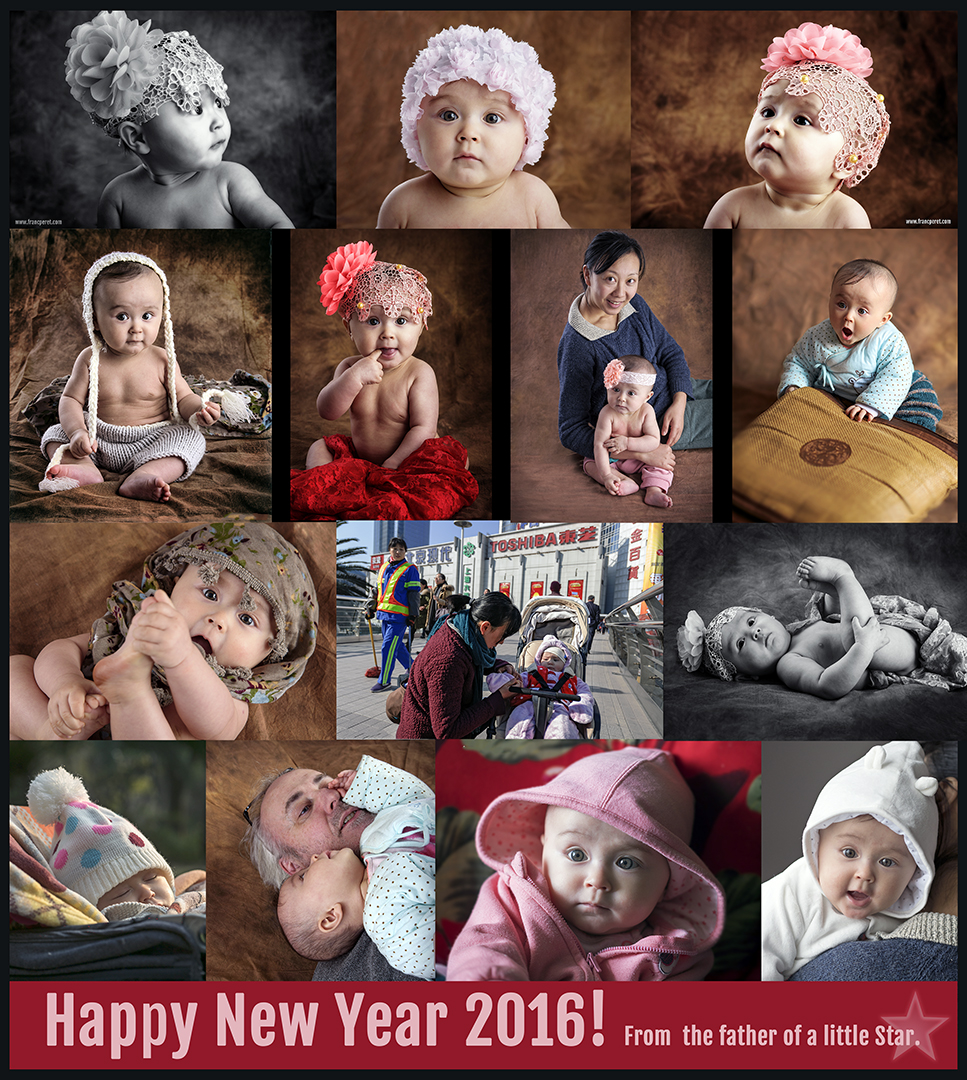
Just a quick word to wish to all my past, actual and future students a Happy New Year 2016!
Being the lucky father of a little star, I am very busy at home! And 2016 is going to be Apolline year…
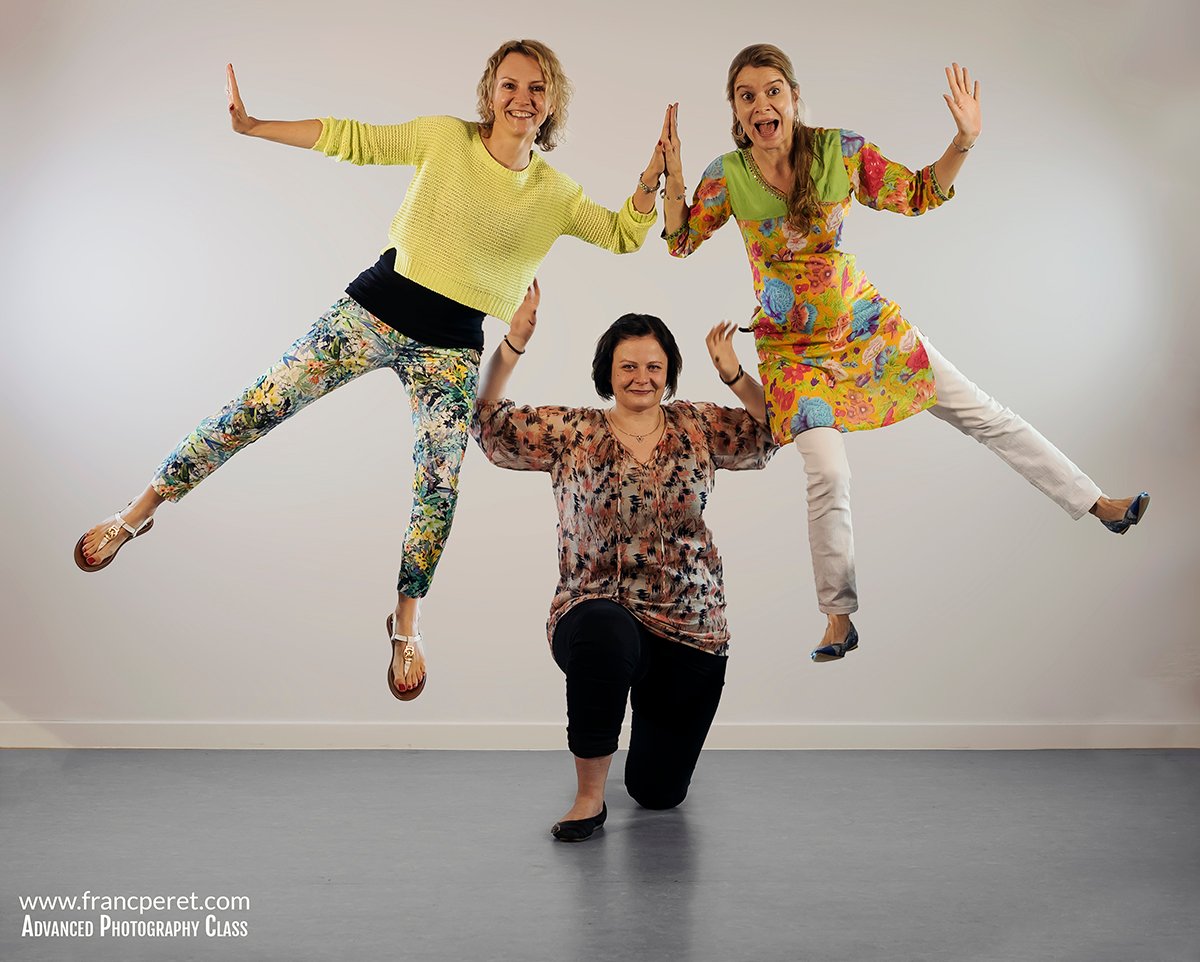
Thanks to Richard Williams for his assistance on the “home made” studio shoot (actually all set in my tiny bedroom)…
Shot with 2 studio flashes, 1 huge umbrella (behaving like a 1.5 meter wide beauty disk) a backdrop and a Nikon D750 + an old great zoom Nikkor AF 28-105 mm f/3.5-f/4.5D set at f/8.
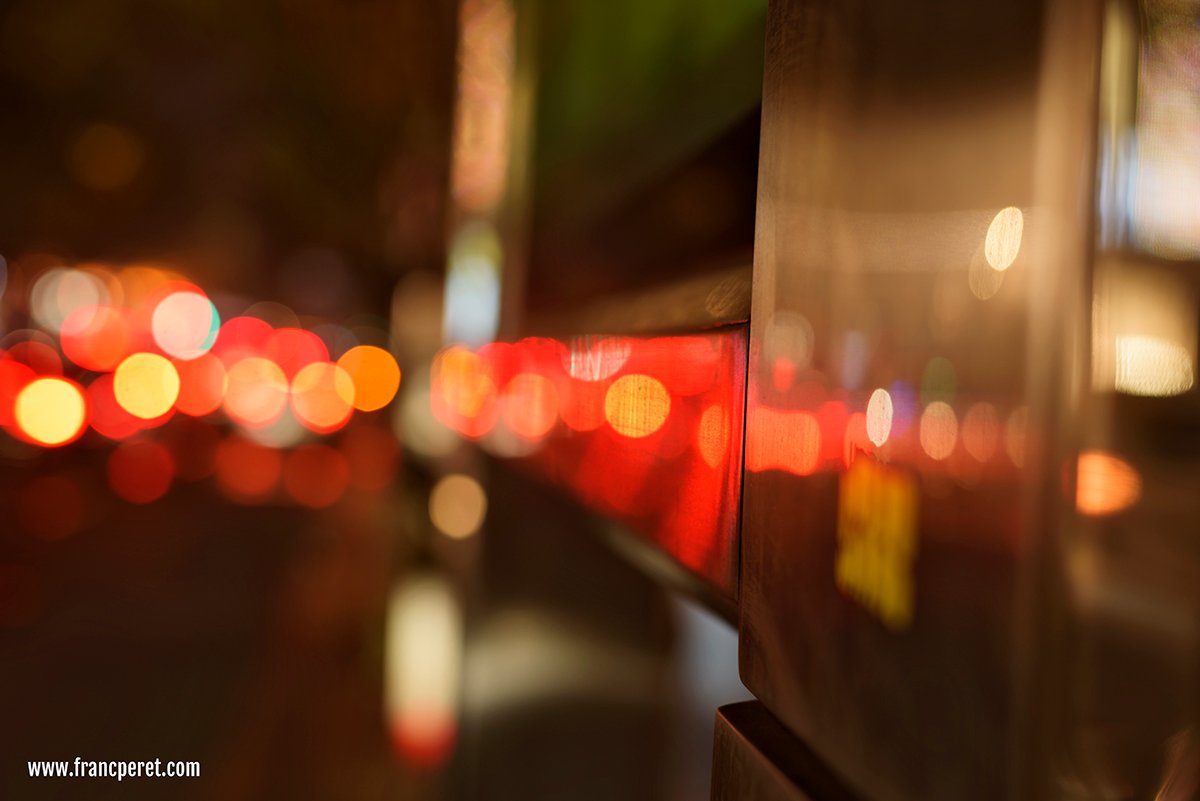
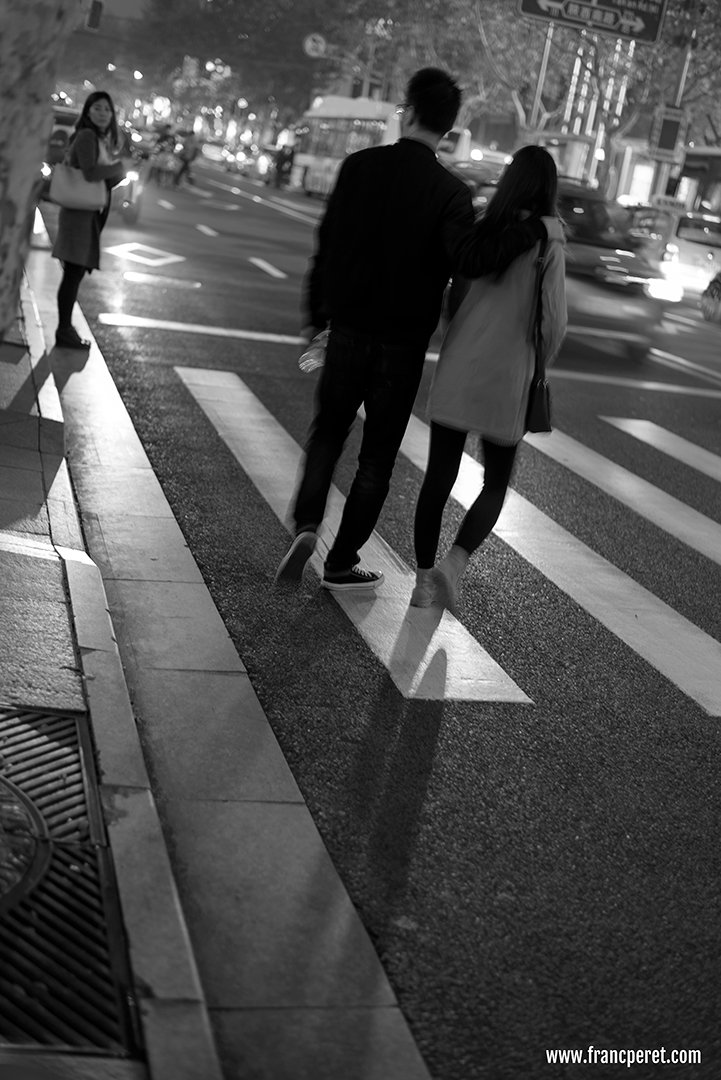
This is another Night shooting session in Shanghai, with 6 of my students in the same area as the previous Night Walk. However, each time, it is a different experience due to the personality of the participant, the mood of the moment and the direction we are taking. Another great session with great people.
By Franc Peret
Last but not least, I am often changing my gear.
This time, instead of the Nikon D750 I used for previous session, I picked my 2 smallest cameras: The Nikon 1 V1 (1 inch sensor) and my Panasonic GM5.
The participant to the class: Nathalie, Vivian, Veronique, Rebecca, Alex and Priscilla. Nikon1 V1 ISO200 1/15s and Cine Nikkor 25mm f/1.4 @ f/1.4.
I fixed a Cine Nikkor 25mm f/1.4 (full metal and full manual) on the Nikon and a Lumix 20mm f/1.7 on the GM5.
Getting the phone hanging in space was a way to capture the interesting metallic link holding it in front of the breaking cars in the background. Nikon1 V1 ISO200 1/30s and Cine Nikkor 25mm f/1.4 @ f/1.4.
SMALL SENSOR vs BIG SENSOR
The big advantage of this type of camera (smaller sensors with great lenses) at night is to provide much more depth of field even at maximum Aperture (f/1.4 and f/1.7 in that case).
Vivian working to achieve the same effect while struggling to keep her balance. Photography is a physical activity. Nikon1 V1 ISO200 1/8s and Cine Nikkor 25mm f/1.4 @ f/1.4.
Full frame camera are offering less noise, but to get enough things in focus, you can rarely use your lens fully open and being forced to close down the Aperture sometime, you need to increase the ISO to compensate.
To summarize, I would say that Full Frame camera at night are best used with subject at a longer distance, while cropped sensors works very well on close-up shots.
Somehow, APS-C (or DX) Sensors offer a great balance between the 2 options.
HUNTING REFLECTION
Alex collecting light on his face from Sony Showroom display. Nikon1 V1 ISO200 1/50s and Cine Nikkor 25mm f/1.4 @ f/1.4.
Here are some of shots I achieved that Night while walking in the heart of Shanghai, teaching to my students how to find a subject, compose their frame, set the camera according lighting condition and being as stable as possible to not need to increase the ISO.
Alex’s camera at rest. Nikon1 V1 ISO200 1/8s and Cine Nikkor 25mm f/1.4 @ f/1.4.
This is an easy task to achieve in Shanghai, as source of lights are coming from everywhere and our only duty is to fill up the frame with colors, reflective surfaces and bright spots.
Lonely Tour Eiffel in a store. Light source direction are unusual at night bringing some magic to anything. Panasonic GM5 ISO100 1/160s and 20mm f/1.7 @ f/2.5All black, white and red. Waiting to cross the street.Panasonic GM5 ISO200 1/6s and 20mm f/1.7 @ f/2
Most importantly, is to not try to reproduce the kind of shots you usually do daytime.
It would be meaningless as nighttime is offering such a different look and challenge.
Yellow Bike build to last according the Brand name: “Yong jiou” (Use Longtime). Nikon1 V1 ISO100 1/6s and Cine Nikkor 25mm f/1.4 @ f/1.4No smoking. In the taxi bringing me to the meeting point. Nikon1 V1 ISO200 1/25s and Cine Nikkor 25mm f/1.4 @ f/1.4.
Best to be stable is to find something solid to hold your back, your shoulder or even your camera from the position you want to build up your composition.
Luminous landscape. Panasonic GM5 ISO200 1/15s and 20mm f/1.7 @ f/2.Nathalie framing a fire hydrant against the bright city landscape. Nikon1 V1 ISO200 1/15s and Cine Nikkor 25mm f/1.4 @ f/1.4
I usually advice wall, handrail, tree or ground.
Unfortunately, you are not always finding a friendly support for every subject.
Alex in a corner for a great color match. Panasonic GM5 ISO100 1/50s and 20mm f/1.7 @ f/2
In that case, the way you are positioning your body and holding your camera are going to matter even more to not get a blurry shot at low shutter speed.
AN HIDDEN WORLD
One of my favorite night shooting subject in such a developing city is background or details that could be used for the shooting of a 1950’s science fiction movie.
I am not sure you are going to understand this sentence, but lets check out the surrounding shots to get an idea of my feeling and inspiration.
Another inspiring Sci Fi background.Panasonic GM5 ISO200 1/10s and 20mm f/1.7 @ f/2A Science fiction set coming from the past. Panasonic GM5 ISO400 1/5s and 20mm f/1.7 @ f/1.8
In this kind of set or with those type of details I can imagine parts of an abandoned space ship or high tech factory.
Sometime people are telling me that I am having too much imagination…
Space Station. Panasonic GM5 ISO200 1/2s and 12mm f/1.6 @ f/4
I am very clear about that.
Imagination will be NEVER too much.
Back to reality (almost). Panasonic GM5 ISO200 1/25s and 20mm f/1.7 @ f/2
For me, imagination is the only way to never get bored of something I am doing since 1986: professional photography.
An individual space ship? Panasonic GM5 ISO400 1/10s and 20mm f/1.7 @ f/2
And after 15 years shooting film, digital photography helped me to cross all my previous boundaries, and Photoshop, Video, film making, editing are added value to the experience.
And as I often say to my students, I am learning something new about photography and film making, almost everyday.
It is an endless process.
My life will never be long enough to learn as much as I would like to…
If you liked this post, you can discover the previous night shooting session in Shanghai Here
Since I am living in Asian big cities, I deeply enjoy shooting at night as there is so much going on with so many light sources, potential silhouette and reflective surfaces. Best of all, it is always a pleasure to share my knowledge and experience about such a very specific topic with some of my favorite students.
By Franc Peret
Here is what I achieved while running this Fall 2015 Night shooting class in the heart of Shanghai.
This is the first of a series of night shooting with and without tripod.
You can discover the second hand held night walk session here.
In search of interesting reflective surfaces and bright dots in background. Nikon D750 ISO100 1/20s 50mm f/1.8 @ f/1.8Audi bright lines. Nikon D750 ISO200 1/6s 50mm f/1.8 @ f/2
I worked with a Nikon D750 and three cheap and bright lenses: Nikon AF-S 50mm f/1.8G, Nikon AF-S 35mm DX f/1.8G and Sigma 28mm f/1.8.
Wide night world in marble. Nikon D750 ISO100 1/20s 50mm f/1.8 @ f/1.8
Surprisingly, the 35mm DX (designed for crop sensor camera, such as Nikon D7200) is working very well on my Full Frame camera.
Abstract car’s light on aluminium panel. Nikon D750 ISO100 1/6s 50mm f/1.8 @ f/2.8Double Rey and his Sony A7. Nikon D750 ISO100 1/8s 50mm f/1.8 @ f/1.8
Set on some Aperture and focusing closer, a strong vignetting appears, but I am avoiding this quit easily. It is a great little lens, sharp and light.
Dream Team of students with (from left to right) Rey, Natacha, Charlie, Isabelle, Monja, Klaus, Gwen, Liam and Jana. Nikon D750 ISO800 1/20s 35mm f/2 @ f/2.2
To Compare, I brought along an old prime lens: Nikon AF-D 35mm f/2 which is still a good performer as you can see on the group shots.
An emergency shot done just before the parked car with the red lights is going away. Hard to be quick, to compose and to be stable. Nikon D750 ISO200 1/10s 35mm f/2 @ f/2
The 28mm f/1.8 Sigma is an old Manual focus lens that I bought second hand more than 10 years ago in Japan for less than 300 RMB (50 USD). It is bright, light and a joy to use.
Kerstin at work: stability and concentration. Nikon D750 ISO400 1/8s 35mm f/2 @ f/2
For many years, Nikon Camera are having a great and helpful feature for focusing, especially at night with a fully open bright lens.
A green dot is lighting up in the left corner of the view finder, as soon as any lens fixed on the camera is getting in focus. It is very accurate and a time saver sometime.
Wood Men in Suits. Red and Blue. Nikon D750 ISO200 1/15s 35mm f/2 @ f/4
TO come back to the night shooting Class, our group didn’t have to cover a long distance as there is so many things to see, with trained eyes, in what supposed to be darkness.
Game of Lines, Silhouette, Light and Shadow. Nikon D750 ISO200 1/4s Sigma 28mm f/1.8 @ f/2.8
3 hours class between 6:30 to 9:30 pm were sufficient to collect hundred of shots.
Here is a short selection of that inspiriting time.
Sakura Hotel, a difficult High Contrast Scene that would deserve a tripod and a HDR treatment with a series of bracketed shots. Nikon D750 ISO400 1/20s Sigma 28mm f/1.8 @ f/2.0
When my Students start to find aesthetic interest in garbage can, I know that my teaching was efficient and meaningful to them. I am having a joke about this in my essential photography program.
When my Students start to find aesthetic interest in garbage can, I know that my teaching was efficient and meaningful to them. Klaus at work with his Fujifilm Camera. Nikon D750 ISO400 1/10s 50mm f/1.8 @ f/2.0
I am teaching that the most dangerous topics for photographer and kids and pets (especially kitty).
In the world, the biggest calendar sell are still cats.
Nothing can beat cats in term of visual attraction to most middle age house wife who are buying those calendars.
Handling the Handle bar. Nikon D750 ISO100 1/6s 50mm f/1.8 @ f/2.0Painted words and side light. Nikon D750 ISO100 1/6s 50mm f/1.8 @ f/2.0
Problem with pets and kids is that they are attractive on their own. Show a picture of a little kid or a baby cat and viewers are going to love your pictures.
Handling the Handle bar, version 2. Nikon D750 ISO100 1/10s 50mm f/1.8 @ f/2.0Handrail. Nikon D750 ISO100 1/30s 50mm f/1.8 @ f/1.8
Frustration comes on the fact that, viewer do not specifically like your picture, they like the subject instead.
And here comes the garbage can parabola.
I am teaching to my students that if they are able to bring positive emotion to viewers while showing them their garbage can picture, they would have achieve something genuinely good as photographer…
Success will not belong to the subject itself, but to the photographer only.
And night shooting, with all its magic, is the best place to give it a try…
If you liked this post, you can discover the second hand held night session in Shanghai here.
I was hired to do this Making Of for VW China, while they were shooting a big budget TV commercial in Shanghai for their new model; VW Cross Polo. I was both director, cameraman and gaffer (for interviews) for this 12 minutes video.
2 days shooting (19 working hours the first day and 15 hours the second day!) and 10 days edit for this piece.
I used both Panasonic AF103 and GH2. 50%/50% of shot from both camera. AF103 was very useful for interview and time laps shot as everything is build in (micro XLR and time laps function).
AF103 was much better in term of handling White Balance (green screen) and GH2 was a very portable choice, but green mostly came out close to Cyan, despite all my set up trial.
I really enjoyed the potential of the scenery and lighting condition as this commercial was supposed to look like an adventure film shoot.
I got complete freedom on shooting and editing, which was very valuable for me. Production company, Agency are client were immediately pleased by the version A result and that ease a lot the editing for the final version you get here.
Client is from Germany and that helped a lot as local Chinese are often scared by originality and they are always asking to copy “reference” they dare to call “their idea”. I am thankful to VW China to offer me that opportunity to fully express myself. This video was for internal use for the company, and they finally asked for music title for copyright as they wanted to make it mainstream.
As I was busy, I didn’t shoot the HKG and Spain (post production) part. HKG was shot with a Canon 60D (in NTSC) and Spain with a small camcorder (NTSC too). My shot with GH2 and AF103 were all made PAL as China is PAL country and editing at 1080P 25fps was a real pleasure, thanks to Premiere CS5.5
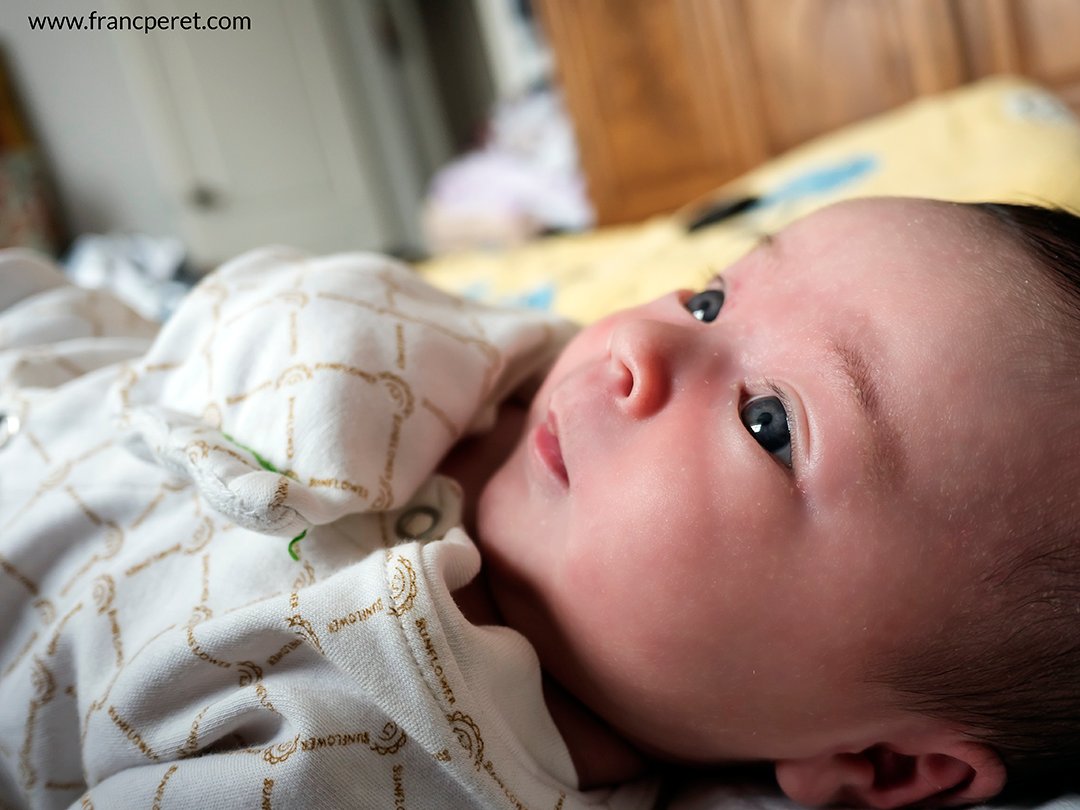
Taking care of my new born baby, I cannot resist shooting her daily, trying to capture her random facial and body expression while she is nestled in my arm. Shooting with one free hand only (often the wrong one), I am enjoying the great overall features of a camera, which became my favorite tool for self “holding Baby” Shots.
By Franc Peret
In my 28 years career, I had a chance to use a wide range of cameras from film to Digital, and since I am working in both photography, film making and video fields, I had to diversify even more my arsenal of shooting tools.
The Panasonic GH4 is quit generous in size for a M43 camera and the Nikon D750 is quit compact for a full frame camera. Overall the size difference between the two is not so huge, but weight is different and lenses are much bigger for the Nikon.
In the mood for choice
A Nikon1 V1 and classic lenses is one of my favorite combination for personal use, but it is not the best choice for “holding baby” shots due to its lack of external control, automatic features (such as autofocus with those lenses) and movable screen.
For my work assignment, I am using a traditional Nikon Full Frame DSLR camera (D800 and now D750) because I am accustomed to this reliable line up which is able to deliver great details images.
Also, to match any shooting situation (according client’s demand), I am owning a wide variety of Nikon lenses from 16mm to 500mm, an expensive collection I started 28 years ago: A good reason to keep faithful to a brand…
For my own time (street photography or traveling), I often pick up something funnier, lighter and more compact such as a Nikon1 V1 or any other compact alternative.
Panasonic for Pro Videography
Working also in Film Making and Corporate Video fields, I invested in the hybrid (photo + video) Panasonic Lumix line up (GH1, GH2, GH3 and GH4) as I always liked the image recorded by Professional Panasonic video camera (HVX200 or HPX500) I was using beforehand.
On Photography forums, many are debating about size sensors and number of pixels, but few post do care about ergonomic. I do. I want my camera to feel comfortable in my hand and I am looking for direct controls with the right touch and the best positioning. GH4 offers a more professional approach on that matter than the D750. Any extra feature which help me to work faster and more efficiently is greatly welcome and the swiveling screen of the GH4 is an amazing advantage compare to traditional DSLR. The D750 is the first Nikon FX camera with a tilting screen (up and down), but it is not sufficient to compete.
And the GH series are amazing tools for video production at a very reasonable cost. Thus, GH4 is capable of 4K video. With the mirror option, the POV “holding baby” shot will work with any camera. GH4 ISO200 1/25s and 25mm f1.4 @ f2
However, for professional photography, The Panasonic GH4 will not yet replace my Nikon bodies as there is still a difference in term of use and final quality output between the two.
Nikon for Pro Photography
Globally, Nikons are offering sturdier body, less shutter lag and more accurate continuous autofocus for sport photography, a second card slot for safety, more pixels for big prints, more accurate optical viewfinder for composition and better raw files to work with (more color information)…
Overall, I still feel that my traditional DSLR bodies are more suited to answer to any of my clients need.
Flexibility for Private use
My shooting style in private life is very different compare to what I am doing for work, and I do not mind to use a much more compact Panasonic system, as I like to feel freer not carrying too much weight.
Most of the time, creativity depends more on system flexibility (adaptability) than ultimate file quality.
This is the shot I achieved, despite my uncomfortable position. I had to correct the color cast on her face as the reflection of my orange tee-shirt tinted her skin in the shadow area. GH4 ISO200 1/160s and 25mm f1.4 @ f2.5.To achieve such a shot from my point of view (POV), it becomes sometime acrobatic as soon as my right arm is busy holding my daughter. Despite the appearance, I am composing the shot precisely, thanks to the swiveling screen open on the left side of the camera. (Shot by Sarah)
Self Baby Nestling Shooting
Recently, as I explained in the introduction, I am stuck at home for a good reason, and often need to take picture, by myself, of my little girl resting in my arm.
This is a difficult task as I am having only one hand free to select the focus point, to modify the setting and to press the shutter button.
Another moment and another angle from the same position. This time, I lowered my upper body to get that point of view. GH4 ISO200 1/50s and 25mm f1.4 @ f2.8.
Also, being so close to my subject, I often meet the minimum focus distance limit of my lens and I can hardly diversify my point of view. Actually, this last restrain is counterbalanced by the possibility to carry the subject under the source of light of my choice.
The GH4 is offering a touch sensitive swiveling screen, and a total freedom to set the focus point anywhere in the frame.
GH4 is made for it!
Actually, I am working around all those limitations by using my Panasonic GH4, thanks to its numerous interesting and adequate features:
1 – GH4’s fully articulated swiveling screen provide a perfect vision of the composition from any Point of View (POV) for me to shoot from any position and even in front of me for a self portrait of us, if needed.
2 – This screen is touch sensitive and it allows me to select the focus point with one finger on the exact part of the subject I want sharp after composing my shot. If I want, I can also take the shot by taping on this screen, just like a smartphone.
Silent shutter mode is a great option to NOT wake up the baby while shooting that close!
3 – The GH4 has focus points located everywhere on the frame (which is not the case on former DSLR which get their focus points spread around the center of the image) and I am free to put my subject wherever I want it in my composition, even next to a border of the frame.
4 – Thanks to a smaller sensor, the Lumix lenses are often sharper on the complete frame (from center to corner), even at full Aperture, while FX lenses often need to be closed down 2 stops to deliver an equivalent result. This means possibilities to use lower ISO on the Panasonic.
This also means another possibility to use lower ISO on the Panasonic.
5 – Also thanks to a smaller sensor, the depth of field is more important than on a Full frame camera (globally a f1.4 Aperture on the GH4 is equivalent to a f2.8 Aperture on my Nikon D750), so there is more things in focus under the same lighting condition (while using the base ISO on both cameras), which is an advantage at such short distance.
Deep sleep breath is one of the most wonderful moment holding a baby in your arm. Feeling safe and comfortable, she just let it softly go for a 2 hours sleep… GH4 ISO400 1/30s and 25mm f1.4 @ f2
6 – The generous size of the GH4’s body (for that type of camera) and its multiple display of physical buttons mean a great ergonomic. Therefore, with only one hand I can have direct control on ISO, White Balance, Exposure compensation, Aperture, focus point positioning and shutter trigger!
7 – Last but not least, the GH4 gets an electronic shutter function, which means (almost) complete silence shooting, which is a huge advantage to NOT wake up the baby who had so much difficulties to fall asleep!
Sharing moment, I am watching a movie on my computer screen while Apolline is doing her gym. GH4 ISO400 1/13s and 25mm f1.4 @ f1.6
GH4 better than a Smartphone?
Compare to all those advantages, my smartphone is quit limited. lacking a screen independent to the on-board camera and a physical shutter button. I am often missing great shots with my smartphone as, in certain position, I cannot efficiently reach and press the virtual shutter trigger located on the screen.
Another restrain is the deformation created by the wide lens, especially while shooting so close.
Me and my mini Me: Sometime, it is mission impossible to shoot on your own; While sleeping for example. Apolline’s right hand is not cut out in composition. As we cannot shorten her nails yet, we are keeping her hands inside very long sleeves to avoid scratches on her face. Sarah’s shot with Panasonic GH4 ISO500 1/20s with 25mm f1.4 @ f1.6.
Why holding the baby?
Another good reason to turn the camera a bit further away than my arm: Mama and Baby interaction. Panasonic GH4 ISO320 1/125s with 42.5mm f1.2@ f1.4.
Of course, there is some limitation and lack of variety by shooting while holding the baby, but there is something extremely motivating: straight interaction between her and me.
While nestled in my arm, my baby girl never stop to change her eyes, facial and body expressions.
She might be willing so much to communicate with me.
And I do not want to miss a chance to grab those fragments of early baby language, before articulated words come into our relationship.
Magical moments capture
Therefore, most important is to concentrate on some usual and unusual technical factors to capture those magical moments. Here are some:
1 – Being so close, lenses (especially wider ones) create distortions as soon as the subject is not centered. Best is to shoot with, minimum, a 25mm lens on a M43 camera, a 35mm on a APS-C (DX) Camera and 50mm on a FX Camera. I am using a wider lens sometime (14mm on M43 = 28mm on FX) to play with the distortion (to make the baby looks like a doll with big eyes on the foreground for example) or by carefully keeping the face of the baby close to the center while showing much more things in the background.
Using a wider lens very close to the subject (the subject being close to a border of the frame) may create some “cute” distortion. GH4 ISO400 1/125s and 14mm f2.5 @ f2.8By keeping the face closer to the center of the frame, a wider lens “behaves” normally and allow to add more information from the environment. GH4 ISO200 1/40s and 14mm f2.5 @ f3.2
2 – Being so close, the depth of field is extremely reduced and it is, more than ever, important to pick up the right part of the subject to focus on (Eyes, most of the time). Also, do not hesitate to close down the Aperture to get enough in focus.
For such close up, you have to set the focus point on the part of the face you think is the most important, especially while using a wide Aperture. This is a risky choice and better to close down the Aperture instead, if you feel you don’t get enough depth in focus. GH4 ISO200 1/160s and 25mm f1.4 @ f1.6.
3 – The way you dress will matter a lot on the final result. While holding the baby in your arm, close to your body, your shirt color (brought alive by the main source of light) is going to be reflected on the shadow area of the baby’s face. Best is to get a white shirt (for smoother contrast) or a black shirt (for more dramatic lighting style, with darker shadows) or a warm color tee shirt to “spring” up the atmosphere.
Each facial expression is giving her a different personality. Being serious, She looks like a little boy much older than her 3 weeks. This might also due to the Darker shadows provided by my black shirt. Panasonic GH4 ISO400 1/30s and 35mm f1.4 @ 1.4.
As you can see, by learning its restrain and gaining more experience on that shooting style, I am going to come up with more creative ideas by taking benefit of the limitation of the concept itself.
So do not be surprised if you see me wearing an aluminium suit one day!
As a conclusion, I would like to give a very important advise to those who are willing to give it a try with a baby, a pet, a pole dancer, a Chippendales or your grand’Ma: hold firmly your subject!
This film is the final result of the Autumn 2013 ELC Shanghai Filmmaking class. I designed this class 4 years ago and I am still teaching it in a very challenging way.
By Franc Peret
Shooting was done in 12 hours only, from a written script done after I first met the students.
Toilet lighting was a real challenge to be able to shoot wide and close-up without loosing too much time on resetting or repositionning lights (Photo: Sarah)Martina was an amazing performer for her first movie ever. She was a joy to work with (Photo: Sarah)
The complete program last 25 hours only (we added a bonus class this time, so total teaching duration was 27 hours and 30 minutes).
Course is split in 6 to 7 weeks with 2 x 2h30mn dedicated to the introduction of story telling, lighting and equipment. Then come 3 classes of 5 hours dedicated to shooting.
Outdor shot of the environment with camera move and unbalanced angle. (Photo: Sarah)External shot scene from another point of view (Photo: Diarmuid Sheehan)
Adapting schedule
Actually we did a second filming this term (will be soon uploaded), 5 hours shooting for a 20 minutes lecture shot with 4 cameras.
2 final 2h30mn classes conclude the course to speak about sound and editing work.
Toilet location is easily crowded (Photo: Sarah)Some students immediately get it to give a help on set up (Photo: Sarah)
The “12th Floor’ short story was shot in 10 hours with 2 hours added for sound recording (foley and voices).
I edited the project on my private time between the classes as schedule was so tight.
Close up shot of the reward scene: giving the 12th floor keys. (Photo: Sarah)Party scene with crowd of students: 4 of them.(Photo: Sarah)
As usual, I was just amazed how everything went well with the 7 students, all of them taking part to the shooting in different ways, 4 of them having to play characters in the story.
The idea behind the story
Story is about a Toilet lady who is living in Black and white but who is dreaming to get the chance to take the lift to reach the 12th floor and a colorful world, a world she can just imagine from a picture stick on top of the lift main door.
Martina acting with the right tone and mood despite the load of laugh from the assistance. (Photo: Diarmuid Sheehan)
Every morning, her colleague are taking the lift but not her as she is in charge of the toilet on the first floor. Her ultimate ambition is to to take care of the toilet on the 12th floor, the top of the building she is working in, to get a vaster view on a more colorful world (“Close to heaven”, as advertised).
This wish is also a way for her to move up in society’s hierarchy.
Main gate set up for the lift scene was a difficult place to light due to reflection on lift door. (Photo: Diarmuid Sheehan)Set up in the main entrance for the lift entrance scne (Photo: Sarah)
This story is about ambition, which always depends on the position person are starting from, and one achievement can be perceived in a total different way, according everyone experience, lifestyle, habit and taste.
The world describe in this film is purposely absurd, with train lift, reservation needed to go to toilet, to add more disturbance to the story.
Challenging Location
Technically, the most difficult part was camera positioning and scene lighting as we shot in location and toilet were far too narrow and too reflective (wall).
We also had to rush on shooting to complete the story, to get the 55 cuts done in only 12 hours.
Corridor scene in tight environment. (Photo: Sarah)Suicide scene with the close up of pipe from another room. (Photo: Sarah)
Therefore, I decided to design a lighting much flatter than I was looking for to be able to quickly shoot from different angle without getting bothered by shadows and flare.
Equipment
The 2 Main cameras were Panasonic AF100 and GH3 with voigtlander and Nikon lenses. Lighting was a mix of 4x low consumption Bulbs, 1 x LED panel, 1 x LED Fresnel light, 1 x LED torch with battery (for the lift), 2 x 650W and 2 x 300W tungsten Fresnel, and 2 x 150W HMI.
An external monitor helped everyone to follow the progress of the shoot and to judge the performance of the actors (Photo: Sarah)
Wednesday June 3 rd and Saturday June 13th
SHAPING OBJECTS WITH LIGHT – PRODUCT SHOT WORKSHOP for creating atmosphere and presenting products
Playing with Light and Shadows. Panasonic GH4 and Lumix 35-100mm f2.8
Being Attractive
If you remember my teaching, you should know that light and composition are more important than the subject itself. There is nothing more true to illustrate this concept than product shot. Product shots are usually done for commercial purpose, and pictures have to be more attractive than the object its self to be considered as successful.
The Magic of light shaping
By learning how to use Light sources, a professional photographer is going to achieve that result, but each object will represent a different challenge according its shape, its reflection, its purpose and the target mood.
Case by Case study
A slice of pizza is not light up and shot the same way than a camera, a jewel or a shower head… Only the understanding of quality of light, family of angle, masking with shadow and post processing can make a good shot possible.
Unique Workshop
Few students will have the chance to participate to this unique workshop I am organizing on that topic, on June 3rd or June 13th. This first part will concern the shooting session and you just need to sign up for one of those two dates to cover it.
Later on, a second part will be dedicated to the post processing of the pictures on Photoshop and workshop timing will be announced later on in June.
Cocktails and Shaker (cropped). NIkon D800 and Pentax 67 75mm f2.8
INFORMATION: 2015 SPRING ADVANCED WORKSHOP
1 Full Day PRODUCT SHOT
June Wednesday 3rd th or Saturday 13th,
Pick up your day and Sign up !
FEW SPOTS AVAILABLE
1 – Introduction
Wednesday December 3rd and Saturday June 13th, I am organizing a Special and Brand new Advanced Photography Workshops open to any of my actual and past students present in Shanghai.
2 – Topic
How to shoot professional looking product shots, such as jewelry or food (and other small and medium size products), with cost saving light and solution.
3 – Timing
First You have to choose the day you want to join: Wednesday or Saturday.
The workshop will be split in 2 parts with a one hour lunch break in the middle.
Sample Menu Shot in The Apartment
– Morning from 10:00 am to 12:30 = Description of Camera settings, presentation of the different type of light, products and equipment set up with shooting demonstration.
– Afternoon from 1:30 to 4:00 pm = Students practical shooting on different set up.
4 – Location
According the number of student who will sign up, it will be in my office or in a classroom nearby.
Up to 5 students, it will be in my office.
Over than this number, it will be in my former classroom. Both locations are 10 minutes walk from subway line 4, very close to Xujiahui. You will get precise description of the location when signing up.
5 – Equipment needed.
Just your camera and a zoom lens + a tripod + a prime lens. Something to take note (you will have to take more note than shooting in the morning).
6 – Limitation
4 people mini – 10 people max.
7 – Cost and Sign up process
900 RMB for the day.
Please contact me by email for signing up and for getting more detailed information. francperet@hotmail.com
Here are some sample of works done with my students during the Spring 2015 Advanced Photography Workshop I am organizing in Shanghai. This time, Having Fun with Special Effects was the main topic of my second class.
By Franc Peret
Joel on his smoky flying carpet. Cannabis Airlines make you fly high!After ZZ Top, The hairy trio with Pier, Dirk and Joel. Hairs are coming from Anna, Chiara and Gwen.
There is a great sharing of excitement among my students and hardest part of the job is to keep enough seriousness to make the trick works in post.
Virpi is no more holding Anna and Gwen in the air.Triple Split personality for Pier who is trying to stop himself to hit himself without successA feet life with Jose, Martin and Harald.Pier is having huge success with Ching and Gwen.
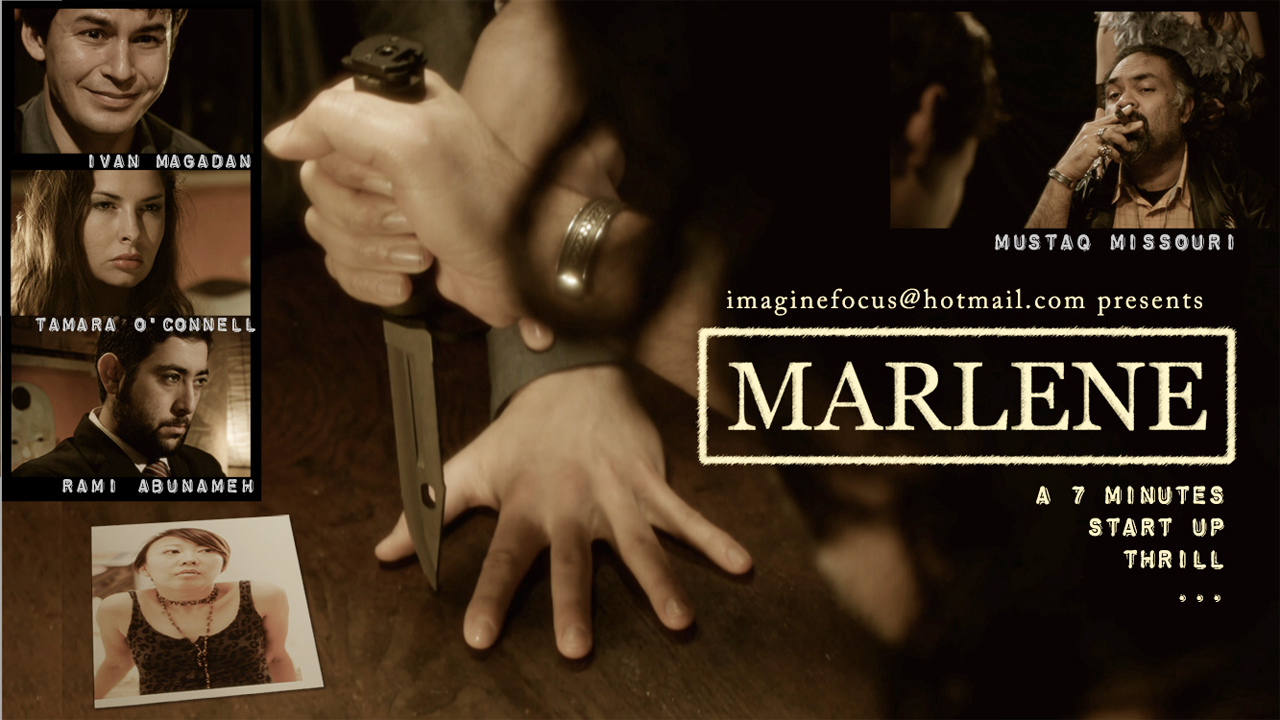
To protect his daughter, Marlene, a powerful mafia guy, is frightening one of his daughter’s classmate, during a tense 7 minutes face to face meeting, to force him to become Marlene’s undercover body-guard in the University.
Mustaq Missouri as a godfather
This movie had been shot by myself with 4 actors. I especially wrote this story, which can be a pilote for a full feature film (if producer comes in) for the main actor, Mustaq Missouri who deserve lots of play.
PREMIERES
1 – Mustaq never played before in front of a camera, more used to theater scene. It was a great experience for both of us. And we are planning new works together soon.
2 – Music is original, I worked on it with my friend Christophe “Dantes” Hisquin. It was a premiere as Christophe and myself had never work on a soundtrack before… And from now, we are always going to do it. Christophe has also a great potential to compose music for motion picture.
A tense action
This movie had been shot with 3 cameras, Panasonic GH13 (hacked version of GH1, thanks to Vitaly!). I was alone with only one assistant to shoot, set up light and record the sound.
The set took place in my bedroom, about 15m2 only! In my old Shanghai flat.
We slept for 3 weeks on the floor as my bed had to be disassembled (actually it is part of the background set). Shooting took 2 and 1/2 days
Everything was shot in my bedroom, with the shooting area occupying only 3m x 4m!
Budget was something like 100 Euros for props and lunchbox, essentially…
All actors were volunteer willing to share the experience.
I wish to compete to Festival with this movie to thank all my friends who participate to this project, especially Mustaq (lead actor) and Christophe (the composer).
I am used to organize the shooting session of my Advanced Photography Class elsewhere than in a proper studio. I do not mind as many equipment are offering very flexible solution to get the best lighting possible in less than 1 hour of preparation time.
The hair light (or Back light) is important on this shot to separate Nina from the background. Key light is delivered by the directive Soft box for a more precise light control.
I invested in a wide range of equipments, of different size, weight and power, to be able to adapt myself to any situation.
Sitting on the black curtain, Nina is mainly lit by the huge umbrella which behave like a wide beauty dish.
Whatever type of flash and modifier (umbrella, soft box, reflectors…) I am using, I am always delighted to prepare my lighting.
Nina is surrounded By a key light (huge umbrella), a kick light (directive soft box) and a Background light (bare flash to create a spot)
During the preparation time, I am already thinking of the different options I am willing to test to always get a great deal of ideas ahead of shooting time.