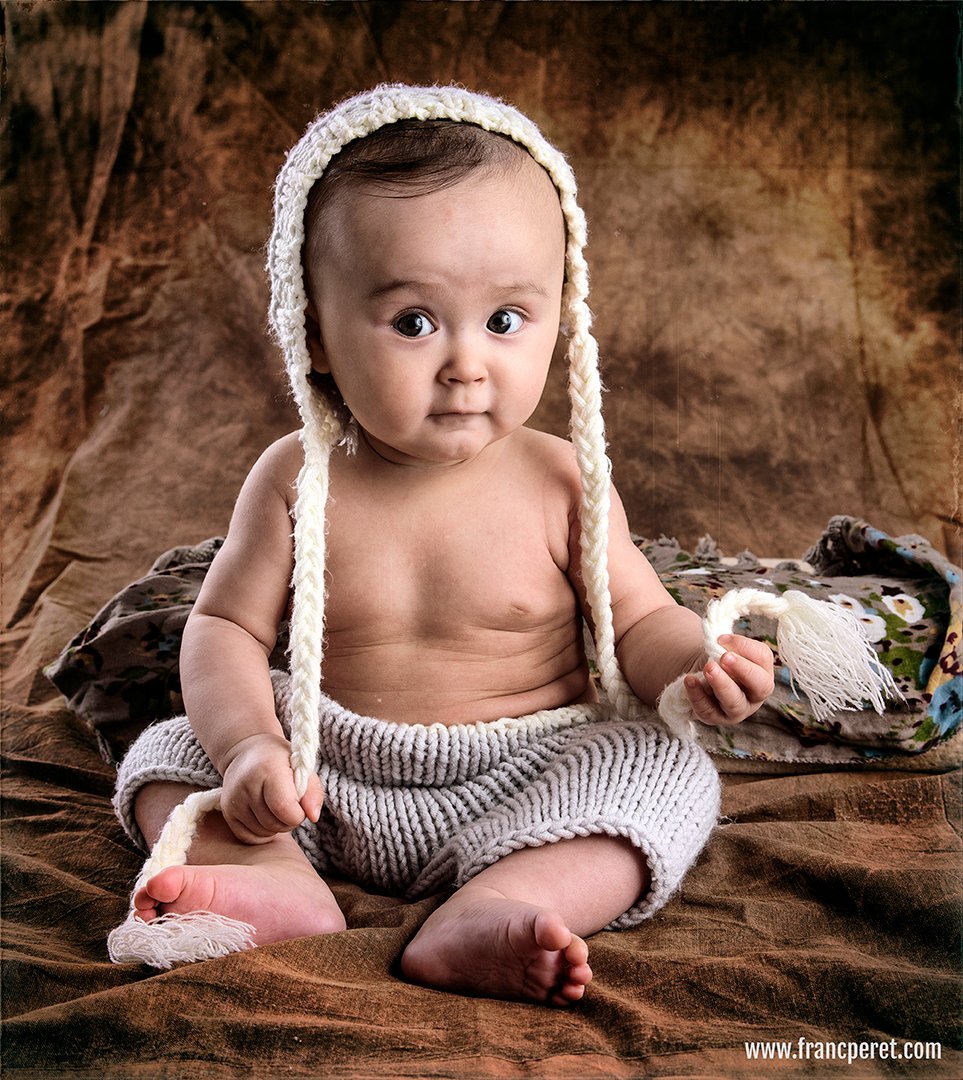
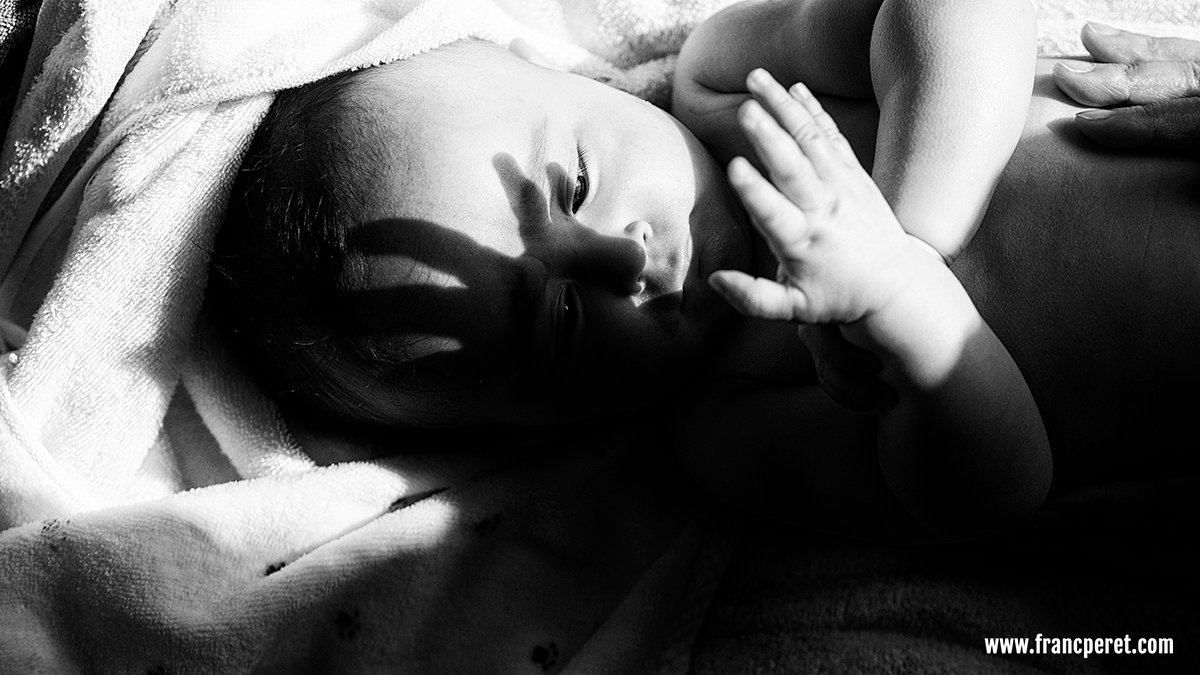
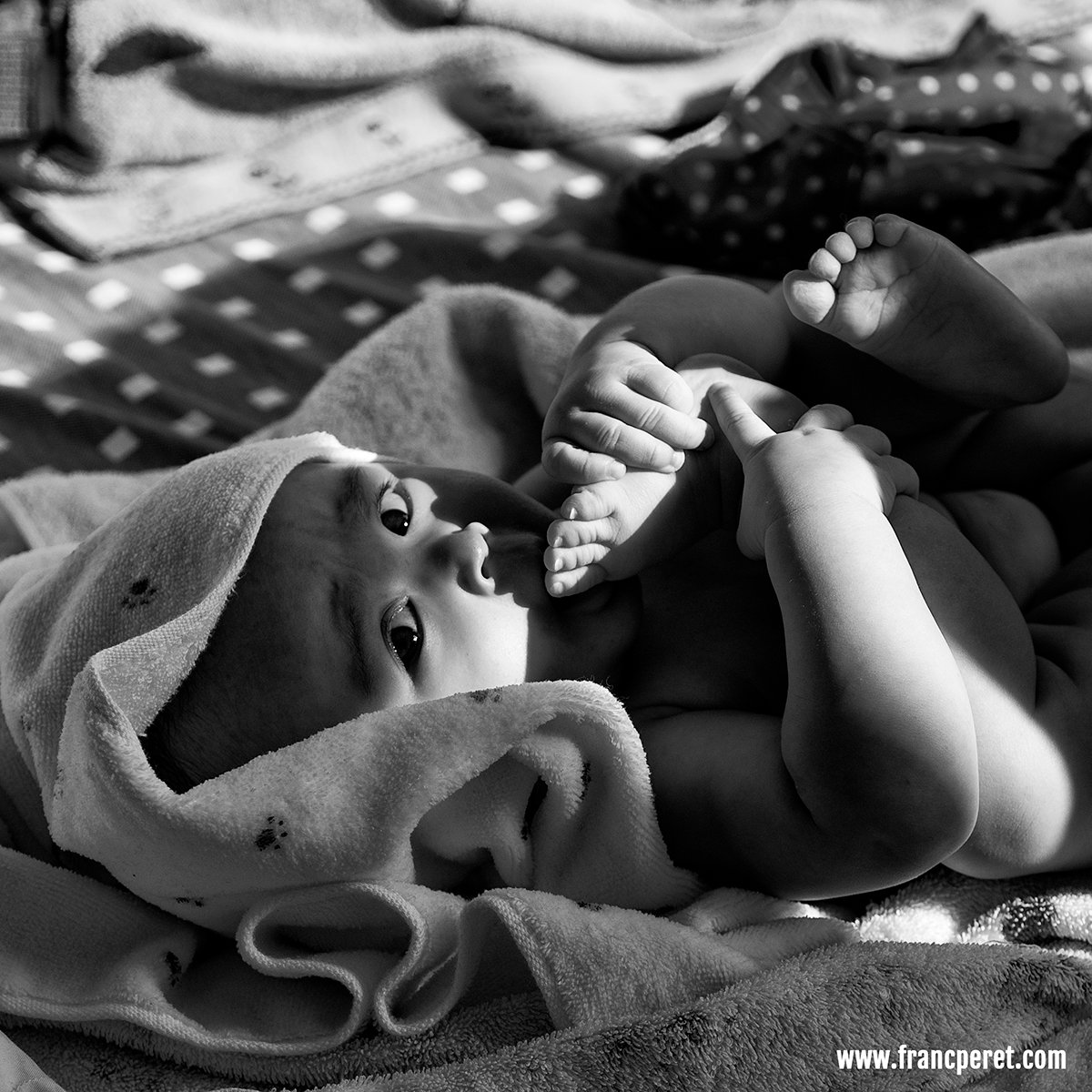
Tag Archives: Photography Class

Mastering Black and White

Many amateur photographer think that to achieve a black and white picture they just need to get rid of the color of a regular shot. Nothing could be more wrong than this belief. Here is why…
By Franc Peret

In my teaching, I always say to my students that Black and White pictures are “dangerous”, Which means something potentially going against their progress.

Why?

THE WRONG B&W TRICK

Because many people are using that trick to make their “so so” pictures in color, suddenly look more “artistic” in Black and White, as B&W print is vastly associated, in many people’s mind, as artwork.

Shooting black and white means seeing things that might be not attractive in colors but appealing in shade of grey with lines, shape and structure.
High contrast scene are the way to go to start to work in B&W, as the strong shape of the shadows are going to compensate the lack of colors.

And some easily pleased people are enjoying the trick very much, without knowing they are going against their own progress in general photography that way.
Using B&W as a cure to compensate a weak composition in color is not the best way to face the problem, finding the solution and improving framing skills.

By using a Yellow filter in my B&W post processing, I  did a double action: brightening up the barrier while darkening the sky a lot. I also reinforced the contrast to give more strength to the shadows in the foreground.
By using a Yellow filter in my B&W post processing, I did a double action: brightening up the barrier while darkening the sky a lot. I also reinforced the contrast to give more strength to the shadows in the foreground.
The diverse structures (barrier, steps, wall, stadium...) the strong shadow and the presence of the 2 opposite colors (yellow and blue) attracted my B&W vision.
The diverse structures (barrier, steps, wall, stadium…) the strong shadow and the presence of the 2 opposite colors (yellow and blue) attracted my B&W vision.

Also, with that misunderstanding in mind, those photographer are certainly not going to learn how to shoot interesting Black and White pictures, as well. This is a dead end for creativity.

FILM TIME

Somehow, Black and White is too attractive.
For many people, B&W looks more “cool” than color.

Street vendors in Winter shot against the light to emphasize the separation between elements and to fill up empty space with shadows. Panasonic GM-5 ISO200 1/320s, 12-32mm f/3.5-f/5.6 @ 13mm f5.6

This is due to the fact that, back to film time, Black & White negative film was the unique post processing accessible to everyone, technically and economically, especially to independent artists.
A laboratory was easily set in the bathroom or the kitchen with few key equipment, accessories and chemicals.

On the B&W shot, human presence becomes more unique and important as the rest of the image is filled with common element, rectilinear structures which are not differentiated by their different colors anymore. It is like pure life (a mother with her baby) versus a dehumanized environment.
On the B&W shot, human presence becomes more unique and important as the rest of the image is filled with common element, rectilinear structures which are not differentiated by their colors anymore. It is like pure life (a mother with her baby) versus a globally dehumanized environment.
Another example where color and B&W are working fine but in a different way. The color shot emphasize the separation in 3 layers surrounding the main subject: the black shadow, the yellow fence and the white building with the blue sky.
Another example where color and B&W are working fine but in a different way. The color shot emphasize the separation of the image in 3 layers surrounding the main subject: the black shadow, the yellow fence and the white building with the blue sky.

This was far to be the case with color film, and back to 1986, I had only one friend, a famous wedding photographer near Paris, who had his professional color lab at home.
It was a huge and very costly installation, needing bunch of preset, test, set up and maintenance to deliver the right result. And, worst of all, the chemical’s smell was constantly allover the place…

Hard light creates sharp shadows, usually a difficult situation for portrait due to too strong contrast, but it suits B&W.
Hard light creates sharp shadows, usually a difficult combination for portrait due to too strong contrast, but it suits B&W very well.

Color lab were scaled for commercial use, not for personal expression.

BEING AN ARTIST

Therefore, for decades, many photographers expressed themselves in Black and White as they could afford its treatment and manipulation.

On the color shot, blue is dominant as everything is  "paint " in that color.
On the color shot, blue is dominant as everything is
“paint ” in that color.
On the black and white version, lines and patterns with sharp contrast from the tree branches and the palissade are taking other as color is not part of the message anymore.

Exhibiting their printed work, they were able to make the difference compare to amateur by improving a lot the quality of their shot by working precisely in the darkroom, the ancestor of Photoshop.

In Black and white, structure and metallic feel is taking over life. For example,  we notice more the wet ground and the straight patterns (doors, broom...). The lady seems to be part of the surrounding (absorbed) like a cosmonaut or a cyborg at the gate of her spaceship.
In Black and white, structure and metallic feel is taking over life. For example, we notice more the wet ground and the straight patterns (doors, broom…). The lady seems to be part of the surrounding (absorbed) like a cosmonaut or a cyborg at the gate of her spaceship.
This picture of the old lady sleeping in a garbage container is working very well in color too as  red and blue are the only two main dominant colors related to the lady's occupation (tools and apron). The color in the center of the image reinforce the cold and lifeless feel of her surrounding.
This picture of the old lady sleeping in a garbage container is working very well in color too as red and blue are the only two main dominant colors related to the lady’s occupation (tools and apron). The color in the center of the image reinforce the cold and lifeless feel of her surrounding.

Brightness, darkness, contrast, grain, blurriness, re-framing, cropping, erasing element were all at hand for the artist to get much more dramatic and impressive shots than average Joe.

DIGITAL TIME

Nowadays, with digital pictures, too many photographer are taking it easy and consider B&W as an easy cure to their far to be perfect color shots.

Marion on the bike. The most important common point between B&W and color shot is quality of light. Good lighting means more potential for a good shot.

Instead of working harder and more efficiently on their composition, they prefer to get rid of colors when the diverse elements in their image get too confusing: with too many tints and shape badly mixed together.

Give me five. The alternance of highlight and shadows  are reinforced by the B&W treatment. Important is to get the main subject under a good lighting.
Give me five. The alternance of highlight and shadows are reinforced by the B&W treatment. Important is to get the main subject under a good lighting.
Shooting against a strong light with a frame filled with reflective surfaces and dark silhouette creates powerful structure which does not need color anymore.

And they wrongly think that the job is done that way.
Somehow, this statement sounds like it is easier to achieve a successful B&W shot than a color one.
Somehow it is true, as you do not need to worry about marrying colors together, but it is not that simple.
All depends on the skill of the photographer.

BACK TO BASIC OF COMPOSITION

Hanging clothes are also great subject for both B&W or color shots.
Street Life in Shanghai are offering very nice opportunities to detect B&W subject, such as those reflective windows and electric.lines.

To build an interesting shot, a photographer needs to put elements together with a certain sens of harmony or conflict.
And color is an added value to light, shadow, contrast, shape, lines, patterns and motion.

Happy mom and her kid in before the fence. Recipe is the same for portrait in color or B&W. Best is to use the sun as a kick light and to get the subject standing on a reflective surface to fill up the shadow.
Kids behind the fence. I was attracted by 2 common point:<br />  1- the round face of the kid and the round shape of the air conditioner fan on top of him.<br /> 2 - His straight and symmetric posture compare to the straight lines (tube, pipe, fence, window, shadows) surrounding him.
Kids behind the fence. I was attracted by 2 common point:
1- the round face of the kid and the round shape of the air conditioner fan on top of him.
2 – His straight and symmetric posture compare to the straight lines (tube, pipe, fence, window, shadows) surrounding him.

If the photographer knows what he is doing, he is going to play a lot with colors to accentuate his subject, his mood or his concept.
A pure amateur without much technique is going to suffer with this overdose of elements and option, and being overwhelmed by it, he might be happy to get rid of colors to reduce his amount of decision making to achieve something going well together.

Playground on grass. Black and White composition needs details with loads of things in focus which imply a rigorous placement  of every element in the frame.
Playground on grass. Black and White composition needs details with loads of things in focus which imply a rigorous placement of every element in the frame.

This is a reductive approach which is not helping personal progress.

At the opposite, the professional photographer, while switching from color shooting to black and white shooting, might feel at first that something is missing in his usual creative arsenal: colors.

Written text and reflective surface are very interesting subject in B&W as well.
Lines, shadows and reflection are very powerful  creative tools.
Lines, shadows and reflection are very powerful creative tools.

Therefore, he is going to work harder on his composition to compensate the lack of colors with more intense contrast, details, lines, shape, patterns and motion.

SEEING EVERYTHING IN B&W

As you can understand, at this stage, I make it clear that creating a Black and white shot means SEEING black and white in your head and SHOOTING as you imagine it.

This B&W portrait in subway emphasize people connection by holding the same aluminium pole.
Silhouette are working very well in B&W creating a cut out effect with very sharp details (hair style).

It means being able to see the scene in front of you not in colors but in shade of grey, from black to white.

With film camera and DSLR, this vision is quit difficult to achieve, as the viewfinder is showing the scene as it is, and lots of experience is needed to be able to predict what will be the B&W result out of the colorful scene you are framing.

Fisherman in Shanghai Century Park. Path way (dam), lake shape and man posture altogether create motion in the shot even nothing much is happening.

According the post processing (filtering), red, yellow, green and blue element in the shot are going to appear completely different (huge luminescence difference) in monochrome.

COMPOSITION TOOLS

Key point in Black and White shooting are still contrast (highlight and shadow), shape, lines, patterns and motion.
First of all, higher contrast scene are helping a lot as they emphasize all those elements, taking over any notion of color.

Motion can be physical movement, another way of  creating powerful lines.
Motion can be physical movement, another way of creating powerful lines.
A surveillance camera is spot on in focus while the pattern in the background provide a feel of space and perspective. People are secondary element under this oppressive structure.

The alternate of highlight and shadow helps to cut out the image, to split the different elements and to create a hierarchy among them.

An old bed spring used as a fence is a great  source of patterns.
An old bed spring used as a fence is a great source of patterns.
Modern city landscape are filled with lines, shape and  loads of interesting element in B&W.
Modern city landscape are filled with lines, shape and loads of interesting element in B&W.

Contrast becomes as powerful as focus point to determinate the main subject and most of the time, it is a very good idea to close down the Aperture to get more depth of field and to grab sharper details in a B&W shot.

Pigeon House in Shanghai Century Park. Some material such as leather, rusted iron and wood are gold mine for textured pictures.

Shape, lines and pattern are the other creative tools that you are looking for in a B&W shots to render a more dramatic (emotional) feel.

Facing a strong sun, the portrait  works well in B&W especially with a wool hat which offers lots of texture and details.
Facing a strong sun, the portrait works well in B&W especially with a wool hat which offers lots of texture and details.
Under soft light, I still prefer color pictures, with a pastel feel to it. Skin is so beautifully rendered that way.

Motion is not only about physical movement (walking people, running kids, passing by bicycle…), it is also a feel of dynamic you create with pattern (repeated element such as square windows on a building or branches of a tree), swirling shape (such as cloud in the sky) and lines (often present in city or natural landscape).

Shanghai Century Park. Winter landscape are among the best topic for Black and white photography.

Actually, winter is the best season of the year to learn how to shoot in B&W as the nature is lifeless and colorless (full of lines as no leaves on branches) while the lower sun is offering plenty of contrast and very long shadows.

The Panasonic allows me to see the world in B&W with its electronic view finder and I can also switch lenses. Here I mounted my lightest portrait lens: Olympus 45mm f/1.8
My favorite B&W shooting companion, the tiny Panasonic GM-5 next to my working tool (Nikon D750).

ELECTRONIC VIEWFINDER

Picnic in Century Park. Depth of field is a welcome addition to most of B&W shot to reinforce texture (mother shirt, grass and trees) an important   element of composition.
Picnic in Century Park. Depth of field is a welcome addition to most of B&W shot to reinforce texture (mother shirt, grass and trees) an important element of composition.

Thanks to new technology, mirror-less cameras using electronic viewfinders offer the possibility to frame and see any scene in Black and White through the lens.
And this is amazingly valuable to get the shot as it should be in term of framing, composition and setting.

I personally do use different mirror-less cameras such as Nikon1, Panasonic GH4 and Panasonic GM-5.
I love those cameras, as they are compact and their lens line-up is very diverse and of great quality.
It is a very interesting addition to my usual Nikon DSLR System.

Anyway, pictures are telling more than words and I think I had wrote enough here.
To complete the subject, please, get a look at some of my Black and White samples, all fully explained with caption.

Enjoy!

FP

Former photo journalist, Film maker and ELC Shanghai Photography teacher, Franc Peret is teaching Essential Photography Classes, Advanced Photography Workshop and Film Making Classes in Shanghai, for the last 11 years.
If you wish to contact Franc, just drop an email to francperet@hotmail.com

Achieving a vintage feel

Tweaking images had always been part of photography, long before the existence of digital file and Photoshop type of software. There is nothing wrong about it, as soon as you exactly know what you are doing. Thus, you need a clear vision of your concept from model, background, accessories, lighting and shooting style.
By Franc Peret

Experimenting with cameras, lenses, point of view, composition, flash, lighting, natural light, structure, model or actors always feed my interest in film making and photography.
Last but not least, post processing is the ultimate touch I can add to finalize my original concept.
I am using my 2 favorite software to do so: Photoshop (for pictures and video) and Premiere (for video).

And the tough version with more details and preservation of the background details.
Two identical shot with 2 different post treatment: the smooth one with glow.

I am working with no more than 10% of their capabilities, but they already allow me to to get closer to my initial ideas, to push even further my interpretation or to create an unexpected result.

Timing is the main difficulty for shooting a kid, as she is always looking for discovery.
Sometime, a cute attitude occur for a very short time. Better to get flashes quick to recharge.
Sometime, a cute attitude occurs for a very short time. Better to get flashes quick to recharge.

Most Important before using a post processing software is to get a concept in mind.

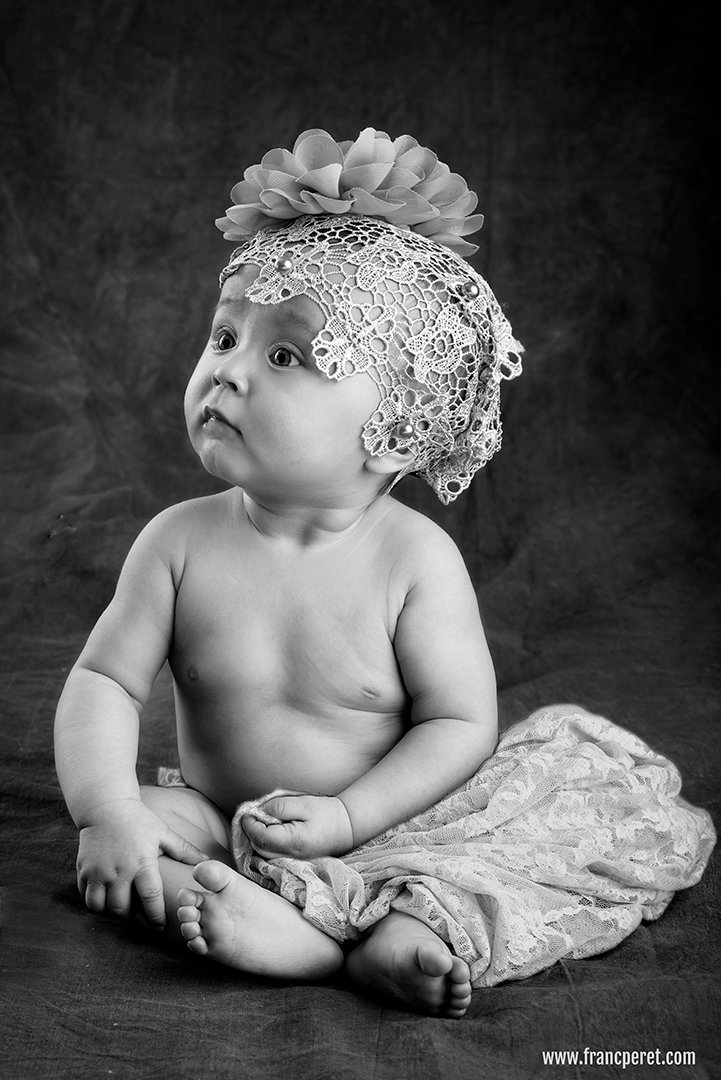
For this series of vintage shot of my little one, I had an idea in mind and this drives most of my choices: background, clothe and accessories, point of view, lens choice and lighting.

Lighting is a bit specific as shooting a little kid is not the same as shooting an adult. You have to be prepared to get her face turning around and therefore to light up the scene from both direction to get a pleasing result wherever the little model is looking.

Difficulties in post processing is options. They are endless and sometime a break is welcome to leave the creative process for a while to come back with a fresh mind.
Difficulties in post processing is options. They are endless and sometime a break is welcome to leave the creative process for a while and to come back few hours later with a fresher mind a more critic eyes.
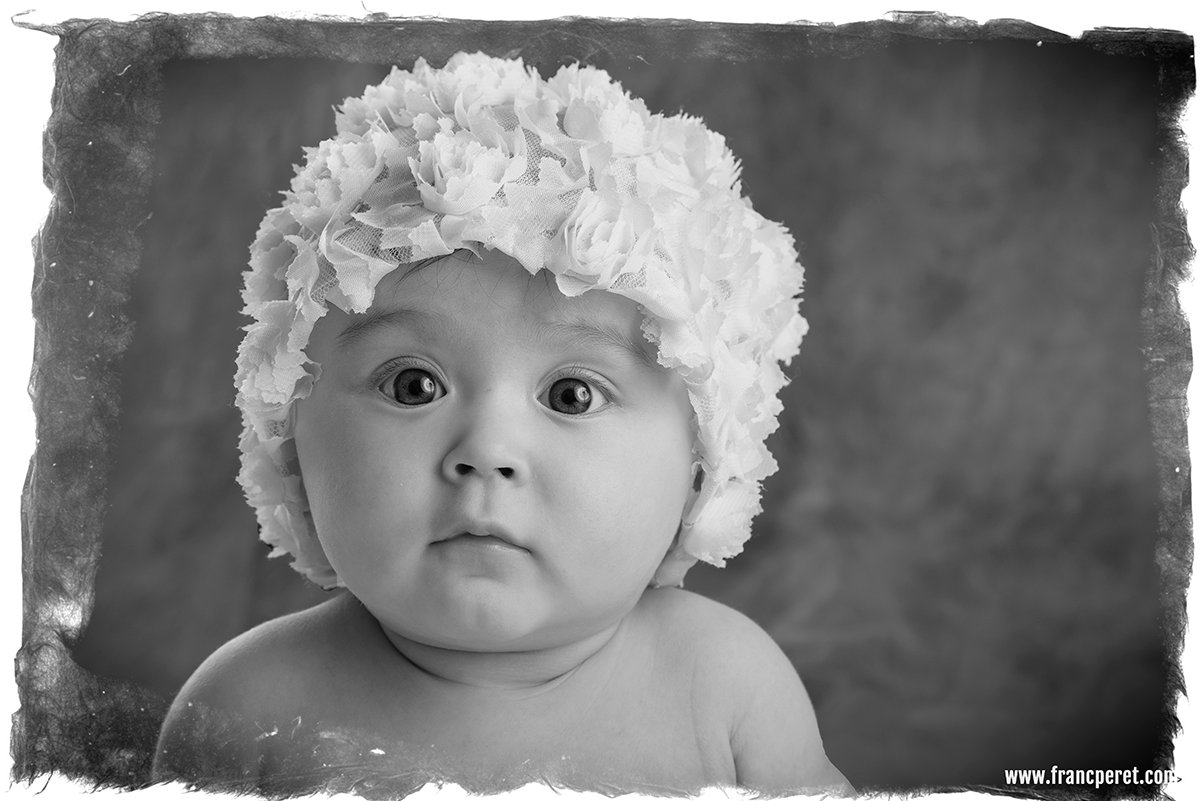
The first treatment is softer with a frame to get a "coming from the past" feel, while this one is having more details and higher contrast. Hard to decide which one is working the best...
The first treatment is softer with a frame to get a “coming from the past” feel, while this one is having more details and higher contrast. Hard to decide which one is working the best…

Key light and fill light should not exceed a 1:2 contrast ratio with the kick light in the same range to detach her silhouette from the background without burning the reflected highlight on her skin.

Sometime, I prefer to keep the color version all depends on the composition and the facial expression.
Sometime, I prefer to keep the color version, all depends on the composition and the facial expression.
Black and White is logically associated to the concept of vintage, but colors matter a lot as a starting point as they do not translate in the same shade of grey compare to the skin.

To achieve such a smooth light set up, I used 3 flashes:
The key light was bouncing inside a huge soft umbrella which behave like a 1.5 meter wide beauty dish (positioned on her left side, next to my right shoulder).
The fill light (which was also used to light up the background) was bouncing in the opposite corner of the room (facing her high, on her right side, over my shoulder).
The kick light was bouncing against the white wall behind her (high, on the right side of her back).

The sun is usually my best friend to shoot Apolline discovering her new world.
The sun is usually my best friend to shoot Apolline discovering her new world. Panasonic GM5 1/2500s ISO100 and OLYMPUS 45mm f/1.8 @ f/1.8
To tell the truth, I am much more used to shoot pictures of my little one in natural light, on the fly, when magic happens. I had to force myself a bit to start that "studio series", but I finally liked the experience very much.
To tell the truth, I much more used to shoot pictures of my little one in natural light, on the fly, when magic happens. I had to force myself a bit to start that “studio series”, but I finally enjoyed the experience very much and I will redo it again. Panasonic GM5 1/800s ISO100 and OLYMPUS 45mm f/1.8 @ f/2.2

Final touch, she was surrounded by white reflector panel to not get colored shadow form the wood furniture around.
I forgot to say that this set up was done in my bedroom and not a studio and my bedroom is quit small…

For that “studio session”, I used my Nikon D750 (ISO100) and a great old zoom lens (AF-S f/3.5-f/4.5 28-105mm D) set at f/8.

With such a cute model and good pictures to start with, it was very inspiring to play around with different photo treatment in post processing, to achieve the vintage look I was after.

A little girl is just an amazing subject to shoot with so many different expression waiting to be recorded
A little girl is just an amazing subject to shoot with so many different expression waiting to be recorded. Panasonic GM5 1/500s ISO100, LEICA DG NOCTICRON 42.5mm f/1.2 @ f/1.2
After shooting that studio session, I got used to treat my image different ways according the facial expression, my mood and type of lighting falling on her.
After shooting that studio session, I got used to treat my image different ways according the facial expression, my mood and type of lighting falling on her. Panasonic GM5 1/320s ISO100, LEICA DG NOCTICRON 42.5mm f/1.2 @ f/1.2

From start to end, I had something in my mind and I just made it come alive by adjusting every steps of the process in the same direction.

FP

Former photo journalist, Film maker and ELC Shanghai Photography teacher, Franc Peret is teaching Essential Photography Classes, Advanced Photography Workshop and Film Making Classes in Shanghai, for the last 11 years.
If you wish to contact Franc, just drop an email to francperet@hotmail.com

My First Pix of the Year

Here is my first shot of the year, in the bathroom mirror, while holding my no-cooperative little one with one hand and shooting with the other, using my newly purchased “vintage” digital camera.
By Franc Peret

For this shot, I am using a Nikon D90, a 2008 technology camra, bought new for 1800 RMB (= 275 USD) + a Nikkor 35mm f/2D (a vintage lens too) and a Yongnuo YN568EX Flash (Cheap and great Chinese Brand).

Why did I buy such an “outdated” camera? More about this in another post, later on…

SET UP EXPLAINED:
– Manual Mode = The only mode I can use to get my camera working with my flash at high synchro speed.
– Autofocus = AF single, multi point selection. This was the most efficient way to get in focus as our heads are in the foreground and, holding the camera that way, I am not able to perfectly set the more precise single focus point on one of our face.
– ISO200 = Base ISO for the D90, best possible quality picture with contrast, color depth and dynamic range.
– f/5.6 = to get enough Depth of field as we are close to the mirror and Apolline is moving back and forth so that she is never on the same plan as me. I could close down a bit more to be safer, but my flash batteries were not freshly charged and bouncing the flash is more demanding in term of power use and recycling time. I wanted to be able to shoot more frequently and at f/5.6 the flash was recycling much faster than at f/8.
– 1/500s (no need to be that fast, but I wanted to test the high speed synchro capability of he Yongnuo flash with the D90 and it works great!).
– Result: Soft light and no motion blur. At that set of value, 100% lighting is coming from the bounced flash directed straight to the ceiling which became the main source of light reflected by the surrounding white wall (and sink!) and the mirror itself.
– Black and White treatment: I felt that it worked very well to give more importance to the camera, as much as Apolline and myself in that shot. It is a matter of visual balance to communicate my feeling: My mind is split in 2 opposite directions that are, sometime, getting along very well:
My daughter VS Photography (and film making!)…

FP

Former photo journalist, Film maker and ELC Shanghai Photography teacher, Franc Peret is teaching Essential Photography Classes, Advanced Photography Workshop and Film Making Classes in Shanghai, for the last 11 years.
If you wish to contact Franc, just drop an email to francperet@hotmail.com
New Year Wishes?

This Colorful chalk on blackboard exhibit in Shanghai street looks like Some wishes for 2016 by a local street artist.
By Franc Peret

A real art piece as it is invaluable, nobody can buy it and it is going to be erased within a month…
Actually, those who are living in China know about those black boards present everywhere in traditional areas. Someone from the local community is writing and drawing on it for all their neighbors to remember the basic rules of good social behaviors as well as some advises related to education, health and safety.

It looks dated, in term of communication tool, but it is quit efficient and it should be considered as a real street art form.

FP

Former photo journalist, Film maker and ELC Shanghai Photography teacher, Franc Peret is teaching Essential Photography Classes, Advanced Photography Workshop and Film Making Classes in Shanghai, for the last 11 years.
If you wish to contact Franc, just drop an email to francperet@hotmail.com

New Year 2016

Just a quick word to wish to all my past, actual and future students a Happy New Year 2016!

Being the lucky father of a little star, I am very busy at home! And 2016 is going to be Apolline year…

Thanks to Richard Williams for his assistance on the “home made” studio shoot (actually all set in my tiny bedroom)…
Shot with 2 studio flashes, 1 huge umbrella (behaving like a 1.5 meter wide beauty disk) a backdrop and a Nikon D750 + an old great zoom Nikkor AF 28-105 mm f/3.5-f/4.5D set at f/8.

Franc Peret is a professional Photographer teaching Essential Photography Classes, Advanced Photography Workshop and Film Making Classes in Shanghai

Shanghai by Night II (Handheld)

This is another Night shooting session in Shanghai, with 6 of my students in the same area as the previous Night Walk. However, each time, it is a different experience due to the personality of the participant, the mood of the moment and the direction we are taking. Another great session with great people.
By Franc Peret

Last but not least, I am often changing my gear.
This time, instead of the Nikon D750 I used for previous session, I picked my 2 smallest cameras: The Nikon 1 V1 (1 inch sensor) and my Panasonic GM5.

The participant to the class: Nathalie, Vivian, Veronique, Rebecca, Alex and Priscilla.
The participant to the class: Nathalie, Vivian, Veronique, Rebecca, Alex and Priscilla. Nikon1 V1 ISO200 1/15s and Cine Nikkor 25mm f/1.4 @ f/1.4.

I fixed a Cine Nikkor 25mm f/1.4 (full metal and full manual) on the Nikon and a Lumix 20mm f/1.7 on the GM5.

Getting the phone hanging was a way to capture the interesting metallic link holding it in front of the breaking cars in the background.
Getting the phone hanging in space was a way to capture the interesting metallic link holding it in front of the breaking cars in the background. Nikon1 V1 ISO200 1/30s and Cine Nikkor 25mm f/1.4 @ f/1.4.

SMALL SENSOR vs BIG SENSOR

The big advantage of this type of camera (smaller sensors with great lenses) at night is to provide much more depth of field even at maximum Aperture (f/1.4 and f/1.7 in that case).

Vivian working to achieve the same effect while struggling to keep her balance.  Photography is a physical activity. anNikon1 V1 ISO200 1/8s and Cine Nikkor 25mm f/1.4 @ f/1.4.
Vivian working to achieve the same effect while struggling to keep her balance. Photography is a physical activity. Nikon1 V1 ISO200 1/8s and Cine Nikkor 25mm f/1.4 @ f/1.4.

Full frame camera are offering less noise, but to get enough things in focus, you can rarely use your lens fully open and being forced to close down the Aperture sometime, you need to increase the ISO to compensate.

To summarize, I would say that Full Frame camera at night are best used with subject at a longer distance, while cropped sensors works very well on close-up shots.
Somehow, APS-C (or DX) Sensors offer a great balance between the 2 options.

HUNTING REFLECTION

Alex collecting light on his face from Sony Showroom  display.  Nikon1 V1 ISO200 1/50s and Cine Nikkor 25mm f/1.4 @ f/1.4.
Alex collecting light on his face from Sony Showroom display. Nikon1 V1 ISO200 1/50s and Cine Nikkor 25mm f/1.4 @ f/1.4.

Here are some of shots I achieved that Night while walking in the heart of Shanghai, teaching to my students how to find a subject, compose their frame, set the camera according lighting condition and being as stable as possible to not need to increase the ISO.

Alex's camera at rest.
Alex’s camera at rest. Nikon1 V1 ISO200 1/8s and Cine Nikkor 25mm f/1.4 @ f/1.4.

This is an easy task to achieve in Shanghai, as source of lights are coming from everywhere and our only duty is to fill up the frame with colors, reflective surfaces and bright spots.

Lonely Tour Eiffel in a store. Light source direction are unusual at night bringing some magic to anything.
Lonely Tour Eiffel in a store. Light source direction are unusual at night bringing some magic to anything. Panasonic GM5 ISO100 1/160s and 20mm f/1.7 @ f/2.5
All black, white and red. Waiting to cross the street.
All black, white and red. Waiting to cross the street.Panasonic GM5 ISO200 1/6s and 20mm f/1.7 @ f/2

Most importantly, is to not try to reproduce the kind of shots you usually do daytime.
It would be meaningless as nighttime is offering such a different look and challenge.

Yellow Bike build to last according the Brand name: "Yong jiou" (Use Longtime). Nikon1 V1 ISO100 1/6s and Cine Nikkor 25mm f/1.4 @ f/1.4
Yellow Bike build to last according the Brand name: “Yong jiou” (Use Longtime). Nikon1 V1 ISO100 1/6s and Cine Nikkor 25mm f/1.4 @ f/1.4
No smoking. In the taxi bringing me to the meeting point. Nikon1 V1 ISO200 1/25s and Cine Nikkor 25mm f/1.4 @ f/1.4
No smoking. In the taxi bringing me to the meeting point. Nikon1 V1 ISO200 1/25s and Cine Nikkor 25mm f/1.4 @ f/1.4.

Best to be stable is to find something solid to hold your back, your shoulder or even your camera from the position you want to build up your composition.

Luminous landscape. Panasonic GM5 ISO200 1/15s and 20mm f/1.7 @ f/2.
Nathalie framing a fire hydrant against the bright city landscape. Nikon1 V1 ISO200 1/15s and Cine Nikkor 25mm f/1.4 @ f/1.4

I usually advice wall, handrail, tree or ground.
Unfortunately, you are not always finding a friendly support for every subject.

Alex in a corner for a great color match.
Alex in a corner for a great color match. Panasonic GM5 ISO100 1/50s and 20mm f/1.7 @ f/2

In that case, the way you are positioning your body and holding your camera are going to matter even more to not get a blurry shot at low shutter speed.

AN HIDDEN WORLD

One of my favorite night shooting subject in such a developing city is background or details that could be used for the shooting of a 1950’s science fiction movie.

Science Fiction background 1.
Science Fiction background 1. Panasonic GM5 ISO200 1/2s and 20mm f/1.7 @ f/2.2

I am not sure you are going to understand this sentence, but lets check out the surrounding shots to get an idea of my feeling and inspiration.

Another inspiring Sci Fi background
Another inspiring Sci Fi background.Panasonic GM5 ISO200 1/10s and 20mm f/1.7 @ f/2
A Science fiction set coming from the past.
A Science fiction set coming from the past. Panasonic GM5 ISO400 1/5s and 20mm f/1.7 @ f/1.8

In this kind of set or with those type of details I can imagine parts of an abandoned space ship or high tech factory.
Sometime people are telling me that I am having too much imagination…

Space Station.
Space Station. Panasonic GM5 ISO200 1/2s and 12mm f/1.6 @ f/4

I am very clear about that.
Imagination will be NEVER too much.

Back to reality (almost).
Back to reality (almost). Panasonic GM5 ISO200 1/25s and 20mm f/1.7 @ f/2

For me, imagination is the only way to never get bored of something I am doing since 1986: professional photography.

An individual space ship?
An individual space ship? Panasonic GM5 ISO400 1/10s and 20mm f/1.7 @ f/2

And after 15 years shooting film, digital photography helped me to cross all my previous boundaries, and Photoshop, Video, film making, editing are added value to the experience.
And as I often say to my students, I am learning something new about photography and film making, almost everyday.
It is an endless process.
My life will never be long enough to learn as much as I would like to…

If you liked this post, you can discover the previous night shooting session in Shanghai Here

Former photo journalist, Film maker and ELC Shanghai Photography teacher, Franc Peret is teaching Essential Photography Classes, Advanced Photography Workshop and Film Making Classes in Shanghai, for the last 11 years.
If you wish to contact Franc, just drop an email to francperet@hotmail.com
Shanghai by Night (Handheld)

Since I am living in Asian big cities, I deeply enjoy shooting at night as there is so much going on with so many light sources, potential silhouette and reflective surfaces. Best of all, it is always a pleasure to share my knowledge and experience about such a very specific topic with some of my favorite students.
By Franc Peret

Here is what I achieved while running this Fall 2015 Night shooting class in the heart of Shanghai.
This is the first of a series of night shooting with and without tripod.
You can discover the second hand held night walk session here.

In search of interesting reflective surfaces and bright dots in background
In search of interesting reflective surfaces and bright dots in background. Nikon D750 ISO100 1/20s 50mm f/1.8 @ f/1.8
Audi bright lines.
Audi bright lines. Nikon D750 ISO200 1/6s 50mm f/1.8 @ f/2

I worked with a Nikon D750 and three cheap and bright lenses: Nikon AF-S 50mm f/1.8G, Nikon AF-S 35mm DX f/1.8G and Sigma 28mm f/1.8.

Wide night world in marble.
Wide night world in marble. Nikon D750 ISO100 1/20s 50mm f/1.8 @ f/1.8

Surprisingly, the 35mm DX (designed for crop sensor camera, such as Nikon D7200) is working very well on my Full Frame camera.

Abstract car's breaking light on aluminium panel
Abstract car’s light on aluminium panel. Nikon D750 ISO100 1/6s 50mm f/1.8 @ f/2.8
Double Rey and his Sony A7.
Double Rey and his Sony A7. Nikon D750 ISO100 1/8s 50mm f/1.8 @ f/1.8

Set on some Aperture and focusing closer, a strong vignetting appears, but I am avoiding this quit easily. It is a great little lens, sharp and light.

Dream Team of students with (from left to right) Rey, Natacha, Charlie, Isabelle, Monja, Klaus, Gwen, Liam and Jana
Dream Team of students with (from left to right) Rey, Natacha, Charlie, Isabelle, Monja, Klaus, Gwen, Liam and Jana. Nikon D750 ISO800 1/20s 35mm f/2 @ f/2.2

To Compare, I brought along an old prime lens: Nikon AF-D 35mm f/2 which is still a good performer as you can see on the group shots.

An emergency shot done just before the parked car with the red lights is going away. Hard to be quick, to compose and to be stable. Nikon D750 ISO200 1/10s 35mm f/2 @ f/2

The 28mm f/1.8 Sigma is an old Manual focus lens that I bought second hand more than 10 years ago in Japan for less than 300 RMB (50 USD). It is bright, light and a joy to use.

Kerstin at work: stability and concentration
Kerstin at work: stability and concentration. Nikon D750 ISO400 1/8s 35mm f/2 @ f/2

For many years, Nikon Camera are having a great and helpful feature for focusing, especially at night with a fully open bright lens.

Orange and Blue
Orange and Blue. Nikon D750 ISO400 1/5s 35mm f/2 @ f/2.2
Red and Blue
Red and Blue. Nikon D750 ISO400 1/15s 35mm f/2 @ f/2.5

A green dot is lighting up in the left corner of the view finder, as soon as any lens fixed on the camera is getting in focus. It is very accurate and a time saver sometime.

Wood Men in Suits. Red and Blue. Nikon D750 ISO200 1/15s 35mm f/2 @ f/4

TO come back to the night shooting Class, our group didn’t have to cover a long distance as there is so many things to see, with trained eyes, in what supposed to be darkness.

Game of Lines, Silhouette, Light and Shadow. Nikon D750 ISO200 1/4s Sigma 28mm f/1.8 @ f/2.8

3 hours class between 6:30 to 9:30 pm were sufficient to collect hundred of shots.
Here is a short selection of that inspiriting time.

Sakura Hotel, a difficult High Contrast Scene that would deserve a tripod and a HDR treatment with a series of bracketed shots. Nikon D750 ISO400 1/20s Sigma 28mm f/1.8 @ f/2.0

When my Students start to find aesthetic interest in garbage can, I know that my teaching was efficient and meaningful to them. I am having a joke about this in my essential photography program.

When my Students start to find aesthetic interest in garbage can, I know that my teaching was efficient and meaningful to them. Klaus at work with his Fujifilm Camera. Nikon D750 ISO400 1/10s 50mm f/1.8 @ f/2.0

I am teaching that the most dangerous topics for photographer and kids and pets (especially kitty).
In the world, the biggest calendar sell are still cats.
Nothing can beat cats in term of visual attraction to most middle age house wife who are buying those calendars.

Handling the Handle bar. Nikon D750 ISO100 1/6s 50mm f/1.8 @ f/2.0
Painted words and side light. Nikon D750 ISO100 1/6s 50mm f/1.8 @ f/2.0

Problem with pets and kids is that they are attractive on their own. Show a picture of a little kid or a baby cat and viewers are going to love your pictures.

Handling the Handle bar, version 2. Nikon D750 ISO100 1/10s 50mm f/1.8 @ f/2.0
Handrail. Nikon D750 ISO100 1/30s 50mm f/1.8 @ f/1.8

Frustration comes on the fact that, viewer do not specifically like your picture, they like the subject instead.
And here comes the garbage can parabola.

Zebra and couple. Nikon D750 ISO100 1/10s 50mm f/1.8 @ f/1.8
Zebra II. Nikon D750 ISO100 1/10s 50mm f/1.8 @ f/1.8
Zebra. Nikon D750 ISO100 1/10s 50mm f/1.8 @ f/1.8

I am teaching to my students that if they are able to bring positive emotion to viewers while showing them their garbage can picture, they would have achieve something genuinely good as photographer…

Success will not belong to the subject itself, but to the photographer only.
And night shooting, with all its magic, is the best place to give it a try…

If you liked this post, you can discover the second hand held night session in Shanghai here.

Former photo journalist, Film maker and ELC Shanghai Photography teacher, Franc Peret is teaching Essential Photography Classes, Advanced Photography Workshop and Film Making Classes in Shanghai, for the last 10 years.

Best Camera for “Holding Baby” shots?

Taking care of my new born baby, I cannot resist shooting her daily, trying to capture her random facial and body expression while she is nestled in my arm. Shooting with one free hand only (often the wrong one), I am enjoying the great overall features of a camera, which became my favorite tool for self “holding Baby” Shots.
By Franc Peret

In my 28 years career, I had a chance to use a wide range of cameras from film to Digital, and since I am working in both photography, film making and video fields, I had to diversify even more my arsenal of shooting tools.

The Panasonic GH4 is quit generous in size for a M43 camera and the Nikon D750 is quit compact for a full frame camera. Overall the size difference between the two is not so huge, but weight is different and lenses are much bigger for the  Nikon.
The Panasonic GH4 is quit generous in size for a M43 camera and the Nikon D750 is quit compact for a full frame camera. Overall the size difference between the two is not so huge, but weight is different and lenses are much bigger for the Nikon.

In the mood for choice

Nikon 1 V1 and classic lenses is one of my favorite combination for personal use, but it is not the best choice for "holding baby" shots due to its lack of external control,  automatic features (such as autofocus with those lenses) and movable screen.
A Nikon1 V1 and classic lenses is one of my favorite combination for personal use, but it is not the best choice for “holding baby” shots due to its lack of external control, automatic features (such as autofocus with those lenses) and movable screen.

For my work assignment, I am using a traditional Nikon Full Frame DSLR camera (D800 and now D750) because I am accustomed to this reliable line up which is able to deliver great details images.
Also, to match any shooting situation (according client’s demand), I am owning a wide variety of Nikon lenses from 16mm to 500mm, an expensive collection I started 28 years ago: A good reason to keep faithful to a brand…
For my own time (street photography or traveling), I often pick up something funnier, lighter and more compact such as a Nikon1 V1 or any other compact alternative.

Panasonic for Pro Videography

Working also in Film Making and Corporate Video fields, I invested in the hybrid (photo + video) Panasonic Lumix line up (GH1, GH2, GH3 and GH4) as I always liked the image recorded by Professional Panasonic video camera (HVX200 or HPX500) I was using beforehand.

On Photography forums, many are debating on size sensors and number of pixels, but few post do care about ergonomic. I do. I want my camera to feel comfortable in my hand and I am looking for direct controls with the right touch and positioned on the right place. GH4 is more professional than the D750 on that point of view. Any extra feature which help me to work faster and more efficiently is greatly welcome and the swiveling screen of the GH4 is an amazing advantage compare to traditional DSLR. The D750 is the first Nikon FX camera with a tilting screen, but it is nothing comparable.
On Photography forums, many are debating about size sensors and number of pixels, but few post do care about ergonomic. I do. I want my camera to feel comfortable in my hand and I am looking for direct controls with the right touch and the best positioning. GH4 offers a more professional approach on that matter than the D750. Any extra feature which help me to work faster and more efficiently is greatly welcome and the swiveling screen of the GH4 is an amazing advantage compare to traditional DSLR. The D750 is the first Nikon FX camera with a tilting screen (up and down), but it is not sufficient to compete.

And the GH series are amazing tools for video production at a very reasonable cost. Thus, GH4 is capable of 4K video.

With the mirror option, the POV "holding baby" shot will work with any camera. GH4 ISO200 1/25s and 25mm f1.4 @ f2
With the mirror option, the POV “holding baby” shot will work with any camera. GH4 ISO200 1/25s and 25mm f1.4 @ f2

However, for professional photography, The Panasonic GH4 will not yet replace my Nikon bodies as there is still a difference in term of use and final quality output between the two.

Nikon for Pro Photography

Globally, Nikons are offering sturdier body, less shutter lag and more accurate continuous autofocus for sport photography, a second card slot for safety, more pixels for big prints, more accurate optical viewfinder for composition and better raw files to work with (more color information)…
Overall, I still feel that my traditional DSLR bodies are more suited to answer to any of my clients need.

Flexibility for Private use

My shooting style in private life is very different compare to what I am doing for work, and I do not mind to use a much more compact Panasonic system, as I like to feel freer not carrying too much weight.
Most of the time, creativity depends more on system flexibility (adaptability) than ultimate file quality.

This is the shot I achieved, despite my uncomfortable position. I had to correct the color cast on her face as the reflection of my orange tee-shirt tinted her skin in the shadow area. GH4 ISO200 1/160s and 25mm f1.4 @ f2.5.
This is the shot I achieved, despite my uncomfortable position. I had to correct the color cast on her face as the reflection of my orange tee-shirt tinted her skin in the shadow area.
GH4 ISO200 1/160s and 25mm f1.4 @ f2.5.
To achieve such a shot  from my point of view (POV), it can become quit acrobatic as soon as my right arm is busy  holding my daughter. Despite the appearance, I am composing the shot precisely, thanks to the swiveling  screen open on the left side of the camera. (Shot by Sarah)
To achieve such a shot from my point of view (POV), it becomes sometime acrobatic as soon as my right arm is busy holding my daughter. Despite the appearance, I am composing the shot precisely, thanks to the swiveling screen open on the left side of the camera. (Shot by Sarah)

Self Baby Nestling Shooting

Recently, as I explained in the introduction, I am stuck at home for a good reason, and often need to take picture, by myself, of my little girl resting in my arm.
This is a difficult task as I am having only one hand free to select the focus point, to modify the setting and to press the shutter button.

Another moment and another angle from the same position. This time, I lowered my upper body to get that point of view. GH4 ISO200 1/50s and 25mm f1.4 @ f2.8.

Also, being so close to my subject, I often meet the minimum focus distance limit of my lens and I can hardly diversify my point of view. Actually, this last restrain is counterbalanced by the possibility to carry the subject under the source of light of my choice.

The GH4 is offering a touch sensitive swiveling screen, and a total freedom to set the focus point anywhere in the frame.

GH4 is made for it!

Actually, I am working around all those limitations by using my Panasonic GH4, thanks to its numerous interesting and adequate features:

1 – GH4’s fully articulated swiveling screen provide a perfect vision of the composition from any Point of View (POV) for me to shoot from any position and even in front of me for a self portrait of us, if needed.

2 – This screen is touch sensitive and it allows me to select the focus point with one finger on the exact part of the subject I want sharp after composing my shot. If I want, I can also take the shot by taping on this screen, just like a smartphone.

Silent shutter mode is a great option to NOT wake up the baby while shooting that close!

3 – The GH4 has focus points located everywhere on the frame (which is not the case on former DSLR which get their focus points spread around the center of the image) and I am free to put my subject wherever I want it in my composition, even next to a border of the frame.

4 – Thanks to a smaller sensor, the Lumix lenses are often sharper on the complete frame (from center to corner), even at full Aperture, while FX lenses often need to be closed down 2 stops to deliver an equivalent result. This means possibilities to use lower ISO on the Panasonic.
This also means another possibility to use lower ISO on the Panasonic.

5 – Also thanks to a smaller sensor, the depth of field is more important than on a Full frame camera (globally a f1.4 Aperture on the GH4 is equivalent to a f2.8 Aperture on my Nikon D750), so there is more things in focus under the same lighting condition (while using the base ISO on both cameras), which is an advantage at such short distance.

Deep sleep breath is one of the most wonderful moment holding a baby in your arm. Feeling safe and comfortable, she just let it  softly go for a 2 hours sleep... GH4 ISO400 1/30s and 25mm f1.4 @ f2
Deep sleep breath is one of the most wonderful moment holding a baby in your arm. Feeling safe and comfortable, she just let it softly go for a 2 hours sleep… GH4 ISO400 1/30s and 25mm f1.4 @ f2

6 – The generous size of the GH4’s body (for that type of camera) and its multiple display of physical buttons mean a great ergonomic. Therefore, with only one hand I can have direct control on ISO, White Balance, Exposure compensation, Aperture, focus point positioning and shutter trigger!

7 – Last but not least, the GH4 gets an electronic shutter function, which means (almost) complete silence shooting, which is a huge advantage to NOT wake up the baby who had so much difficulties to fall asleep!

Sharing moment, I am watching a movie on my computer screen while Apolline is doing her gym. GH4 ISO400 1/13s and 25mm f1.4 @ f1.6

GH4 better than a Smartphone?

Compare to all those advantages, my smartphone is quit limited. lacking a screen independent to the on-board camera and a physical shutter button. I am often missing great shots with my smartphone as, in certain position, I cannot efficiently reach and press the virtual shutter trigger located on the screen.
Another restrain is the deformation created by the wide lens, especially while shooting so close.

Sometime, it is mission impossible to shoot on your own; While sleeping for example. Sarah's picture with Panasonic GH4 ISO500 1/20s with 25mm f1.4 @ f1.6.
Me and my mini Me: Sometime, it is mission impossible to shoot on your own; While sleeping for example. Apolline’s right hand is not cut out in composition. As we cannot shorten her nails yet, we are keeping her hands inside very long sleeves to avoid scratches on her face. Sarah’s shot with Panasonic GH4 ISO500 1/20s with 25mm f1.4 @ f1.6.

Why holding the baby?

Another good reason to turn the camera a bit further away than my arm: Mama and Baby interaction. Panasonic GH4 ISO320 1/125s with 42.5mm f1.2@ f1.4.

Of course, there is some limitation and lack of variety by shooting while holding the baby, but there is something extremely motivating: straight interaction between her and me.
While nestled in my arm, my baby girl never stop to change her eyes, facial and body expressions.
She might be willing so much to communicate with me.
And I do not want to miss a chance to grab those fragments of early baby language, before articulated words come into our relationship.

Magical moments capture

Therefore, most important is to concentrate on some usual and unusual technical factors to capture those magical moments. Here are some:

1 – Being so close, lenses (especially wider ones) create distortions as soon as the subject is not centered. Best is to shoot with, minimum, a 25mm lens on a M43 camera, a 35mm on a APS-C (DX) Camera and 50mm on a FX Camera. I am using a wider lens sometime (14mm on M43 = 28mm on FX) to play with the distortion (to make the baby looks like a doll with big eyes on the foreground for example) or by carefully keeping the face of the baby close to the center while showing much more things in the background.

Using a wider lens very close to the subject (the subject being close to a border of the frame) may create some "cute" distortion. GH4 ISO400 1/125s and 14mm f2.5 @ f2.8
Using a wider lens very close to the subject (the subject being close to a border of the frame) may create some “cute” distortion. GH4 ISO400 1/125s and 14mm f2.5 @ f2.8
By keeping the face closer to the center of the frame, a wider lens "behaves" normally and allow to add more information from the environment. GH4 ISO200 1/40s and 14mm f2.5 @ f3.2
By keeping the face closer to the center of the frame, a wider lens “behaves” normally and allow to add more information from the environment. GH4 ISO200 1/40s and 14mm f2.5 @ f3.2

2 – Being so close, the depth of field is extremely reduced and it is, more than ever, important to pick up the right part of the subject to focus on (Eyes, most of the time). Also, do not hesitate to close down the Aperture to get enough in focus.

For such close up, you have to set the focus point on the part of the face you think is the most important, especially while using a wide Aperture. This is a risky choice and better to close down the Aperture instead, if you feel you don't get enough depth in focus. GH4 ISO200 1/160s and 25mm f1.4 @ f1.6.
For such close up, you have to set the focus point on the part of the face you think is the most important, especially while using a wide Aperture. This is a risky choice and better to close down the Aperture instead, if you feel you don’t get enough depth in focus. GH4 ISO200 1/160s and 25mm f1.4 @ f1.6.

3 – The way you dress will matter a lot on the final result. While holding the baby in your arm, close to your body, your shirt color (brought alive by the main source of light) is going to be reflected on the shadow area of the baby’s face. Best is to get a white shirt (for smoother contrast) or a black shirt (for more dramatic lighting style, with darker shadows) or a warm color tee shirt to “spring” up the atmosphere.

Each facial expression is giving her a different personality. Being serious, She looks like a little boy much older than her 3 weeks. This might also due to the Darker shadows provided by my black shirt. Panasonic GH4 ISO400 1/30s and 35mm f1.4 @ 1.4.

As you can see, by learning its restrain and gaining more experience on that shooting style, I am going to come up with more creative ideas by taking benefit of the limitation of the concept itself.
So do not be surprised if you see me wearing an aluminium suit one day!
As a conclusion, I would like to give a very important advise to those who are willing to give it a try with a baby, a pet, a pole dancer, a Chippendales or your grand’Ma: hold firmly your subject!

Former photo journalist, Film maker and ELC Shanghai Photography teacher, Franc Peret is teaching Essential Photography Classes, Advanced Photography Workshop and Film Making Classes in Shanghai, for the last 10 years.

New Born Apolline

Apolline (Ling Li, 灵莉, in Chinese) was delivered on June 3rd, after 36 hours of tough efforts from her mother (and my beloved wife) Sarah. First mensuration: 51cm long and 3.65 Kg. I am taking advantage of this great personal event to offer some tips about taking pictures of babies.

By Franc Peret

Having a baby is the start of an emotional journey which is going to last until her adult life (at least).

Another earlier shot, less than 3 hours after birth. In China, a tag is attached to the body with the name of the mother and the sex of the baby. Majority of Chinese prefer boy than girl and some of them would not hesitate to switch a baby to get their wish fulfilled.
Another earlier shot, less than 3 hours after birth. In China, a tag is attached to the body with the name of the mother and the sex of the baby. Majority of Chinese parents prefer boy than girl and some of them would not hesitate to switch a baby to get their wish fulfilled. Light was getting lower already, but my subject is not moving. I increased the ISO to be able to close down a bit the Aperture to be sure that the complete frame will be sharp. Panasonic GH4 ISO400 1/40s, 25mm f1.4 @ f2.
One of my very first shot in the hospital, a couple of hours after Apolline birth in Shanghai.
One of my very first shot in the hospital, a couple of hours after Apolline birth in Shanghai. Artificial Light was real bad, but that does not matter in such circumstances, capturing immediate magic moments are more important than aesthetics improvement sometime. Panasonic GH4 ISO200 1/80s, 25mm f1.4 @ f1.8.

Most of the time, my students are having difficulties to take good pictures if they are too much in love with their subject, which is often the case with kids (hopefully!).

When emotions get on the way

With a camera in hand, they can hardly see their beloved ones with cold blood aesthetics and critical eyes for concentrating on key elements, which are somehow needed to achieve a successful composition and therefore a better shot.

One last "finger holding" picture with a different vision. Notice that on all those three shot I am using a diagonal composition to fill up my frame with interesting information an to render a more dynamic feel: her grabbing seems to be in action.
A second “finger holding” picture with a different angle and much more light. Notice that on those 2 shots I am using a diagonal composition to fill up my frame with interesting information and to render a more dynamic feel: her finger grabbing seems to be in action, like it just happened. Panasonic GH4 ISO200 1/320s and 25mm f1.4 @ f2.8.
First day with Apolline, I was amazed by her hands, especially compared to surrounded Chineses babies in the same room. Her fingers are so thin and so long. To give an idea of their size, I let her hold one of my finger and focused on it to attract the attention of the viewer on it. Panasonic GH4 and 25mm f1.4 @ f1.4.
First day with Apolline, I was amazed by her hands, especially compared to surrounded Chineses babies in the same room. Her fingers are so thin and so long. To give an idea of their size, I let her holding one of my finger and I focused on it to attract the attention of the viewer. Panasonic GH4 ISO200 1/60s and 25mm f1.4 @ f2.

Double personality

Due to my long professional career, I am used to split my personality in two as soon as I am grabbing a camera for shooting.

Massage time on Apolline's little foot. While my right hand was busy, I succeeded to stabilize my camera with my left hand, setting up manually the focus on the nearest limit of the lens and just moving physically toward my subject until the foot gets in focus. I used a very bright lens to render that dreamy comfy look from the blanket and surrounding element. Panasonic GH4 + Metabones Speed Booster + Nikon AIS 55mm f1.2 @ f1.2.
Massage time on Apolline’s little foot. While my right hand was busy, I succeeded to stabilize my camera with my left hand, setting up manually the focus on the nearest limit of the lens and just moving physically toward my subject until the foot gets in focus. I used a very bright lens to render that dreamy comfy look from the blanket and surrounding element. Panasonic GH4 ISO200 1/100s + Metabones Speed Booster + Nikon AIS 55mm f1.2 @ f1.2.
A foot print was taken from our new born baby for Hospital record, I focused on the blue ink which is still visible. Panasonic GH4 and 25mm f1.4 @ f1.6.
A foot print was taken from our new born baby for Hospital record, I focused on the blue ink which is still visible. Important here was to press the shutter at the right timing, when feet were statics, to get the shot in low light and low ISO. Panasonic GH4 ISO200 1/250s and 25mm f1.4 @ f1.6.

As everyone else, I am using my heart for emotion and inspiration, but whatever happens, I am able to keep my brain concentrated on technical decision as soon as there is a view-finder between me and the scene.

Different Case Study

For example, in usual life, seeing blood flooding make me badly sick, but as a photographer, watching bloody scene through my lenses does not affect me at all.

Here, the composition challenge was to get her feet sharp and the rest of her body out of focus in the background. Compare to the previous shot, I turned the bed to soften a bit the contrast by getting the windows (main source of light) closer to my shoulder. Here, depth of field was less important as the foot is the main subject. Nikon1 V1 with Angenieux 25mm f0.95 @ f2.
Here, the composition challenge was to get both my hand and her feet in the shot and the rest of her body out of focus in the background. I turned the bed to soften a bit the contrast by getting the windows (main source of light) closer to my right shoulder. Here, depth of field was less important as only the foot is the main subject. Nikon1 V1 ISO200 1/50s with Angenieux 25mm f0.95 @ f2.
I am addicted to my daughter's feet which are quit slender for a 2 weeks old, half Chinese, baby girl. I position the bed to get that strong contrast lighting form the nearby window to help me to separate her feet and my hand by creating a shadow between the 2. I tried to be as symmetrical as possible to attract the attention on both subjects shape and size. I Closed down the Aperture to get enough depth of field and more details to perfectly render the skin texture of both hand and foot. Nikon 1 V1 and Angenieux 25mm f0.95 @ f2.8.
I am addicted to my daughter’s feet which are quit slender for a 2 weeks old, half Chinese, baby girl. I position the bed to get that strong contrast lighting from the nearby window to help me to separate her feet and my hand by creating a shadow between the 2. I tried to be as symmetrical as possible to attract the attention on both subjects texture, shape and size. I Closed down the Aperture to get enough depth of field and more details (by reaching a sweet spot of my lens) to perfectly render the skin texture of both hand and foot. Nikon1 V1 ISO100 1/40s and Angenieux 25mm f0.95 @ f2.8.

In such shooting circumstances, I am only thinking of getting the best shots possible out of the scene, even the guy in front of me is bleeding like hell, as you can see here, in my 1994 Taiwan Qi Gung report.
Actually, I felt sick the first time I watched my pictures!

Sweet headline

To come back to my headline sweeter topic, shooting baby (especially yours) need that double personality split capacity and I am sure any of my student or reader can earn it.

Wake up time. This is a difficult moment. Baby is moving randomly and it is best to pull back to get some headroom and "footroom". Here I didn't anticipated the amplitude of  her movement and her right foot is cropped a bit. I still like this picture because the blurry part (legs are both out of focus and moving) translate the body tension accompanying  the moaning session. My advice: Just get what you absolutely need in focus and do not mind the blurriness elsewhere as soon as it serves your intention.  Nikon D750 ISO 560 1/125s and AF-S 85mm f1.4D @ f2
Wake up time. This is a difficult moment. Baby is moving randomly and it is best to pull back to get some headroom and “footroom”. In this shot, I didn’t anticipate enough the amplitude of her movement and her right foot is cropped a bit. I still like this picture because the blurry parts (legs are both out of focus and moving) translate the body tension accompanying the moaning session. My advice: Just get what you absolutely need in focus and do not mind the blurriness elsewhere as soon as it serves your intention (more dynamic and lively shot). Nikon D750 ISO 560 1/125s and AF-S 85mm f1.4D @ f2
Sleeping time, nothing is moving, there is no excuse to get a blurry or grainy pictures, in those ideal conditions. I positioned the bed (a chair actually) next to a window to get the smooth light (overcast polluted day is perfect for that)  falling on my baby. I can work quietly, stabilizing my camera and shooting at base ISO for best quality. I used a very bright lens and focused on her face. Panasonic GH4 and 42.5mm f1.2 @ f1.4
Sleeping time, nothing is moving, there is no excuse to get a blurry or grainy pictures, in those ideal conditions. I positioned the bed (a chair actually) next to a window to get the smooth light (overcast polluted day is perfect for that) falling on my baby. I can work quietly, stabilizing my camera and shooting at base ISO for best quality. I used a very bright lens and focused on her face. Panasonic GH4 ISO200 1/200s and 42.5mm f1.2 @ f1.2

To help them and you on that, I am delivering some simple tips related to baby shooting, something I am experimenting since 3 weeks at the time I am writing this article.

Auto portrait in the bathroom. First of all, light on as many (and good) lights as possible to get a better quality shot. Photography is painting with light! Second, position the focus point on something significant (such as a face), hold the camera firmly (and the baby too!) and try to keep it straight, horizontal and stable. Nikon D750 ISO400 1/80s and 50mm f1.8 @ f2.8. I increased the ISO a bit to be able to close down the Aperture (to get more DOF) as my face and baby's face are not on the exact same distance. As I am stable to hold the camera and to not move, 1/80s was sufficient.
Auto portrait in the bathroom. First of all, light on as many (and good) lights as possible to get a better quality shot. Remember: Photography is painting with light! Second, position the focus point on something significant (such as a face), hold the camera firmly (and the baby too!) and try to keep it straight, horizontal and stable. Try to look friendly or smart and shoot. Nikon D750 ISO400 1/80s and 50mm f1.8 @ f2.8. I increased the ISO a bit to be able to close down the Aperture (to get more DOF) as I am using a Full Frame camera and as my face and baby’s face are not positioned at the exact same distance. Being stable enough to hold the camera and to not move, 1/80s was sufficient.
Cleaning time. Mama is taking care of the baby girl which is moving a lot, except her head (one of the heaviest part of her body). Therefore, I was able to keep a reasonable ISO value with a lower shutter speed, to get both a sharp face while keeping hands movement blurry to describe er excitement. Panasonic GH4 ISO400 1/40s and 25mm f1.4 @ f1.4/
Cleaning time. Mama is taking care of her baby girl who is moving a lot, except her head (one of the heaviest part of her body). Therefore, I was able to keep a reasonable ISO value as a lower shutter speed was sufficient to get both a sharp face while keeping hands movement blurry, to describe Apolline’s excitement. I focused on her eyes precisely as I am quit close with a fully open Aperture (less Depth of field overall). Panasonic GH4 ISO400 1/40s and 25mm f1.4 @ f1.4/.

TIPS FOR PASSPORT PICTURE

First thing first, I needed to shoot a passport picture to be sure to get it on time for a planed trip back to France during summer break.

Mission impossible?

This is not an easy task when baby is only 1 week old and can hardly:

My one week old daughter's picture for her passport. Shot with a Panasonic GH4 ISO200 1/60s and 28mm f2.8 @ f4 (for more details and depth of field) under natural light (window and white wall)
My one week old daughter’s picture for her passport. Shot with a Panasonic GH4 ISO200 1/60s and 28mm f2.8 @ f4 (for more details and depth of field) under natural light (window and white wall).

– Stay awake with eyes opened under good lighting.
– Sit down
– Hold her head by herself.

5 steps for success

All of this sounds like Mission impossible, but I succeed to manage it following those steps:
1 – Stand next to a window to collect as much light as possible.
If weather is sunny, get a transparent curtain closed to soften the light.
Do not try to shoot it at night or under artificial lighting, the image has many chances to be grainy or blurry. Do not use flash! It is dangerous for baby’s eyes and can damage them, especially if you set a direct flash straight on her face.
2 – Mount a ‘portrait” lens on your camera: a 25mm or longer on a M43 camera, a 50 mm or longer on an APS-C (DX) camera or 85 mm or longer on a FX camera.
3 – In Aperture mode, set up your ISO and Aperture in advance, according your lighting situation, to reach a fast enough shutter speed (about 1/125s).
4 – Get your baby well dressed, in a good mood and fully wake up (daytime after feeding him/her).
5 – Someone has to hold her/him as straight as possible, facing the camera, with one hidden hand behind the neck for keeping him/her still.

One bad habit is to always shoot close up shots and to avoid too much the environment, as the changing facial expression of the little one is so attractive. Panasonic GH4 ISO400 1/60s and 25mm f1.4 @ f1.4.
With a bit of discipline, you can try to force yourself to pull back and to include both a out of focus foreground and a wider background around your main And cute subject. Panasonic GH4 ISO400 1/100s and 25mm f1.4 @ f1.4.
With a bit of discipline, you can try to force yourself to pull back and to include informative out of focus foreground and a wider background around your main And cute subject. Panasonic GH4 ISO400 1/100s and 25mm f1.4 @ f1.4.

Later on, I am going to add some more ideas and advises into this page, while adding more pictures.
Already, you are having plenty of tips by reading all posted picture’s captions.
Hope all of this will be useful…

Some technical remarks

I am using 3 different types of cameras with different size sensor. This matters a lot in term of Depth of field and field of view. I am used to switch and I am used to consider my lens choice and my Aperture settings accordingly.

Surprise! Nikon D750 ISO400 1/160s and AFS 85mm f1.4D @ f1.4.
Do not hesitate to shoot a lot and often, as soon as you get a good composition, the right lighting and good exposure. Facial expression is changing so quickly that every shot will be different. Nikon D750 ISO400 1/160s and AFS 85mm f1.4D @ f1.4.
Do not hesitate to shoot a lot and often, as soon as you get a balanced composition, a good enough lighting and the right exposure. Facial expression is changing so quickly that every shot will be different. It was real hard to make a choice among so many cute facial expression. Nikon D750 ISO400 1/160s and AFS 85mm f1.4D @ f1.4.

To keep it simple (even it is not perfectly accurate), Nikon D750 (FX) Sensor’s Size = 2 x Panasonic GH4 Sensor’s Size (M43) and Nikon D750 (FX) Sensor’s Size = 2.7 x Nikon 1 V1 Sensor’s Size (CX).

Or Little Asian Princess... Nikon D750 ISO400 1/160s and AFS 85mm f1.4D @ f1.4.
Or Little Glamorous Asian Princess… Nikon D750 ISO400 1/160s and AFS 85mm f1.4D @ f1.4.
Funny face... Nikon D750 ISO400 1/160s and AFS 85mm f1.4D @ f1.4.
Funny face… Nikon D750 ISO400 1/160s and AFS 85mm f1.4D @ f1.4.

In term of field of view:
A 25mm lens on a GH4 is equivalent to a 50mm lens on a Nikon D750.
A 25mm lens on a Nikon1 V1 is equivalent to a 68mm lens on a Nikon D750.
In term of Depth of field rendition:
a f1.4 Aperture on a GH4 is equivalent to a f2.8 Aperture on a Nikon D750
a f0.95 Aperture on a Nikon1 is equivalent to a f2.8 Aperture on a Nikon D750

Former photo journalist, Film maker and ELC Shanghai Photography teacher, Franc Peret is teaching Essential Photography Classes, Advanced Photography Workshop and Film Making Classes in Shanghai, for the last 10 years.

Spring 2015 Product Shot

Wednesday June 3 rd and Saturday June 13th
SHAPING OBJECTS WITH LIGHT – PRODUCT SHOT WORKSHOP for creating atmosphere and presenting products

Playing with Light and Shadows. Panasonic GH4 and Lumix 35-100mm f2.8. Photography Class, Lesson and workshop.
Playing with Light and Shadows. Panasonic GH4 and Lumix 35-100mm f2.8

Being Attractive
If you remember my teaching, you should know that light and composition are more important than the subject itself. There is nothing more true to illustrate this concept than product shot. Product shots are usually done for commercial purpose, and pictures have to be more attractive than the object its self to be considered as successful.

The Magic of light shaping
By learning how to use Light sources, a professional photographer is going to achieve that result, but each object will represent a different challenge according its shape, its reflection, its purpose and the target mood.

Case by Case study
A slice of pizza is not light up and shot the same way than a camera, a jewel or a shower head… Only the understanding of quality of light, family of angle, masking with shadow and post processing can make a good shot possible.

Unique Workshop
Few students will have the chance to participate to this unique workshop I am organizing on that topic, on June 3rd or June 13th. This first part will concern the shooting session and you just need to sign up for one of those two dates to cover it.

Later on, a second part will be dedicated to the post processing of the pictures on Photoshop and workshop timing will be announced later on in June.

Cocktails and Shaker (cropped). NIkon D800 and Pentax 67 75mm f2.8

INFORMATION:
2015 SPRING ADVANCED WORKSHOP
1 Full Day PRODUCT SHOT
June Wednesday 3rd th or Saturday 13th,
Pick up your day and Sign up !
FEW SPOTS AVAILABLE

1 – Introduction
Wednesday December 3rd and Saturday June 13th, I am organizing a Special and Brand new Advanced Photography Workshops open to any of my actual and past students present in Shanghai.

2 – Topic
How to shoot professional looking product shots, such as jewelry or food (and other small and medium size products), with cost saving light and solution.

3 – Timing
First You have to choose the day you want to join: Wednesday or Saturday.
The workshop will be split in 2 parts with a one hour lunch break in the middle.

Panasonic GH4 and Lumix 35-100mm f2.8.
Sample Menu Shot in The Apartment

– Morning from 10:00 am to 12:30 = Description of Camera settings, presentation of the different type of light, products and equipment set up with shooting demonstration.
– Afternoon from 1:30 to 4:00 pm = Students practical shooting on different set up.

4 – Location
According the number of student who will sign up, it will be in my office or in a classroom nearby.
Up to 5 students, it will be in my office.
Over than this number, it will be in my former classroom. Both locations are 10 minutes walk from subway line 4, very close to Xujiahui. You will get precise description of the location when signing up.

5 – Equipment needed.
Just your camera and a zoom lens + a tripod + a prime lens. Something to take note (you will have to take more note than shooting in the morning).

6 – Limitation
4 people mini – 10 people max.

7 – Cost and Sign up process
900 RMB for the day.

Please contact me by email for signing up and for getting more detailed information. francperet@hotmail.com

Former ELC Photography teacher, Franc Peret is teaching Essential Photography Classes, Advanced Photography Workshop and Film Making Classes in Shanghai, for the last 10 years.